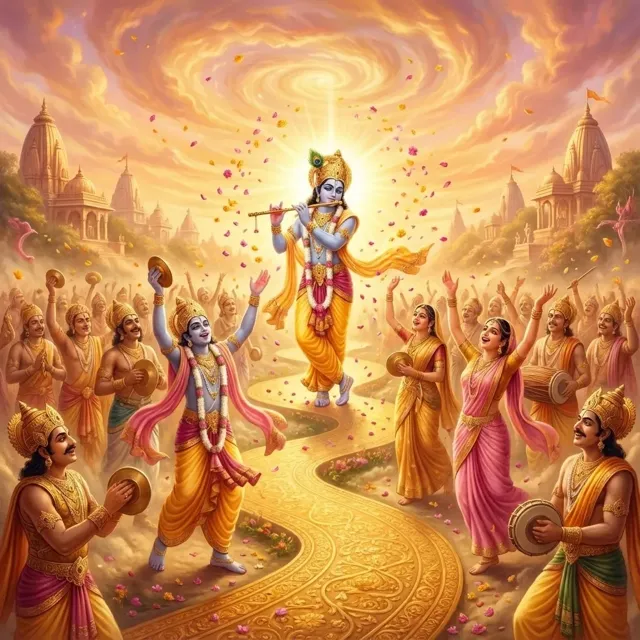
The Yoga of Devotion
Bhakti Yoga
Krishna explains the path of devotion and the qualities of His true devotees.
Arjuna asks who is more perfect: the devotee or the impersonalist? Krishna declares that worshiping him with personal devotion is the highest path. He then describes the qualities of a true devotee who is dear to him.
Key Takeaways
- Personal devotion (Bhakti) is easier and more natural than abstract meditation
- If you cannot focus the mind, practice the regulations of Bhakti yoga
- A true devotee is free from envy, equal in happiness and distress
Chapter 12 - The Yoga of Devotion
Common questions and insights about this chapter
Bhakti Yoga is the path of devotion and love toward the Supreme. It involves dedicating all actions, thoughts, and emotions to God with pure love. Krishna declares this the easiest and most effective path for most people.
While both paths lead to the same goal, Krishna recommends devotion to the personal form. The path of the formless Absolute is more difficult and abstract for embodied beings. The personal approach through devotion is more natural and accessible.
A true devotee is free from hatred, friendly to all, compassionate, free from possessiveness and ego, equal in happiness and distress, forgiving, content, self-controlled, determined, and with mind and intellect fixed on God.
Yes! That's the beauty of Bhakti Yoga. It doesn't require scholarly knowledge, renunciation, or intense austerities. Anyone with sincere love and devotion can practice it. The qualification needed is a loving heart, not intellectual brilliance.
Chapter 12 Quiz
Progress through levels to deepen your wisdom