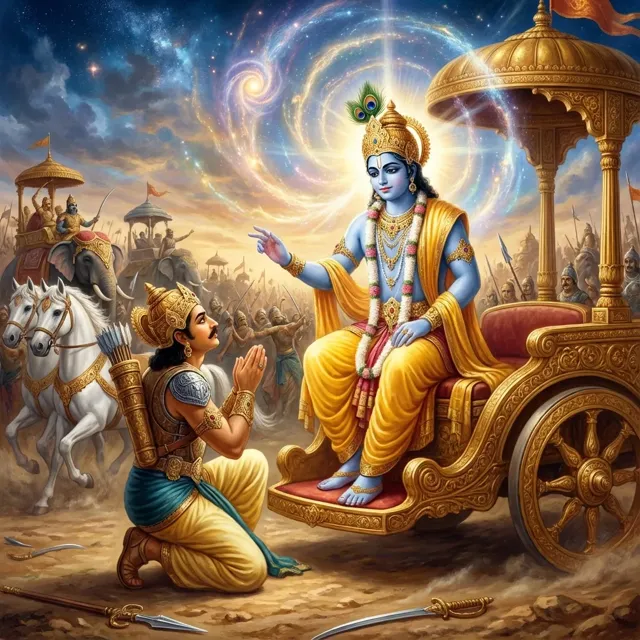
The Yoga of Knowledge
Sankhya Yoga
Krishna begins his teachings, explaining the eternal nature of the soul and the path of knowledge and wisdom.
The Yoga of Knowledge
Krishna begins his teachings by explaining the eternal nature of the soul (Atman) and the transitory nature of the physical body. He urges Arjuna to perform his duty (Dharma) with equanimity and detach himself from the results of his actions.
Key Takeaways
- The soul is indestructible and outlasts the body
- Focus on effort, not the outcome (Karma Yoga)
- The importance of emotional balance and wisdom
Chapter 2 - The Yoga of Knowledge
Common questions and insights about this chapter
Chapter 2, 'Sankhya Yoga,' introduces the fundamental concepts of the soul's immortality, the distinction between the eternal self and the temporary body, and the path of selfless action (Karma Yoga). Krishna teaches that the soul never dies and cannot be destroyed.
This famous verse teaches that we should focus on performing our duty with dedication and excellence, without being attached to the results. We control our actions, not outcomes. This reduces anxiety and helps us act with clarity and purpose.
A Sthitaprajna is someone who has achieved stable wisdom and equanimity. They remain unaffected by pleasure or pain, honor or dishonor, success or failure. They have complete control over their senses and mind, and act with clarity and purpose.
Chapter 2 is considered the summary of the entire Bhagavad Gita because it introduces all the major themes: the immortality of the soul, karma yoga, sankhya (knowledge), and the characteristics of an enlightened person. The remaining chapters elaborate on these core teachings.
Chapter 2 Quiz
Progress through levels to deepen your wisdom