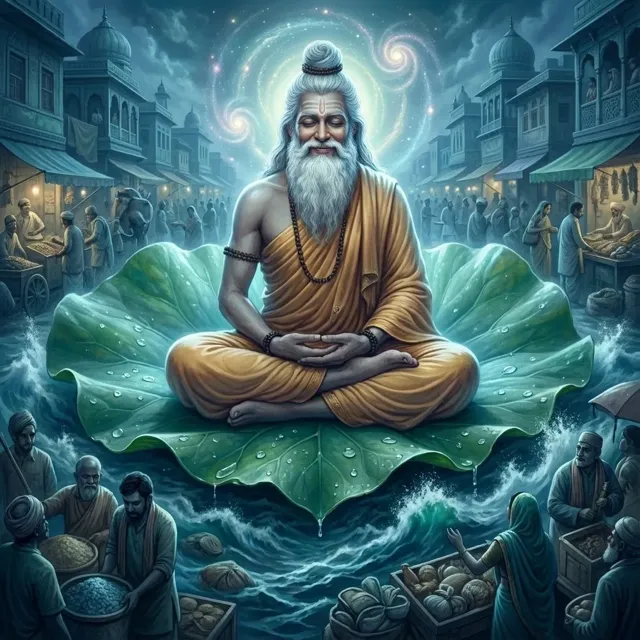
The Yoga of Renunciation
Karma Sannyasa Yoga
Krishna compares the paths of renunciation and action, showing how both lead to liberation.
Arjuna asks which is better: renunciation of work or work in devotion? Krishna clarifies that while both lead to liberation, acting in devotion (Karma Yoga) is easier and superior for most. A sage sees all beings with equal vision.
Key Takeaways
- True renunciation is internal detachment, not just physical abandonment
- The wise see the same soul in a priest, a cow, a dog, and an outcast
- Peace comes from knowing God as the beneficiary of all sacrifices
Chapter 5 - The Yoga of Renunciation
Common questions and insights about this chapter
Krishna teaches that while both paths lead to liberation, Karma Yoga (selfless action) is more practical for most people. True renunciation is internal—freedom from attachment—not external abandonment of duties. One can practice renunciation while engaged in action.
Just as a lotus leaf remains untouched by water despite being in it, a wise person performs actions without being affected by their results. They engage with the world but remain internally detached, preventing negative emotions and bondage.
A person of true knowledge sees the same eternal spirit in all beings—whether in a learned priest, a cow, an elephant, or a dog. They look beyond external differences to recognize the divine essence that pervades all life.
Peace comes from performing duties selflessly while remaining internally detached from results, recognizing that you are not the doer but an instrument of the divine. This mental renunciation brings tranquility even in the midst of action.
Chapter 5 Quiz
Progress through levels to deepen your wisdom