
Arthashastra
15 Books · 150 Chapters
The Science of Wealth and Statecraft by Kautilya






Short on Time?
Kautilya’s Manual of Statecraft
Concerning Discipline
Vinayadhikarika21 chapters
The Science of Power
The foundational blueprint for a sovereign's life, where discipline and the pursuit of wisdom form the first line of defense for any empire.

The Conquest of the Senses
A rigorous guide to mastering the internal storm, proving that a king who cannot conquer his own senses will never truly rule his subjects.

The Network of Eyes
The silent infrastructure of the state—how a network of invisible eyes ensures that the King is omnipresent even when he is unseen.

The Architecture of Allegiance
The delicate alchemy of loyalty, detailing how to test the mettle of ministers and ensure the throne is supported by those of unbreakable character.
The House of Crabs
A masterclass in palace security, revealing how to protect the sovereign from the closest of threats—where even a family's embrace can hold a hidden blade.

The Clock of Power
The relentless rhythm of the throne, partitioning the day and night into a clockwork of duty, ensuring the state never pauses in its vigilance.

The Mouthpieces of Kings
The strategic deployment of the King's voice through envoys, where a single well-placed word can prevent a war or trigger a revolution.
The Fortified Heart
An architectural study in survival, showing why the construction of a fortress is the physical manifestation of the sovereign's will to endure.

The Geometry of Defense
The cold geometry of urban planning, where the layout of the capital becomes a complex machine for both commerce and tactical defense.
The Internal Machine
The internal gears of governance, establishing the departments that breathe life into the state's administration and keep its blood flowing.

The Accountant of Empires
The caloric and financial ledger of an empire, where the meticulous audit of grain and gold ensures the state can outlast any famine or siege.
The Bitter Honey
The forensic management of the royal treasury, proving that the King's true power is stored in his coffers long before it is displayed in his swords.

The Geometry of the Word
The sacred geometry of the royal edict, where the precise drafting of the word becomes a binding contract between the sovereign and the universe.

The Treasury of Gems
An alchemical census of the earth's riches, detailing the gemstones and ores that form the material backbone of Mauryan prestige.

The Alchemies of the Earth
Where the forge meets the throne—the strategic control of mines and industrial production that fuels the empire's economy and its war machine.

The Goldsmith's Forge
The master goldsmith's vigil, detailing the rigorous audit required to protect the crown's brilliance from the deceptions of the workshop.
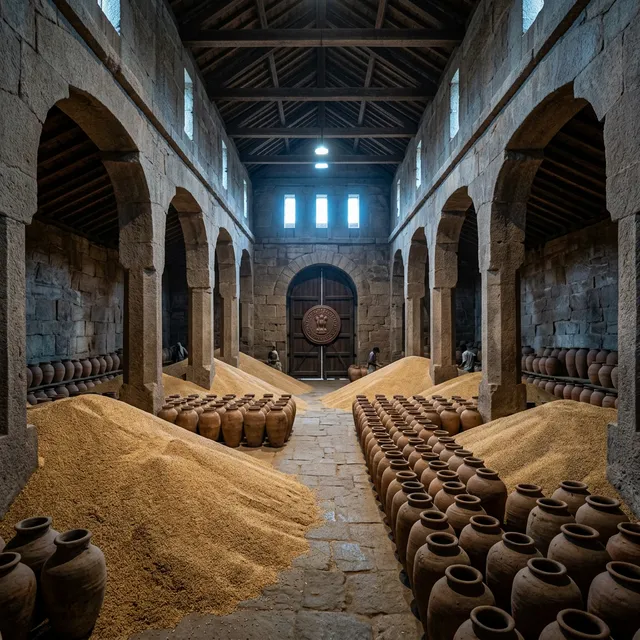
The Pulse of the Harvest
The biological fuel of the state, where the management of granaries turns the harvest into a strategic asset of life-and-death importance.

The Market's Pulse
The heartbeat of the Mauryan economy—the marketplace, where the regulation of trade ensures that the Favor of the People is never sold.

The Arsenals of the Wild
The lethal bounty of the forest, showing how timber, bamboo, and poisons are harvested and transformed into the state's arsenal.

The Architecture of Measurement
The definition of reality itself—establishing the standard weights and the water-clock to ensure the King defines time and space for his people.

The Threshold of Customs
The invisible walls of the frontier, where the collection of tolls and the oversight of merchants protect the state's economic integrity.
Government Superintendents
Adhyakshaprachara36 chapters
The Ledger of Levies
A masterclass in taxation and levies, ensuring the Treasury stays full without draining the lifeblood of the hard-working subjects.

The Loom of the State
The industrial loom of the state, where the production of textiles provides both an economic engine and a social safety net for the vulnerable.

The Breath of the Furrow
The sacred contract with the soil, detailing how the state's agriculture turns the breath of the furrow into the strength of the nation.

The Spirit's Shadow
The spirit's shadow—the regulation of liquor and intoxicants, where the state keeps a watchful eye on the people's vices and their virtues.

The Blade of the Altar
The cold ethics of the slaughterhouse, where the regulation of meat and the protection of cattle balance the needs of life with the necessity of law.

The Gilded Cage
A study in the gilded cage of the royal ladies, detailing how to manage the vast household while ensuring the King's safety is never compromised.

The Admiral of the Monsoon
The master of the monsoon—the Admiral's guide to the rivers and seas, where the control of the waters expands the reach of the King's hand.

The Keeper of the Herds
The strategic stewardship of the herds, ensuring that the biological wealth of the nation—its cattle and horses—is managed with forensic precision.

The Rhythm of the Stallion
The rhythm of the stallion—how the training and care of the royal cavalry turns a beast of burden into a decisive engine of war.

The Tusk and the Trumpet
The tusk and the trumpet—the lethal management of the war-elephant, the biological tank of the ancient world that shatters the enemy's resolve.

The Training of the Great
The training of the Great—a pedagogical guide to preparing the royal animals for the chaos of the battlefield and the ceremony of the court.

The Chariot's Path
The chariot's path—the technical regulation of the King's transport, ensuring his movement is as swift and steady as the cosmic order.

The Seal of the Frontier
The sentinel of the frontier—the warden of the borders who ensures that the empire is a closed system, protected from all external ripples.

The Eye of the Collector
The forensic eye of the collector, detailing how to survey the land and its people to ensure the King's shadow reaches the furthest village.

The Sentinel of the Capital
The master of the capital—the sentinel who ensures that the city's peace is maintained through a complex web of permits and night-watches.

The Weight of the Word
The ultimate weight of the sovereign's word, detailing the laws in the court of justice that turn the King's decree into the people's reality.

The Bonds of Union
The invisible bonds of union, exploring the laws of marriage and the sacred trust that forms the foundation of every stable family and state.

The Divided Line
The divided line of inheritance, where the precise distribution of wealth ensures the continuity of the lineage and the stability of the social order.

The Law of the Hearth
The laws of the hearth and the home, detailing the protection of property and the resolution of the most intimate of disputes.
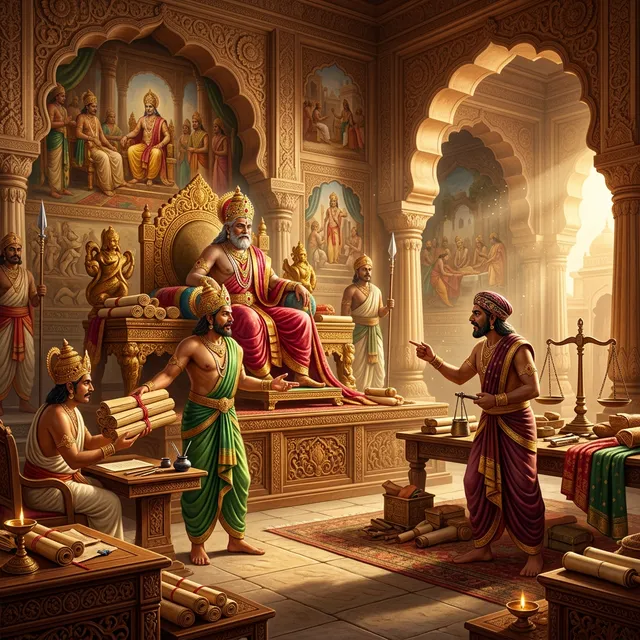
The Broken Promise
The legal consequences of the broken promise, where the King ensures that a man's word remains his bond through the reach of the law.
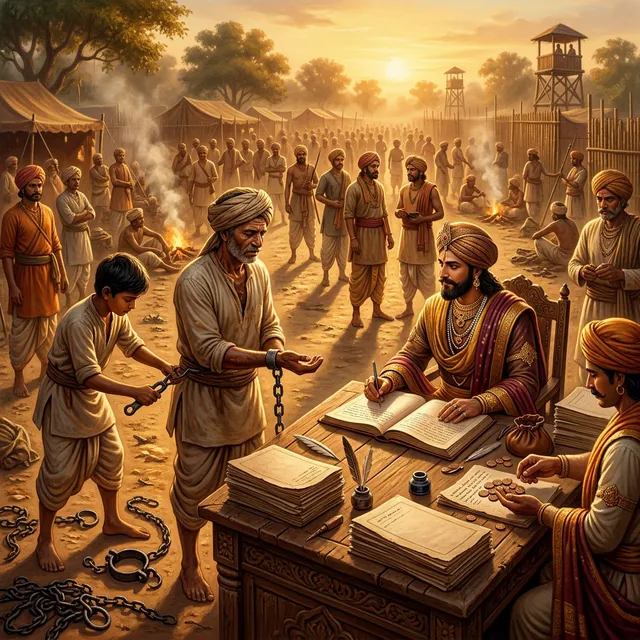
The Bound and the Hired
The boundary between the bound and the hired—the forensic regulation of labor, ensuring the slave is protected and the worker is paid.

The Sacred Trust
The sacred trust of the deposit, where the integrity of commerce is protected by the unyielding weight of the King's judicial hand.
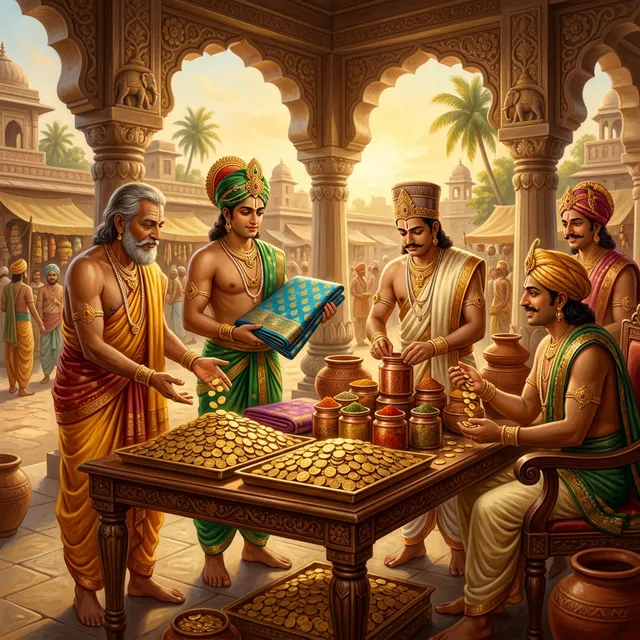
The Common Venture
The common venture—the regulation of partnerships and cooperatives, where the state encourages growth through shared risk and shared reward.

The Rescision
The laws of rescision—the legal mechanism for correcting mistakes in trade, proving that the King's justice is as flexible as it is firm.
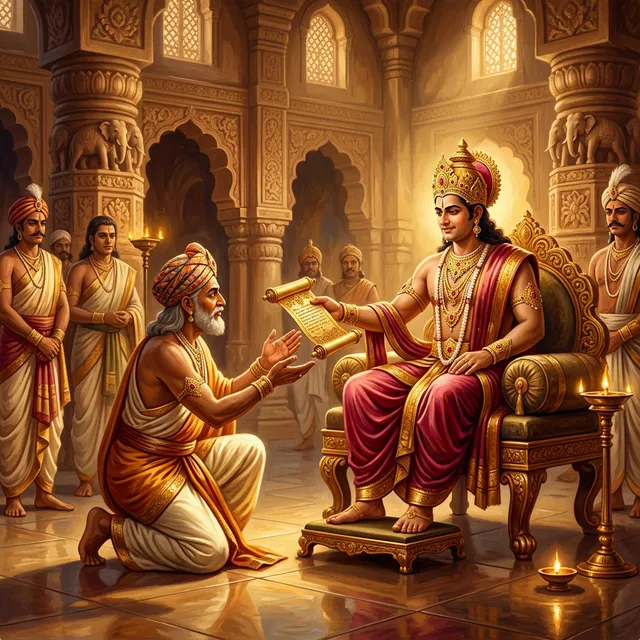
The King's Gift
The strategic management of the King's gift, detailing how the distribution of land and honors creates a loyal and productive nobility.
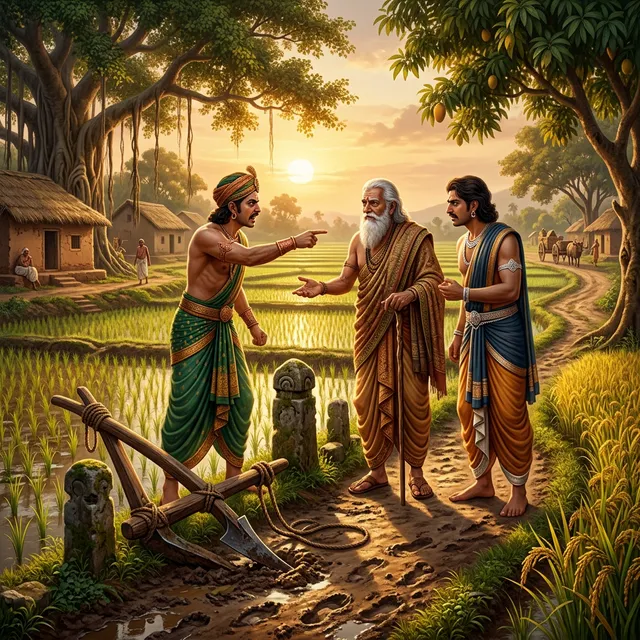
The Shadow of Ownership
The shadow of ownership—a study in the laws of property and adverse possession, ensuring that the land remains in the hands of the productive.
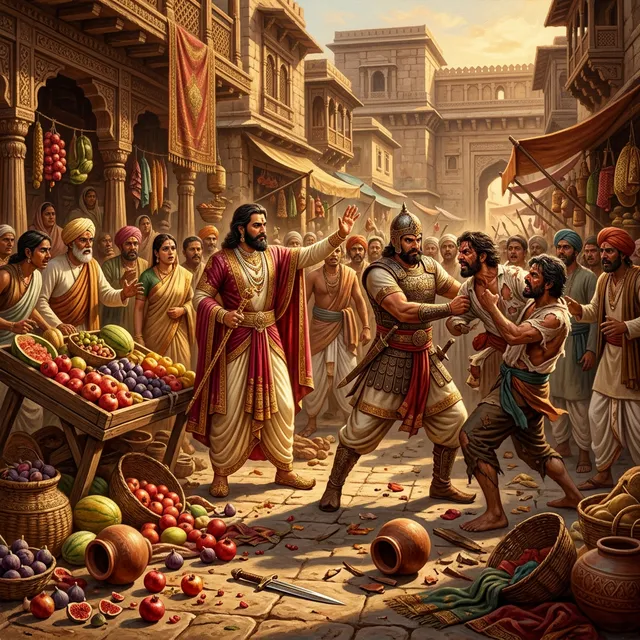
The Hand of Wrath
The hand of wrath—the forensic regulation of physical assault, where the King ensures that the rule of law replaces the rule of the fist.

The Poisoned Tongue
The lethal power of the poisoned tongue—the laws of defamation and libel, where the King protects the reputation of the worthy from the wicked.
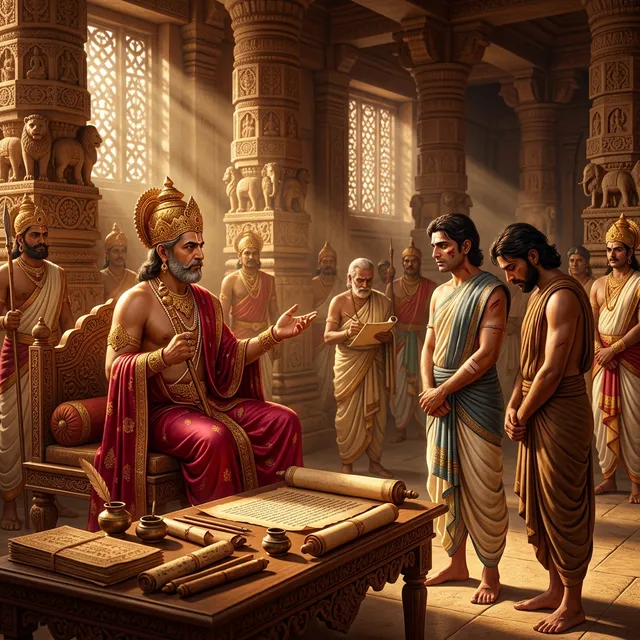
The Striking Hand
The striking hand of the law—the regulation of theft and robbery, where the King's justice is as swift as the criminal's flight.

The Gambler's Roll
The gambler's roll—the strategic regulation of betting and games of chance, where the state keeps a watchful eye on the risks taken by its people.
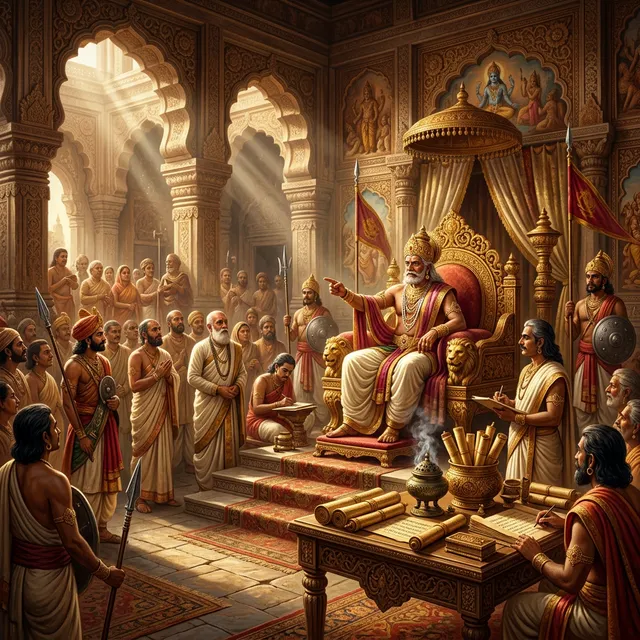
The Final Verdict
The final verdict—the laws of miscellaneous offenses, ensuring that no act of disorder is too small for the King's forensic attention.
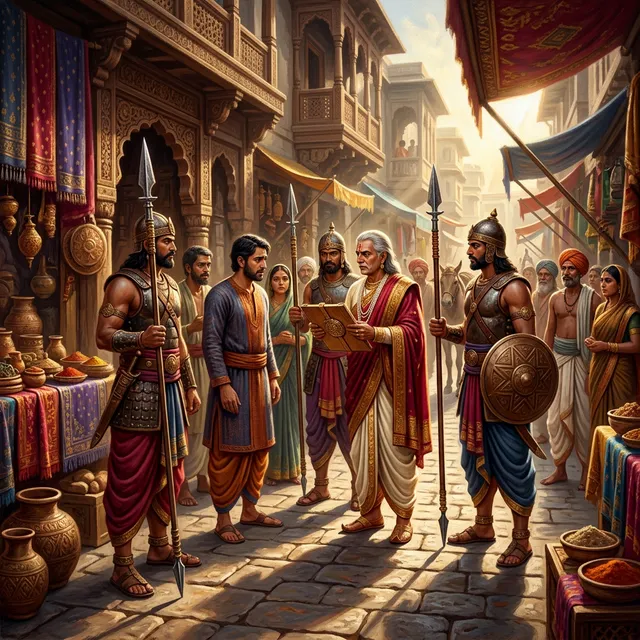
The Law’s Reach
The law's long reach—the regulation of the police and the secret service, ensuring that the King's justice is felt even in the shadows.
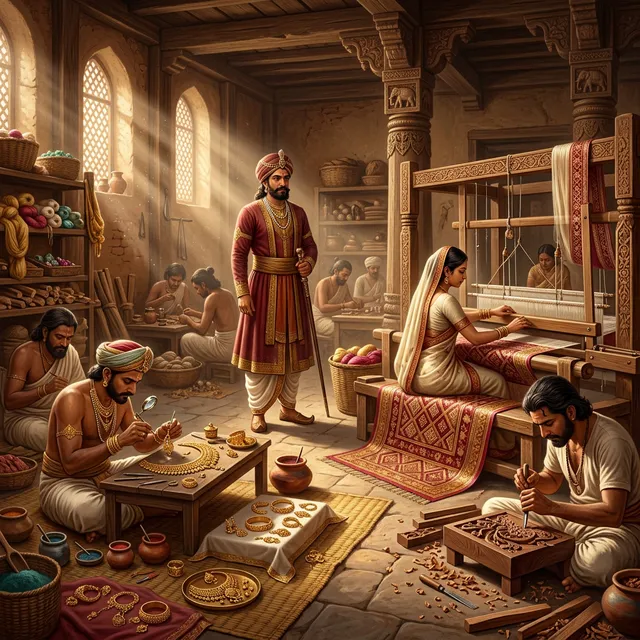
The Artisan’s Shield
The artisan's shield—the strategic protection of the state's industries from the deceptions and failures of the marketplace.
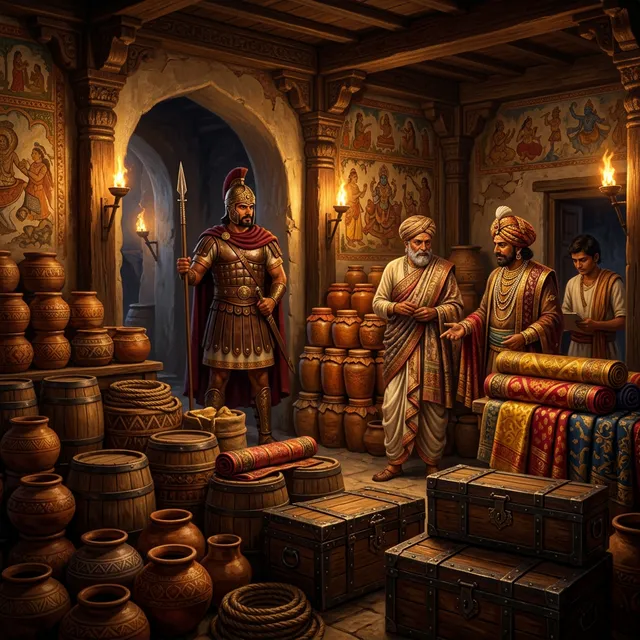
The Merchant’s Vigil
The merchant's vigil—the laws of commerce and the protection of the trader, ensuring the flow of wealth is never interrupted by greed.

The Cloud of Calamity
The cloud of calamity—the strategic management of national disasters, where the King's leadership turns tragedy into a display of state power.

The Suppression of Thorns
The suppression of the thorns—a masterclass in internal security, detailing how to remove all obstacles to the King's absolute peace.
Concerning Law
Dharmasthiya20 chapters
The Youth’s Temptation
The youth's temptation—the forensic use of psychological subversion to test the mettle of those who would serve the throne.

The Seizure of the Wicked
The seizure of the wicked—the strategic use of the secret service to neutralize the threats that live within the heart of the empire.

The Silent Witness
The silent witness—a deep dive into the use of informants and spies to ensure the King knows the secrets of the people.

The Trial of Truth
The trial of truth—the forensic use of torture and interrogation, where the state demands the reality of the crime at any cost.
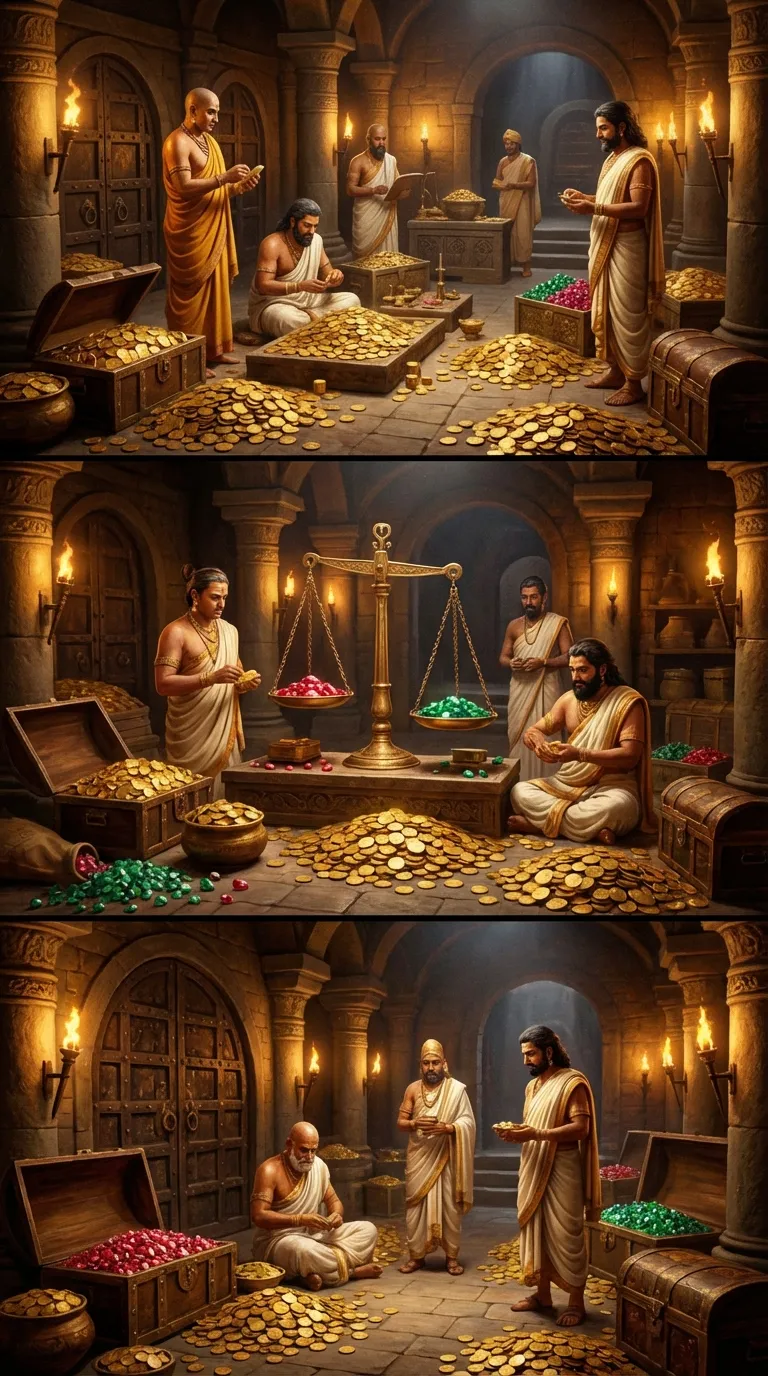
The Department’s Purity
The department's purity—the strategic audit of the state's own servants, ensuring that the machine of government is never rusted by corruption.
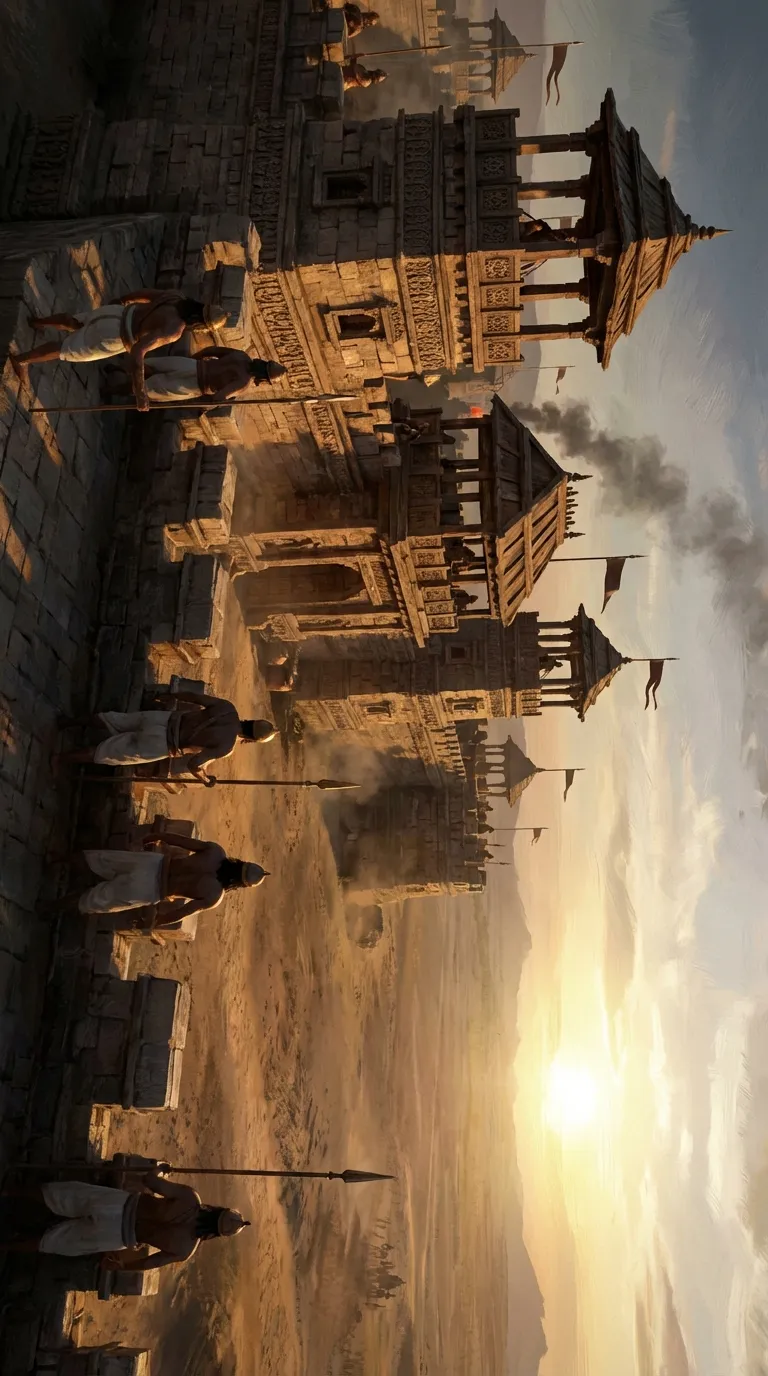
The Price of the Limb
The price of the limb—the forensic regulation of physical punishment, where the King ensures that the debt of the crime is paid in full.
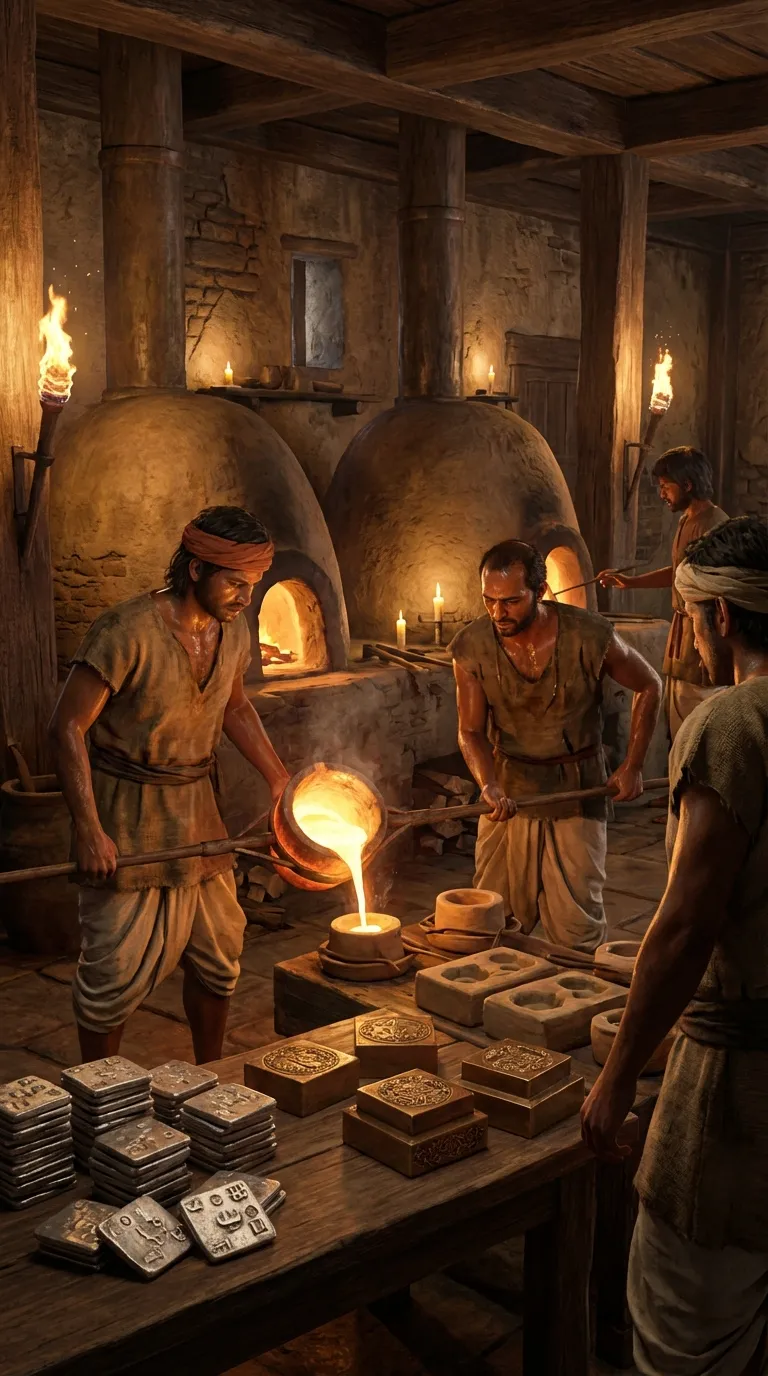
The Hand of Justice
The hand of justice—the execution of the law, detailing how the state transforms the judicial decree into the finality of the sentence.

The Sacred Bound
The sacred bound—the regulation of the social order, ensuring that every subject knows their place in the cosmic and terrestrial hierarchy.

The King’s Shadow
The King's shadow—the strategic management of the royal presence, ensuring his prestige is felt throughout the vast reaches of his domain.

The Full Coffer
The full coffer—a masterclass in the collection of taxes during times of war, proving that the King's need is the state's command.

The Measure of Service
The measure of service—the strategic payment of the state's servants, ensuring that loyalty is bought with gold and secured with honor.

The Courtier’s Path
The courtier's path—a guide to surviving and thriving in the proximity of power, where every word is a move on the political chessboard.

The Art of Time
The art of time—the strategic use of the calendar and the clock to ensure the King's actions are always aligned with the celestial rhythm.

The Pillar of State
The pillar of state—a masterclass in the seven elements of sovereignty, showing how the King, the Minister, and the Land form an unbreakable whole.

The Seven Elements
The seven elements—a deeper study in the structural integrity of the empire, where every weakness in a neighbor is a lethal opportunity.

The Rhythm of State
The rhythm of state—the strategic management of diplomacy and peace, where the King's hand is as steady as the flow of a river.

The Six-fold Shield
The six-fold shield—the masterwork of Mauryan foreign policy, revealing the strategic options that protect an empire from all external threats.

The Bond of Allies
The bond of allies—how to select and manage the partners who will stand with the King in the inevitable storm of war.

The Choice of War
The choice of war—the forensic analysis of the moment when diplomacy fails and the lethal mechanics of the army must be deployed.

The Targeted State
The targeted state—the strategic identification of the vulnerable neighbor, proving that an empire grows by the consumption of the weak.
Removal of Thorns
Kantakasodhana13 chapters
The Shadow of Rebellion
The shadow of rebellion—how to fragment an enemy state from within, using the lethal power of rumor and subversion to shatter their resolve.

The March of the Circle
The march of the circle—the strategic coordination of a coalition, where the King leads a chorus of allies in the music of conquest.

The Friend in Need
The friend in need—the forensic analysis of alignment, showing why the strategic help of another is the King's most valuable asset.
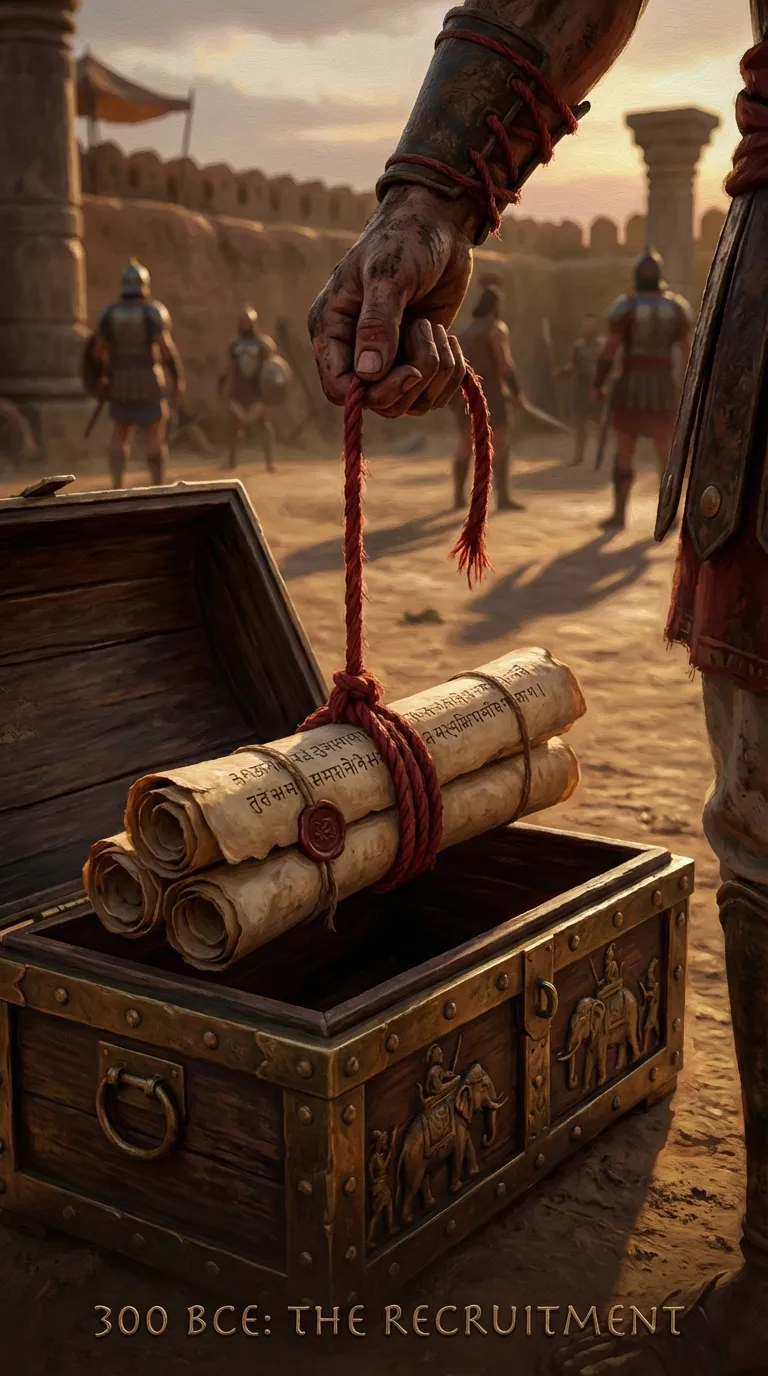
The Terms of Acquisition
The terms of acquisition—how to transform gold and grain into the human resource that fuels the fires of the state's expansion.

The Bond of Gold
The bond of gold—the strategic accumulation of wealth through diplomacy, proving that the King's peace is often bought before it is fought.

The Terms of the Soil
The terms of the soil—the strategic acquisition of land, where the quality of the earth defines the long-term strength of the throne.

The Interminable Bond
The interminable bond—a study in the endurance of treaties and the colonization of new lands, ensuring the King's legacy is eternal.
The Shield of Work
The shield of work—the industrial dominance of the landscape, where the King's works turn the wilderness into a productive engine of state.

The Shadow of the Enemy
The shadow of the enemy—the forensic use of rear-enemy intelligence to ensure the King is never blindsided in his pursuit of power.

The Recruitment of Power
The recruitment of power—the strategic mobilization of the Circle of States to restore the King's presence in a time of decay.

The Circle of Conquest
The circle of conquest—the final consolidation of power, where the conquered are integrated into the master's grand strategic design.

The Attitude of the Conquered
The attitude of the conquered—a guide to the mercy that ensures a conquered lineage becomes a loyal pillar of the new empire.

The Conduct of Power
The conduct of power—the strategic survival of the hostage and the fugitive, proving that the King's spirit can never be truly caged.
The Conduct of Courtiers
Yogavritta6 chapters
The Master of the Circle
The master of the circle—a final synthesis of the diplomatic wheel, where the six-fold policy turns the world into a system of mastery.

The Master of the Wheel
The stability of the empire rests not on grand armies but on the king's absolute command of its smallest functions. As the central axle of the state, he must personally ensure every component turns in perfect alignment with his will, for the slightest deviation invites collapse. This is the science of being the master of the wheel.

The Scales of the Vulgar
The state maintains its power through the meticulous management of its people. Order is not a natural condition but an engineered one, built upon constant surveillance, economic scrutiny, and the pre-emptive suppression of discontent. The common population is a resource to be cultivated and a force to be controlled, with every workshop and tavern a potential node of sedition.

The Scales of the Army
The strength of an army is not found in its numbers but in its precise composition. A king must weigh the loyalty of hereditary soldiers against the volatile utility of mercenaries and allies, for the wrong calculation invites destruction not from the enemy, but from within. This is the cold arithmetic of state survival.

The Scales of the Ally
The true measure of an ally is not found in immediate gifts of gold or territory, but in their future strategic value. A king must learn to weigh the tangible allure of present wealth against the intangible, but far greater, promise of future power. This calculation is the foundation of enduring strength.

The Scales of the Spirit
The state's power rests not only on its armies and treasuries but on the morale of its people. This psychological terrain is a battlefield, to be managed with spies, staged prophecies, and manufactured belief, ensuring the hearts of the governed are as disciplined as the King's own soldiers.
Source of Sovereign States
Mandala-yoni2 chapters
The Scales of the Architect
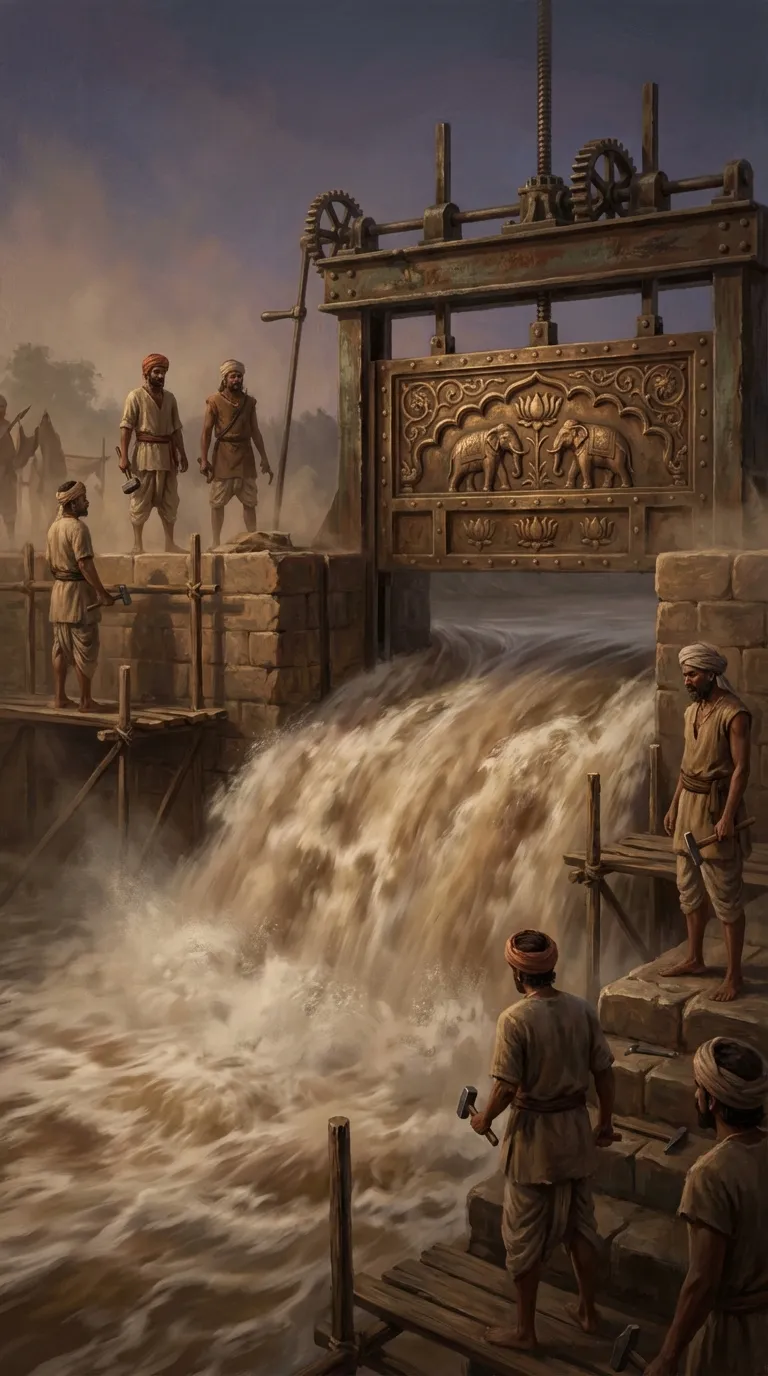
The state's power is built not just with armies but with stone, earth, and water. A superintendent of public works learns that every dam, granary, and road is an instrument of control, but also a point of failure where corruption and human nature threaten the king's grand design.

The Scales of the Senses
A king's ultimate power is not his army or his treasury, but the rigorous discipline of his own mind. Faced with the temptations of his senses—the six enemies that have toppled empires—he must achieve an internal stillness, proving that true sovereignty begins with self-conquest.
The Six-fold Policy
Shadgunya18 chapters
The Scales of the Flesh
The state's power is ultimately measured on the bodies of its subjects. In the king's judicial chambers, the scales of justice are balanced not with abstract principles but with the calculated application of pain, where truth is a commodity to be extracted and a man's flesh is the final ledger of accounts.

The Scales of the Invader
An invader crosses the frontier, forcing the king to choose between surrendering territory and destroying it himself. He embraces the cold logic of statecraft, unleashing his spies and poisoners not only on the enemy, but on his own lands. This is the science of making one’s own kingdom indigestible to a foreign power.
The Scales of the Recruit
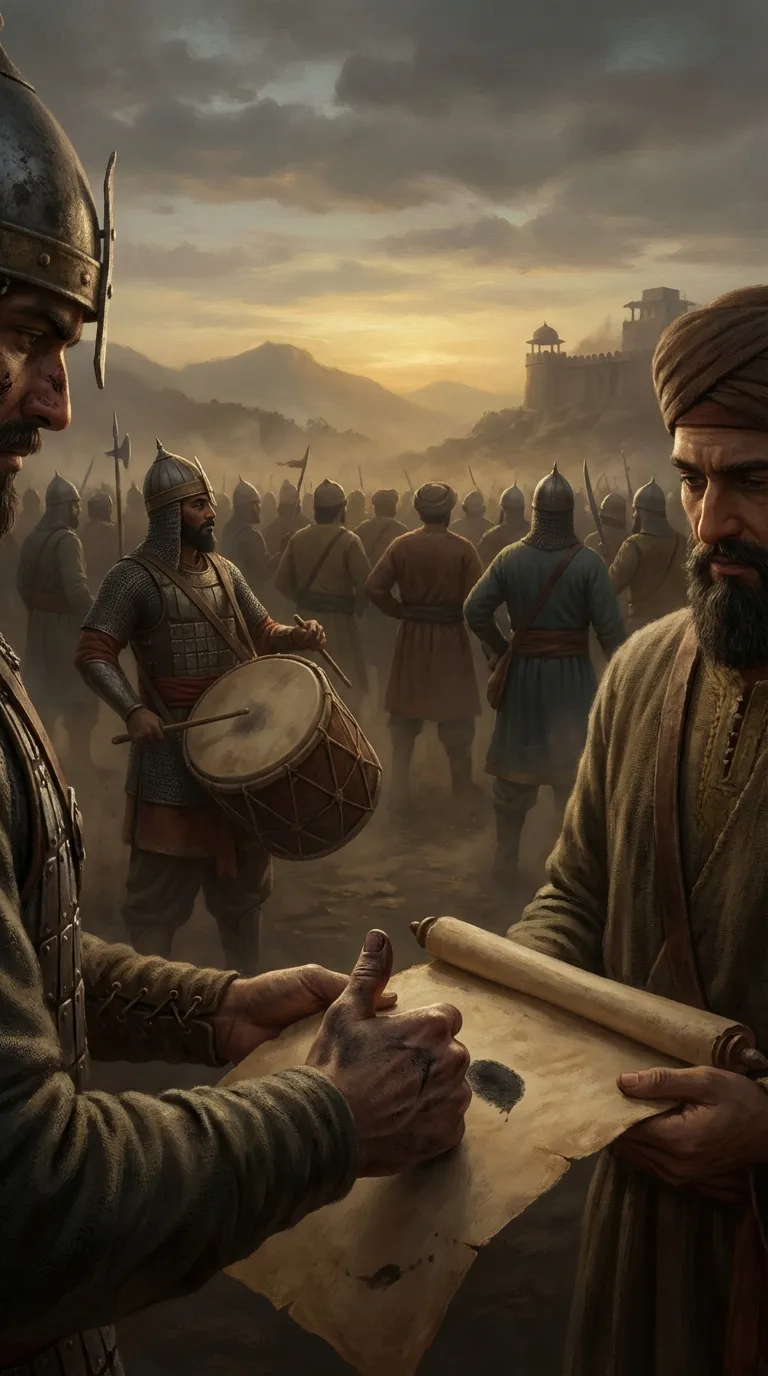
The state requires an army, an instrument of its will forged from raw human material. The King’s recruiter must be a master of assessment, testing not only the strength of a man’s arms but the reliability of his spirit. Through calculated trials of fear, temptation, and pain, the unworthy are discarded and the useful are marked for service.

The Scales of the Stratagem
In warfare, the most decisive terrain is the enemy's mind. A King's stratagems—rumor, false prophecy, and targeted assassination—are sharper than any blade. Deception is not a tool of war; it is war itself, a science of leveraging an opponent’s belief against him.

The Scales of the Traitor
This chapter details the systematic uncovering of corruption within the Mauryan state. A high official, observing discrepancies in the royal granaries, employs a network of spies and provocateurs to test the loyalty of his subordinates, revealing the mundane face of treason and the cold science of its detection.

The Scales of the Resolve
The king must weigh the internal resolve of his commanders, for victory is not won by numbers but by the psychological fortitude of his instruments. He treats their spirit not as a virtue to be admired, but as a strategic material to be tested for its breaking point. In the crucible of the state, only unyielding iron has value.

The Scales of the Camp
An army's true strength is not its blades but its supply lines. The Superintendent of the Camp must police the ceaseless flow of grain, fodder, and coin, for a single fraudulent measure can rot an empire from within. In the vast logistical train, every sack and every cart is a potential point of failure—and a test of the state's vigilance.

The Scales of the March
The march is not a journey but a weapon. Its success depends on a brutal calculus of speed, supply, and terrain, turning the landscape itself into an instrument of state power. Every step is measured against the grain in the storehouse, for an army’s true strength is born not on the battlefield, but in the treasury.
The Scales of the Stratagem
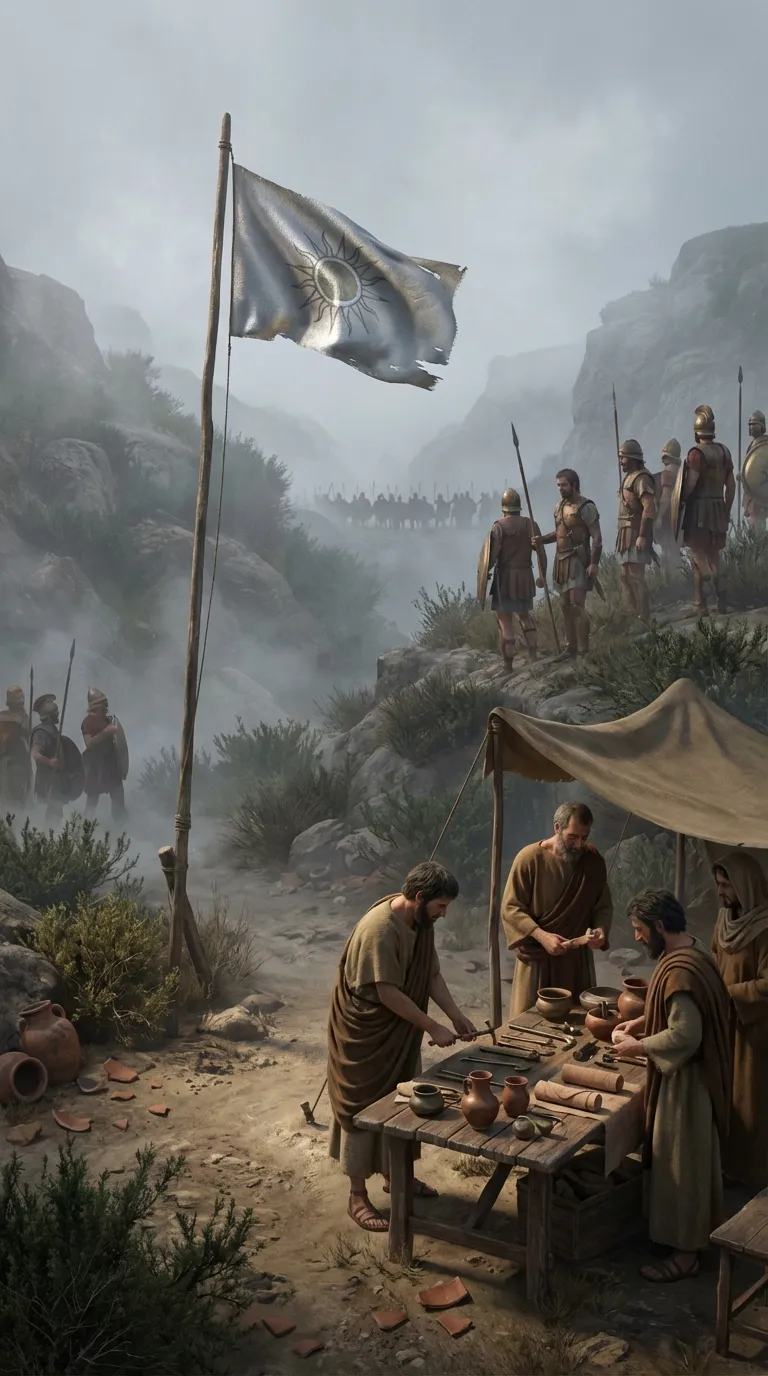
The king must choose between a bloody, conventional siege and a devious stratagem of misdirection and rumor. A spymaster's plan to defeat an enemy by manipulating his mind demonstrates that the true battlefield is perception itself. The cost of such a victory is a world where truth is just another weapon.

The Scales of the Terrain
The ground itself is a weapon, a form of intelligence. A wise ruler understands that the choice of battlefield determines the outcome long before the first spear is thrown. This is the science of mastering the earth, where strategy is written in soil and stone, not just steel.

The Scales of the Array
The battlefield is a problem of geometry, not of courage. An advisor to the king demonstrates how the precise arrangement of troops—the array—is a law of survival, transforming fallible men into a single, thinking weapon. Victory is found not in individual heroics, but in the cold, unassailable logic of the formation.
The Scales of the Strategy
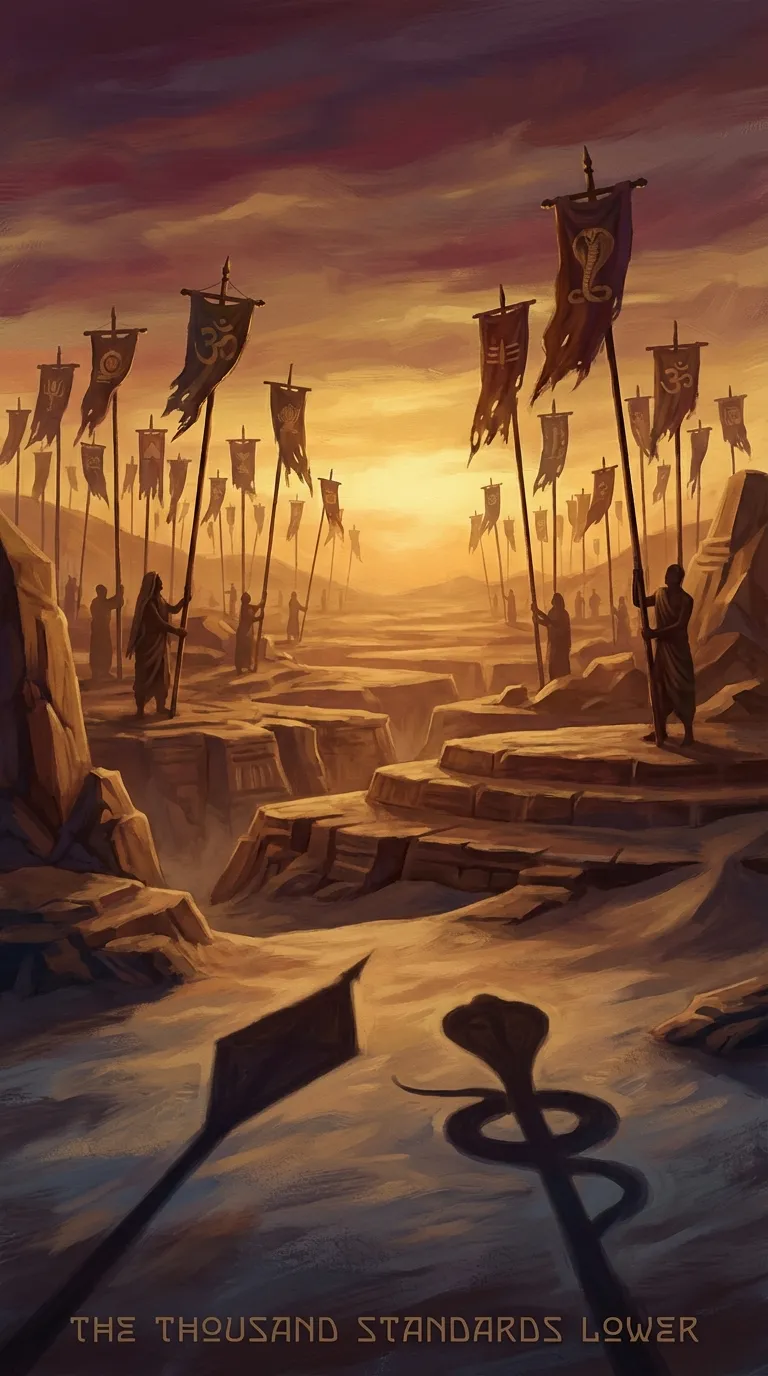
The war is won, but the conquest is not over. As the King contemplates the fate of his defeated rival, his master strategist Kautilya reveals the final, intricate stage of victory. Power is not secured by the sword alone, but by a precise and unsettling science of assimilation and control.

The Scales of the Guild
The state's power depends on its control over the economy. The King's superintendent must regulate the powerful merchant guilds, whose collective wealth and influence pose a constant challenge to the throne. Through meticulous inspection, unyielding enforcement of law, and a network of spies, the state ensures that commerce serves the realm, not just the wealthy.

The Scales of the Messenger
A king’s messenger is not a man but an instrument, a carrier of words that can build an alliance or unleash a war. Sent into a hostile court, the envoy must be a master of observation and control, for his every gesture is weighed, and the message he carries must be delivered perfectly, even at the point of a sword.
The Scales of the Weak
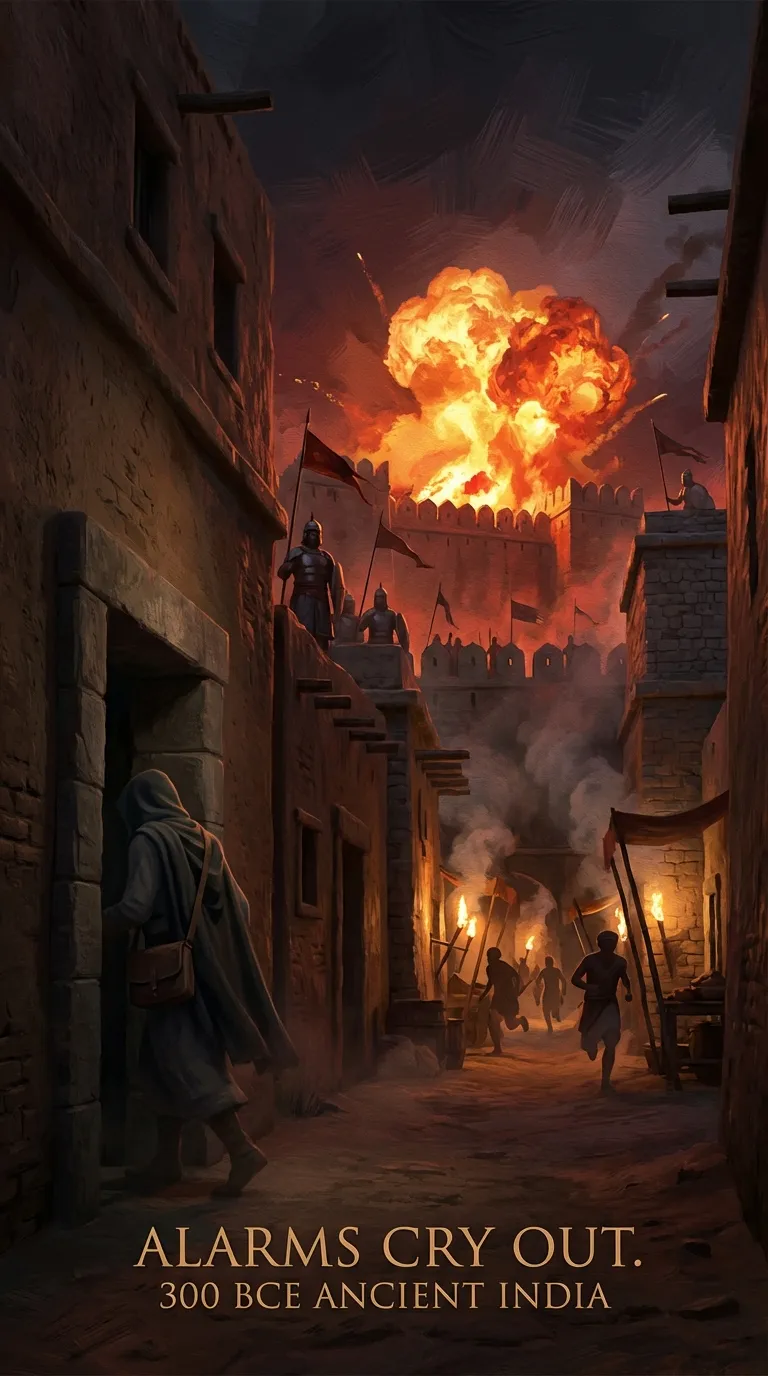
A weak king faces an ultimatum from a powerful conqueror. Instead of bowing to force or raising a doomed army, he employs a strategy of subtle poison, aimed not at the body but at the trust between his enemy and his enemy's commanders. It is a lesson in how the small survive the great: not through strength, but through a superior understanding of weakness.

The Scales of the Execution
The king’s court is not a place for deliberation but for decision. When a high official is found guilty of corruption, the king’s judgment is swift and absolute, demonstrating that the state’s integrity is paramount. The law’s finality is the bedrock of order, a weight that, once applied, can never be removed.

The Scales of the Venom
The king's power must project beyond his borders, into the very chambers of his rivals. This requires a different kind of weapon, one administered in silence and perfected in secret. The state’s alchemists practice the science of venom, ensuring that a single, well-placed drop can accomplish what an entire army cannot.

The Scales of the Capture
Victory in battle is only the first act. The true measure of power lies in the methodical conversion of a captured enemy from a liability into a loyal asset of the state. This is the science of assimilation, where every prisoner is a resource to be cultivated or discarded.
Vices and Calamities
Vyasanadhikarika5 chapters
The Scales of the Unsteady
The King's power rests not on stability, but on the precise control of instability. By subtly manipulating the kingdom's economic and political weights, the ruler ensures he is the only fixed point in a volatile world. His agents are the instruments of this science, creating the very uncertainty that makes his authority necessary.

The Scales of the Stratagem
To defeat a prideful enemy, the King sanctions a final, elaborate deception. A false promise of treachery lures the rival king into a trap of his own making, demonstrating that victory is not won by strength alone, but by the calculated manipulation of an opponent's character.

The Scales of the Siege
A king besieging a fortress rejects his generals' calls for a swift, glorious assault. Instead, he chooses the slower, more certain science of attrition and subversion. The siege becomes a contest not of strength against stone, but of patience against the enemy's will to endure.

The Scales of the Operation
The management of a military campaign extends far beyond the battlefield. It is an intricate system of logistics, finance, and intelligence, where the sovereign must master every detail from the granary to the treasury. Absolute control is the only defense against the internal decay that can cripple an army before it ever meets the enemy.

The Scales of the Peace
Victory on the battlefield is merely the prelude to the true conquest. This is the science of pacification, where a conqueror must dismantle an enemy’s will, not just his army. To secure peace is to master the intricate regulation of a defeated people’s customs, fears, and allegiances, turning the silence of the sword into the enduring quiet of stable rule.
The Work of an Invader
Abhiyasyatkarma5 chapters
The Scales of the Injury
After conflict, victory is not enough. The scales of injury must be balanced, ensuring the aggressor bears the full and calculated cost of their ambition. This is not plunder but a systematic transfer of wealth, designed to refill the conqueror’s treasury and cripple the vanquished’s capacity for future war.

The Scales of the Wonderful
The king’s authority is not a birthright but a performance, secured by manipulating public belief. To counter a rival’s growing influence, the court stages a miracle, employing spies disguised as ascetics to manufacture a divine sign. This act of strategic spectacle solidifies the king’s power, revealing that in the calculus of rule, awe is a resource to be managed as carefully as grain or gold.

The Scales of the Mantra
The king’s private counsel, the mantra, is the most volatile substance in the empire. Its containment is the first principle of power, for a single leaked word can unravel a dynasty. This is the science of secrets, where the silence of the council room is a weapon and every whisper beyond its walls is a declaration of war.

The Scales of the Remedy
A sickness in the treasury threatens to unravel the state, a rot that begins with a single dishonest official. The king, guided by cold doctrine, must excise the corruption before it spreads. The remedy he applies is as sharp and as impersonal as a surgeon's knife, intended to heal the empire by making a fearsome example of one man.

The Scales of the Treatise
In the quiet heart of the Mauryan empire, the chancellor Kautilya conducts a final appraisal of his life’s work: the great treatise on the science of power. He weighs not its content, but its structure—the logical skeleton that will allow it to endure beyond his own life. This is the final forging of a weapon made not of steel, but of pure, cold knowledge.
Relating to War
Sangramika6 chapters
Encampment
The strategic layout and security protocols of the military camp.
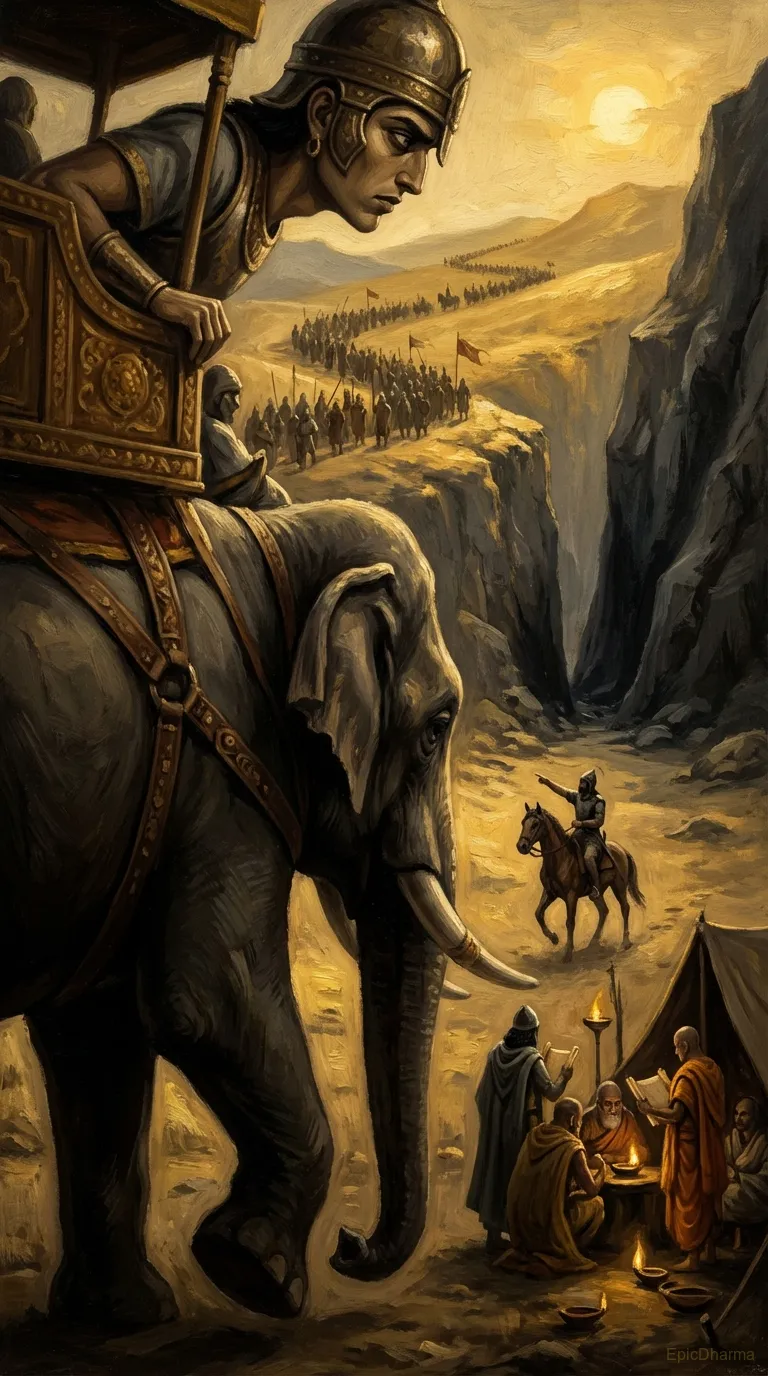
March of the Camp and Protection of the Army
Tactics for secure army movement and anticipating attacks in distress.

Treacherous Fights and Encouragement to the Army
Subversive battle strategies and rallying the troops morale.

Battle-fields; The Work of Infantry, Cavalry, Chariots and Elephants
The precise mechanics and roles of the four-fold arms in warfare.
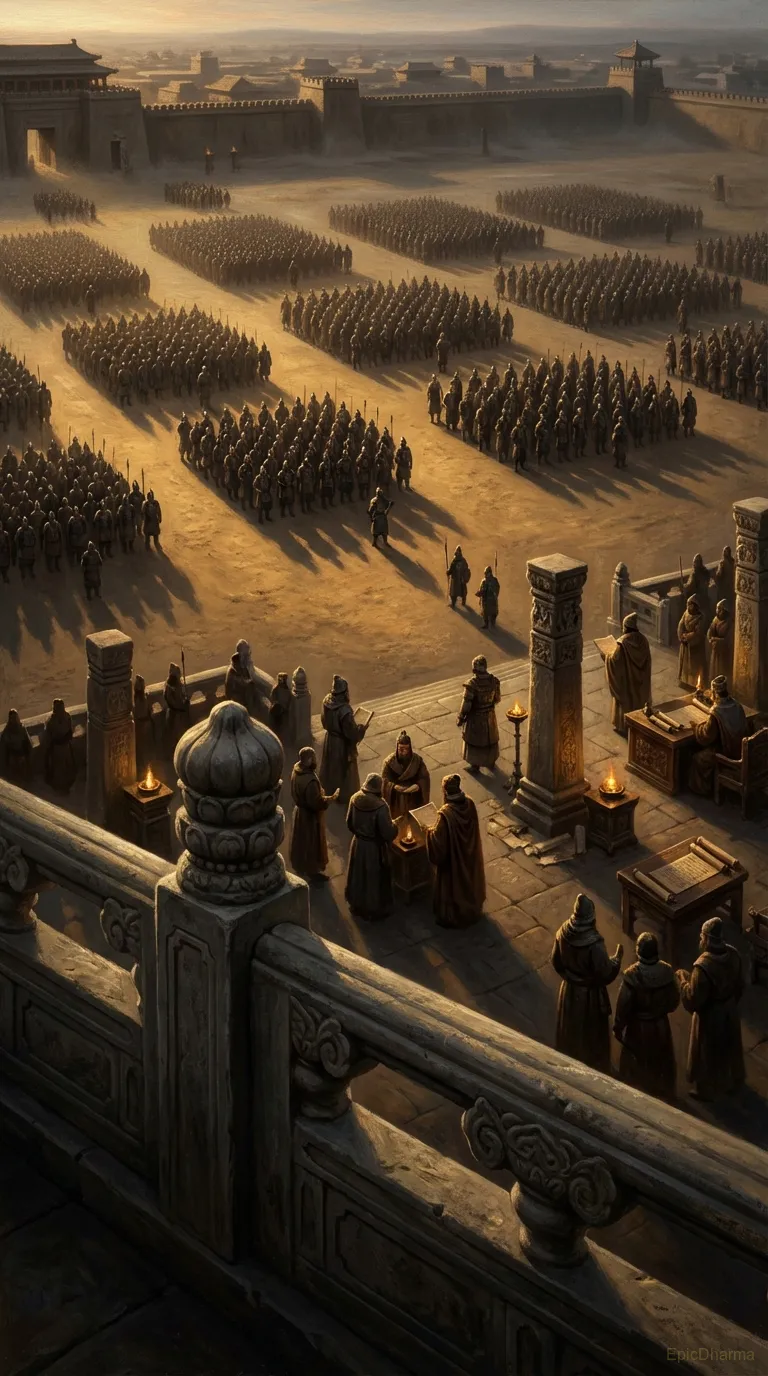
Distinctive Array of Troops and Strength Distinction
Forming battle lines and properly identifying weak versus strong forces.

Battle-Arrays of the Army
Classic strategic formations: the block, the snake, the circle, and the detached order.
Conduct of Corporations
Sanghavritta3 chapters
Causes of Dissension
Methods for planting discord among independent oligarchies and corporations.

Secret Punishment among Corporations
Covert operations and assassination tactics to weaken rival guilds from within.

The Duties of a Chief
Guidelines for leaders of corporate states to maintain unity and guard against internal betrayal.
Concerning a Powerful Enemy
Abaliyasa5 chapters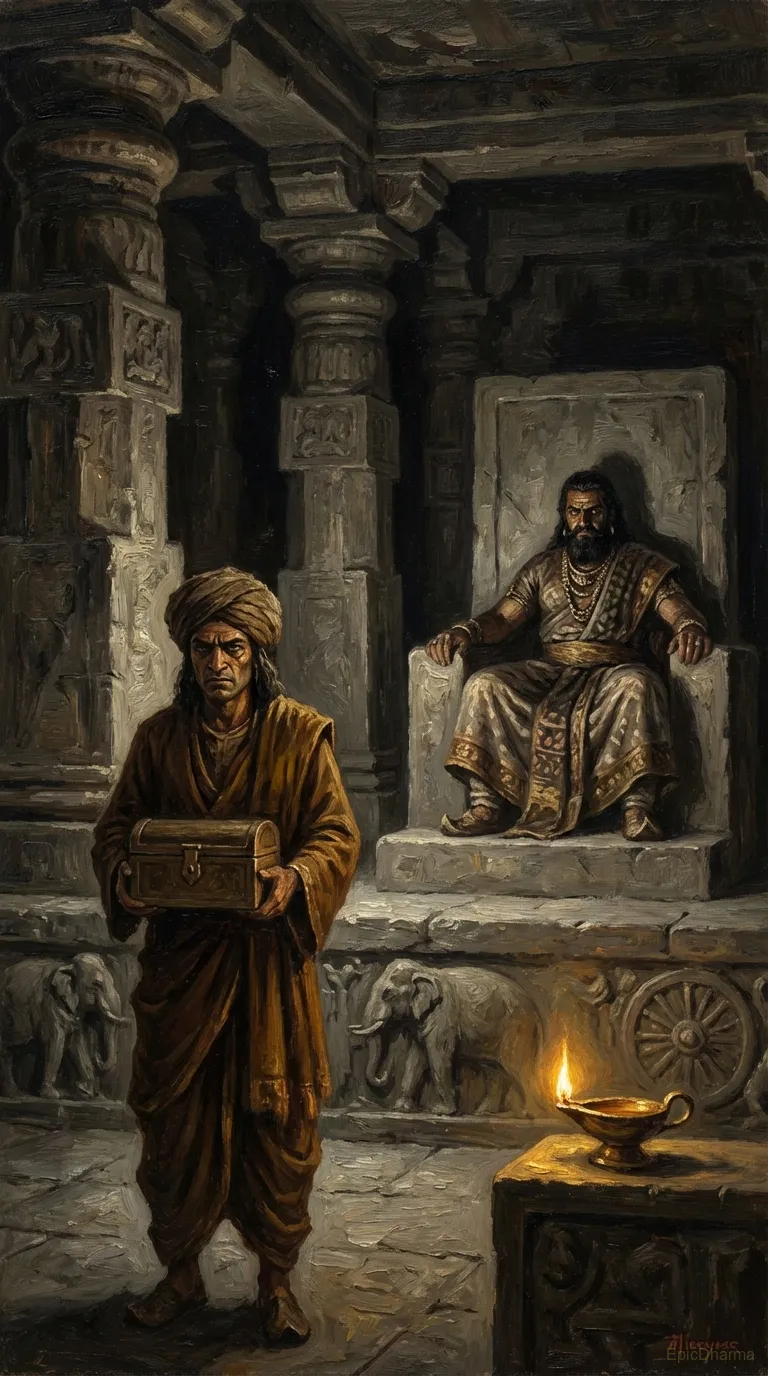
The Duties of a Messenger
The employment of envoys to stall powerful adversaries.
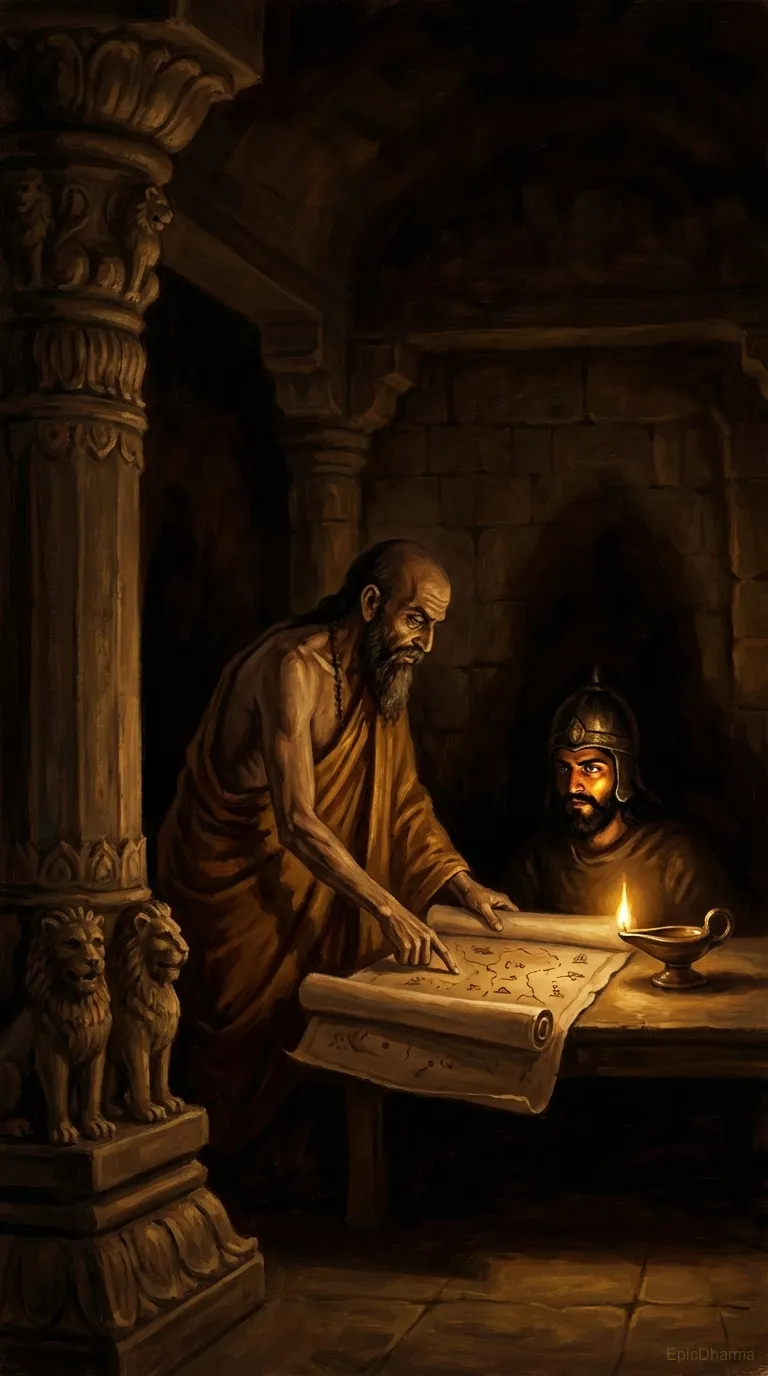
Battle of Intrigue
Unleashing a silent war of deception against overwhelming odds.
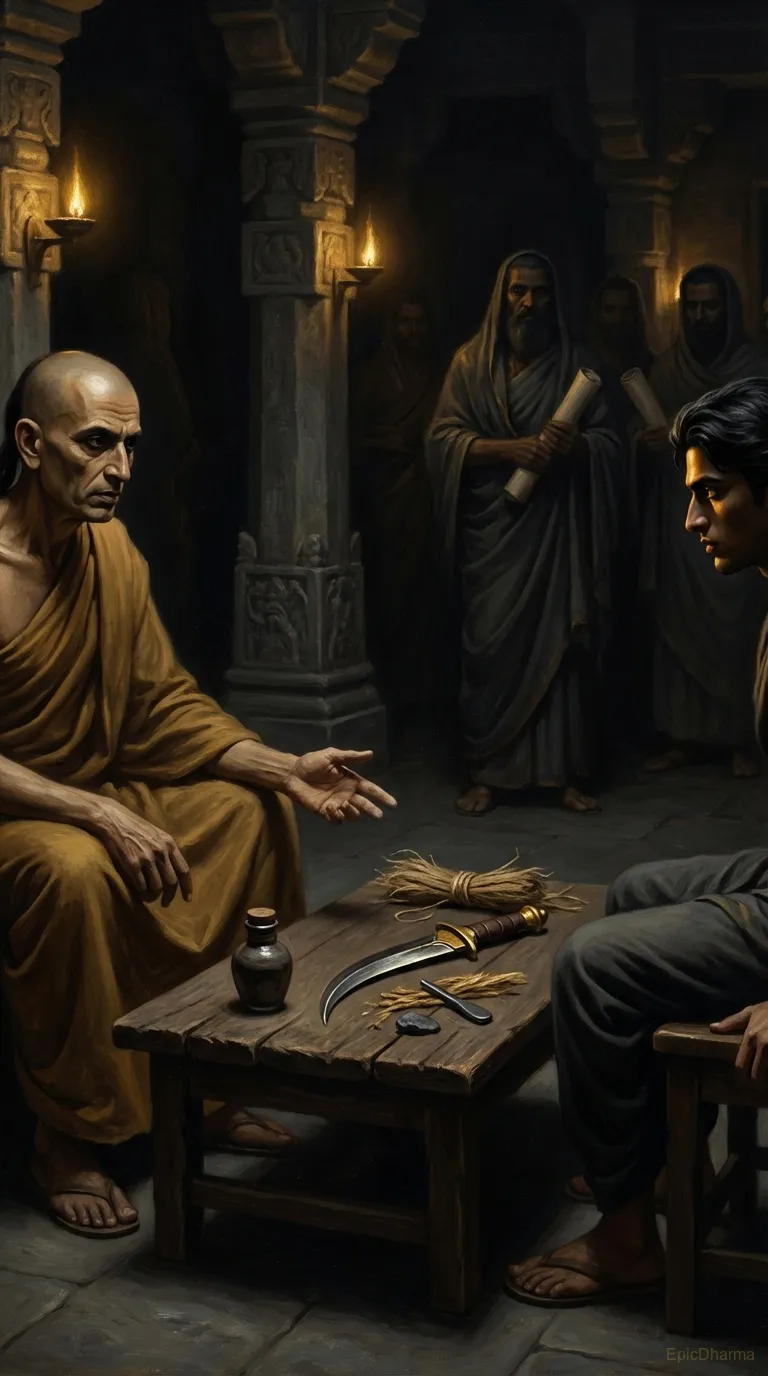
Spies with Weapons, Fire, and Poison
Extreme sabotage measures to cripple a superior foe.

Destruction of Supply, Stores, and Granaries
Targeting the logistical lifelines of the invading army.
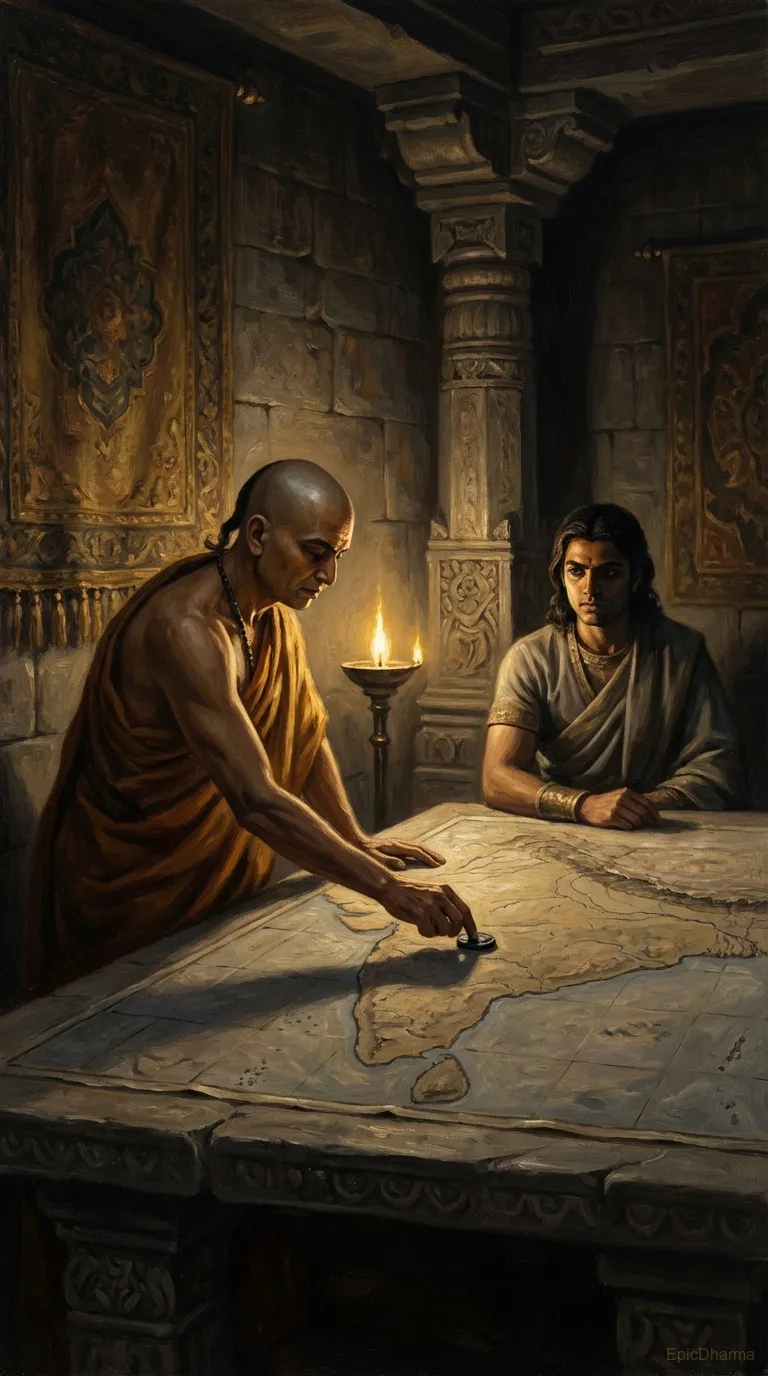
Capture of the Enemy by Secret Means
Using clandestine devices and lethal ambushes to capture a stronger enemy.
Capture of Fortresses
Durgalambhopaya5 chapters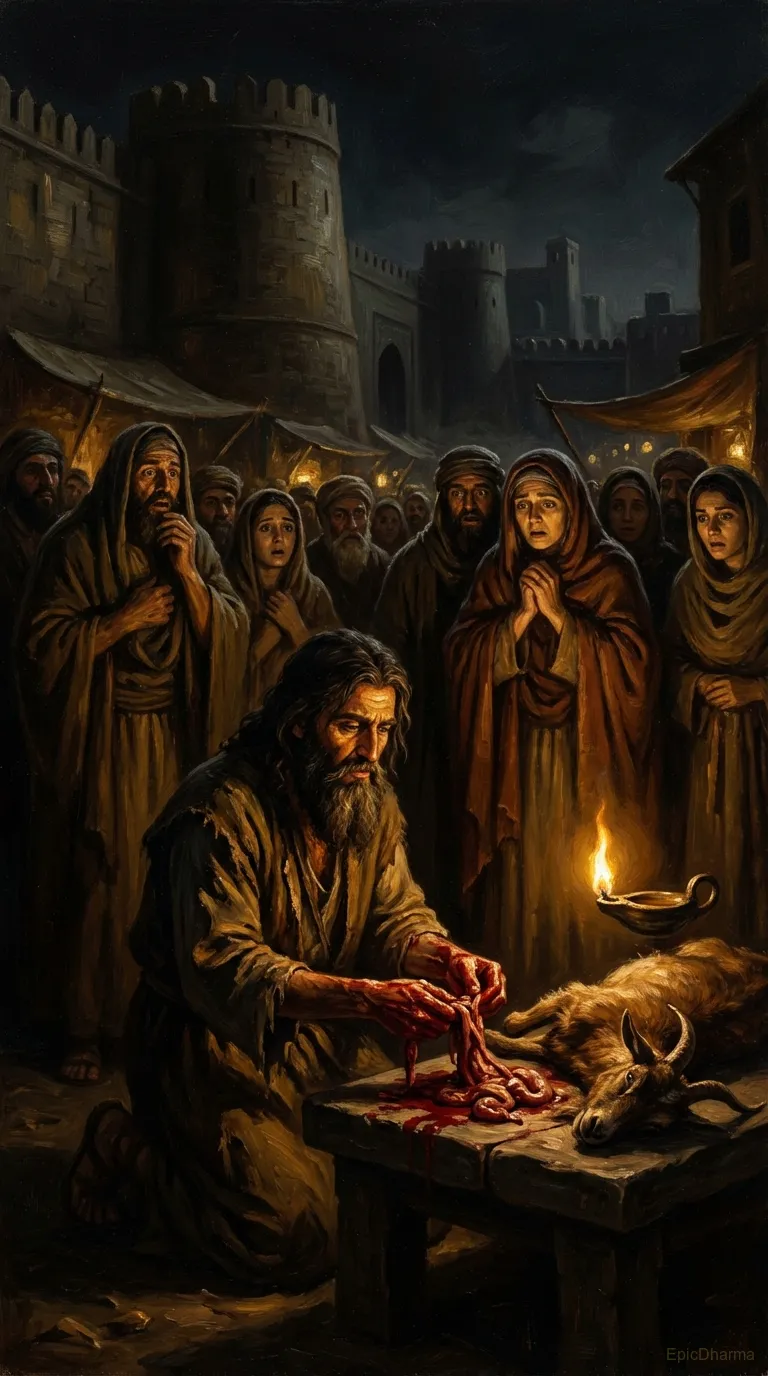
Sowing the Seeds of Dissension
Agitating the population behind enemy walls prior to a siege.

Enticement of Kings by Secret Contrivances
Tricking rival leaders out of their strongholds.
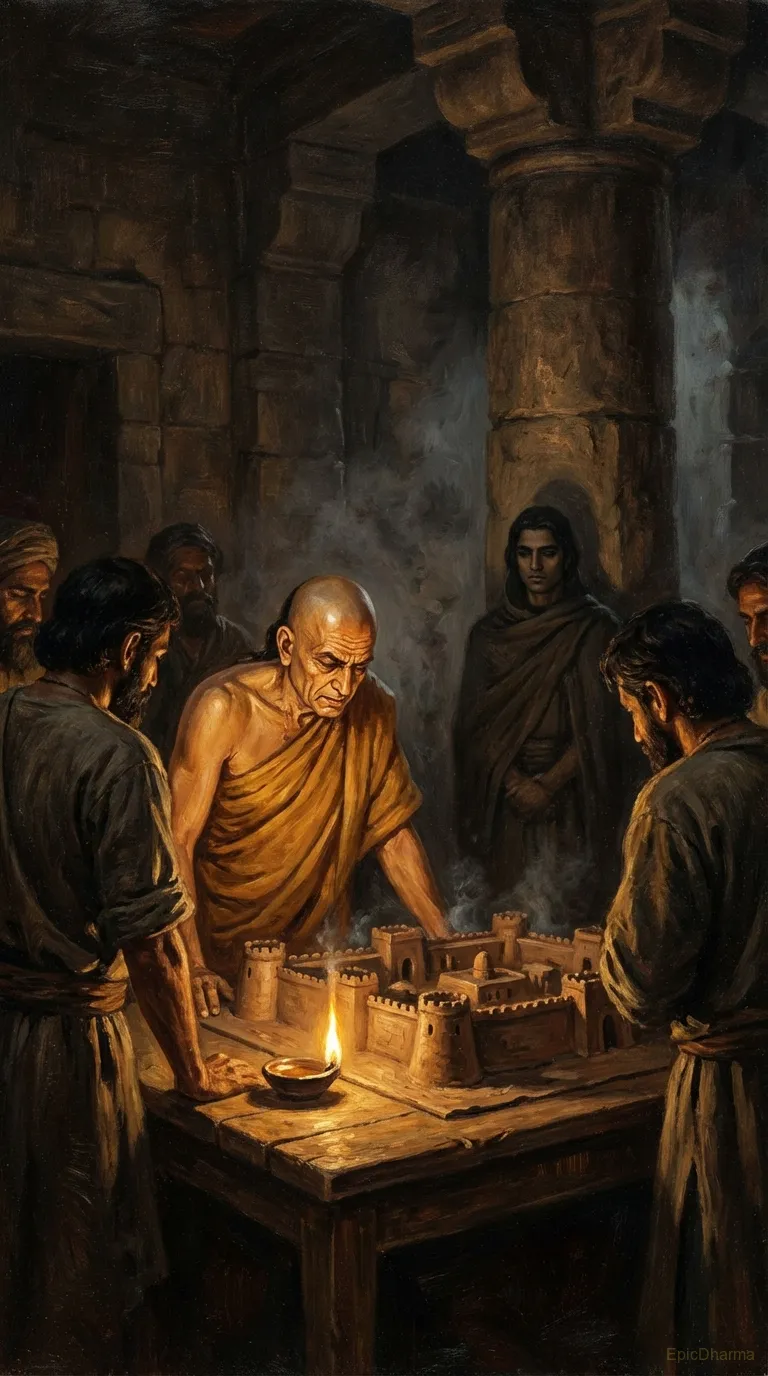
The Work of Spies in a Siege
Deploying hidden agents inside an encamped fortress.
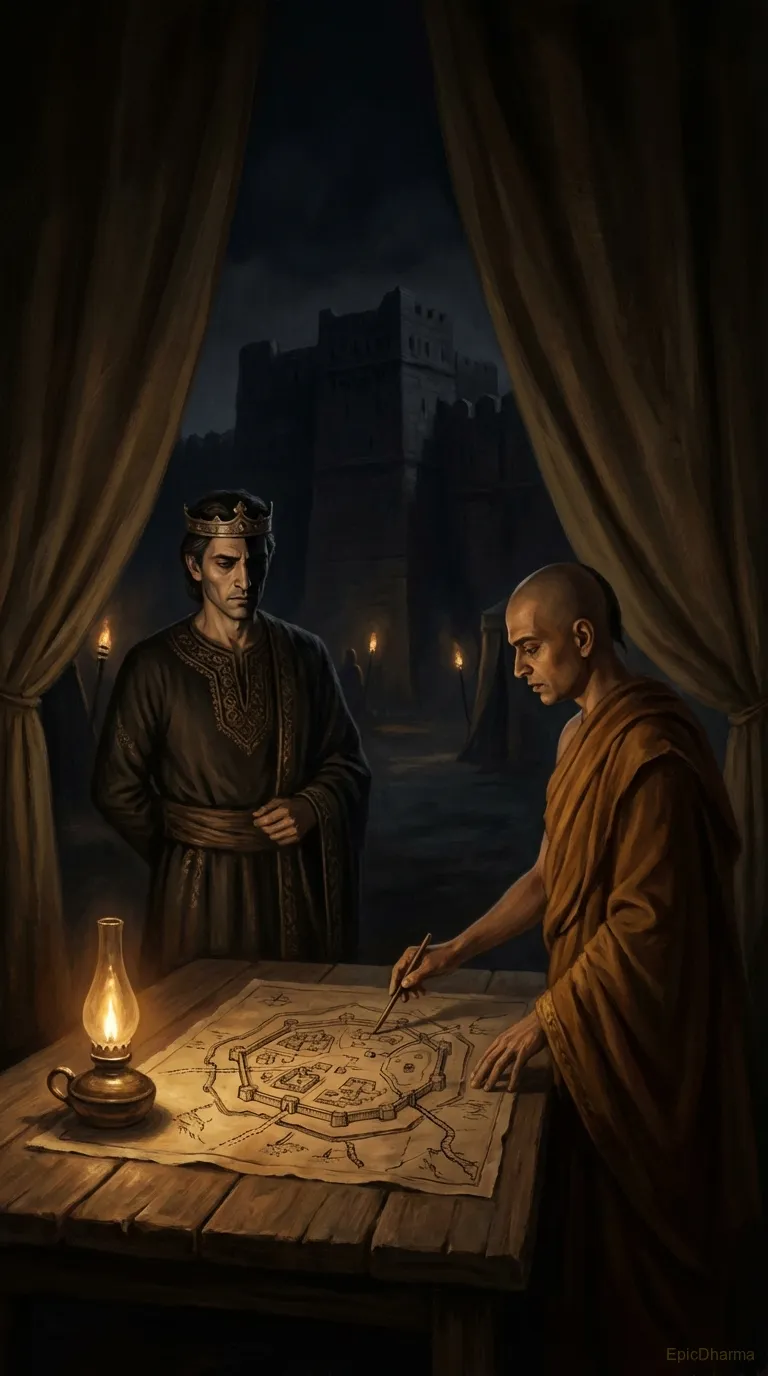
The Operation of a Siege
Military maneuvers and direct assaults to breach the fortified walls.

Restoration of Peace in a Conquered Country
Establishing governance and order in a newly annexed territory.
Secret Means
Aupanishadika4 chapters
Means to Injure an Enemy
Esoteric and chemical concoctions designed to inflict silent slaughter.

Wonderful and Delusive Contrivances
Manufacturing illusions and exploiting superstitions to control the masses.

Application of Medicines and Mantras
Incantations to cause blindness, illness, or death among enemy forces.

Remedies against Injuries
Treatments for countering an enemy’s poisonous weapons and dark stratagems.