The Book of the Dead
The ancient Egyptian Book of the Dead — the spells buried with the dead, the road through the Duat, the weighing of the heart, and the Field of Reeds — retold in clear modern English from E. A. Wallis Budge.
Short on Time?
The Spellbook for Eternity: One Soul’s Journey Through the Egyptian Afterlife
The Scribe’s Papyrus
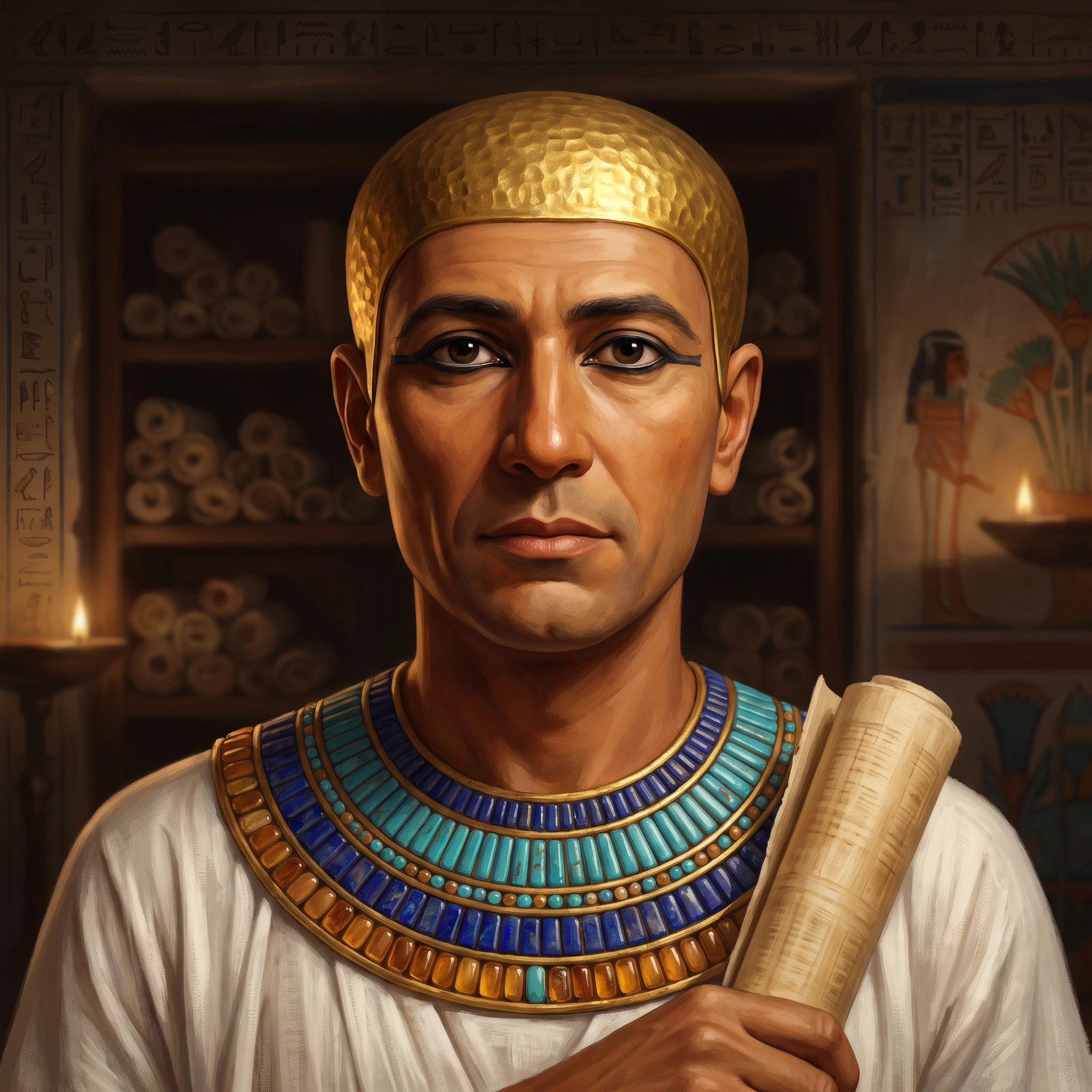
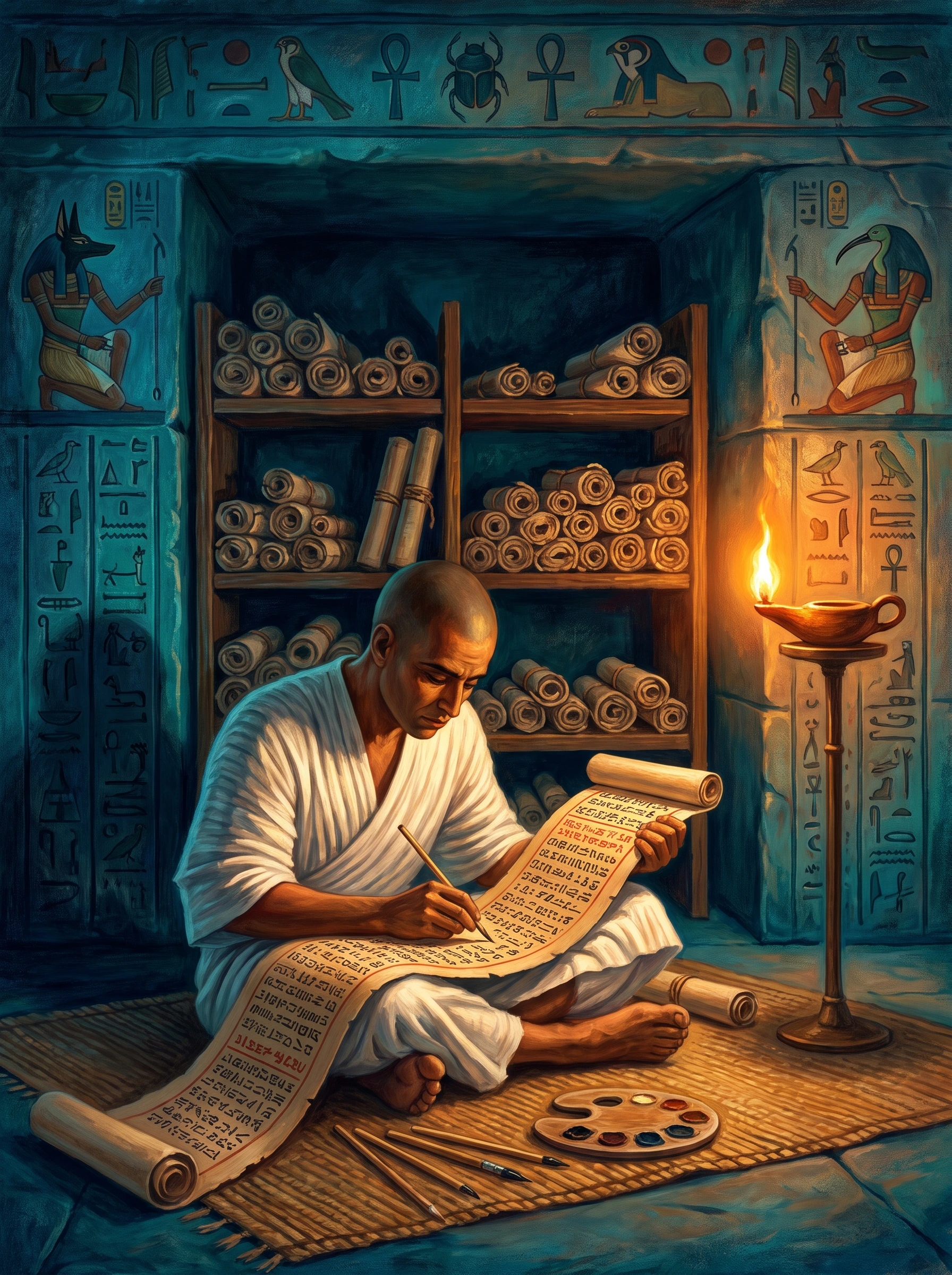
The Book of the Dead is not one book but a hoard of spells, hymns, and words of power, gathered over thousands of years and copied onto papyrus rolls that were buried with the dead — a traveler's guide for the most dangerous journey anyone would ever make.
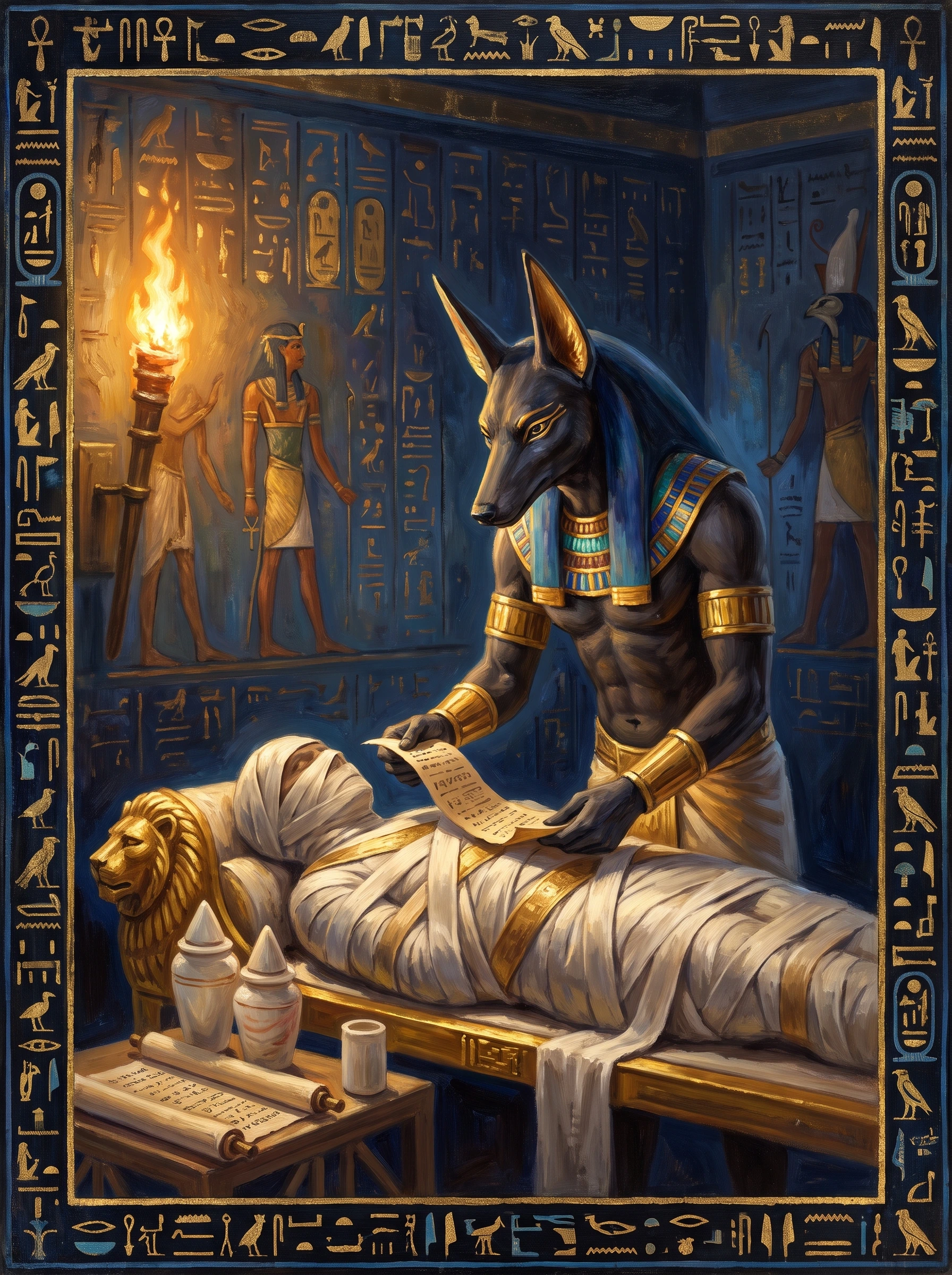
The House of Embalming
The dead body was cleansed, embalmed with spices and balsams, wrapped in hundreds of yards of linen, and sealed in stone — and then, at the tomb door, the Opening of the Mouth gave it back breath, sight, and speech for the road ahead.
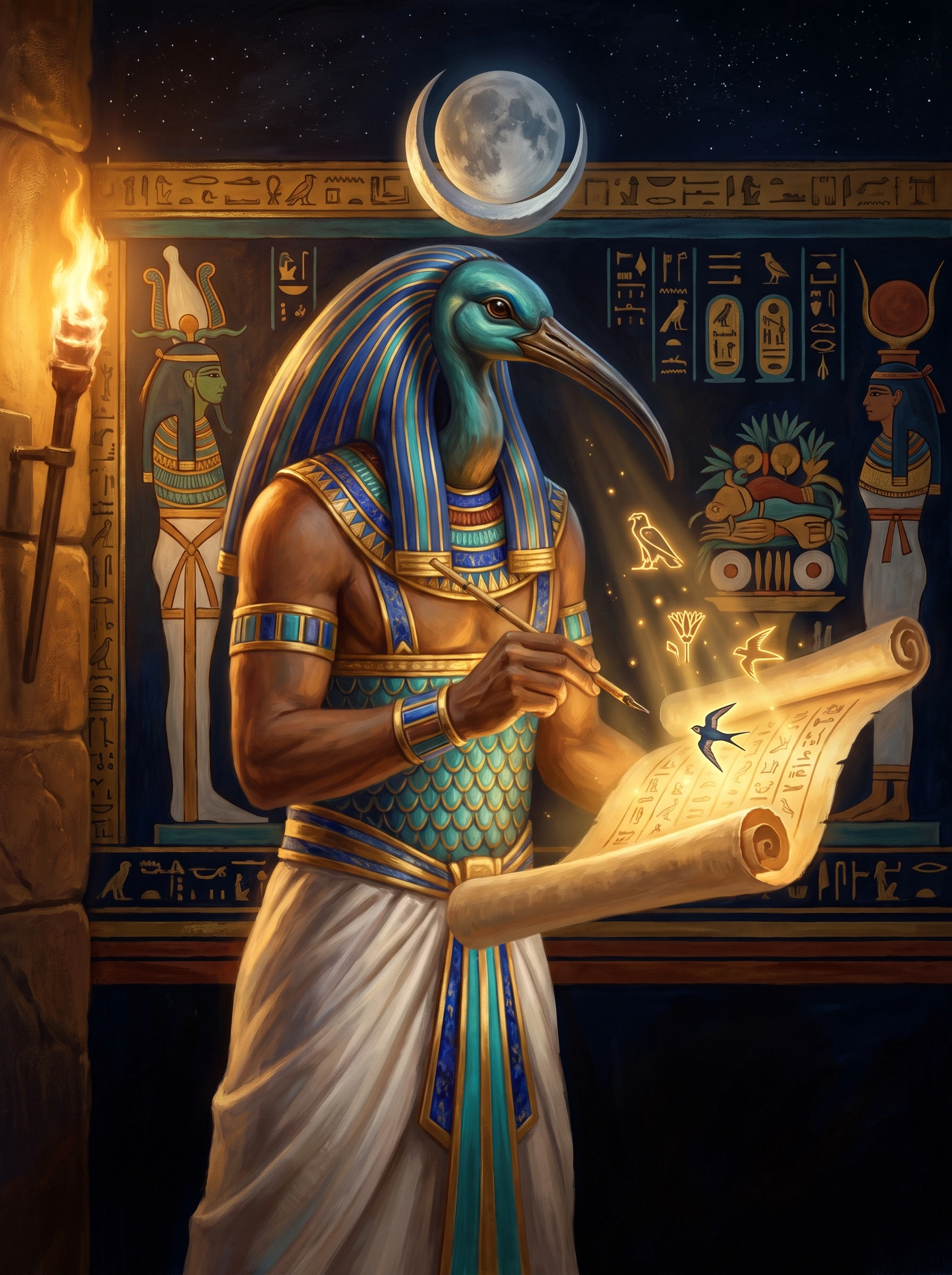
Coming Forth by Day
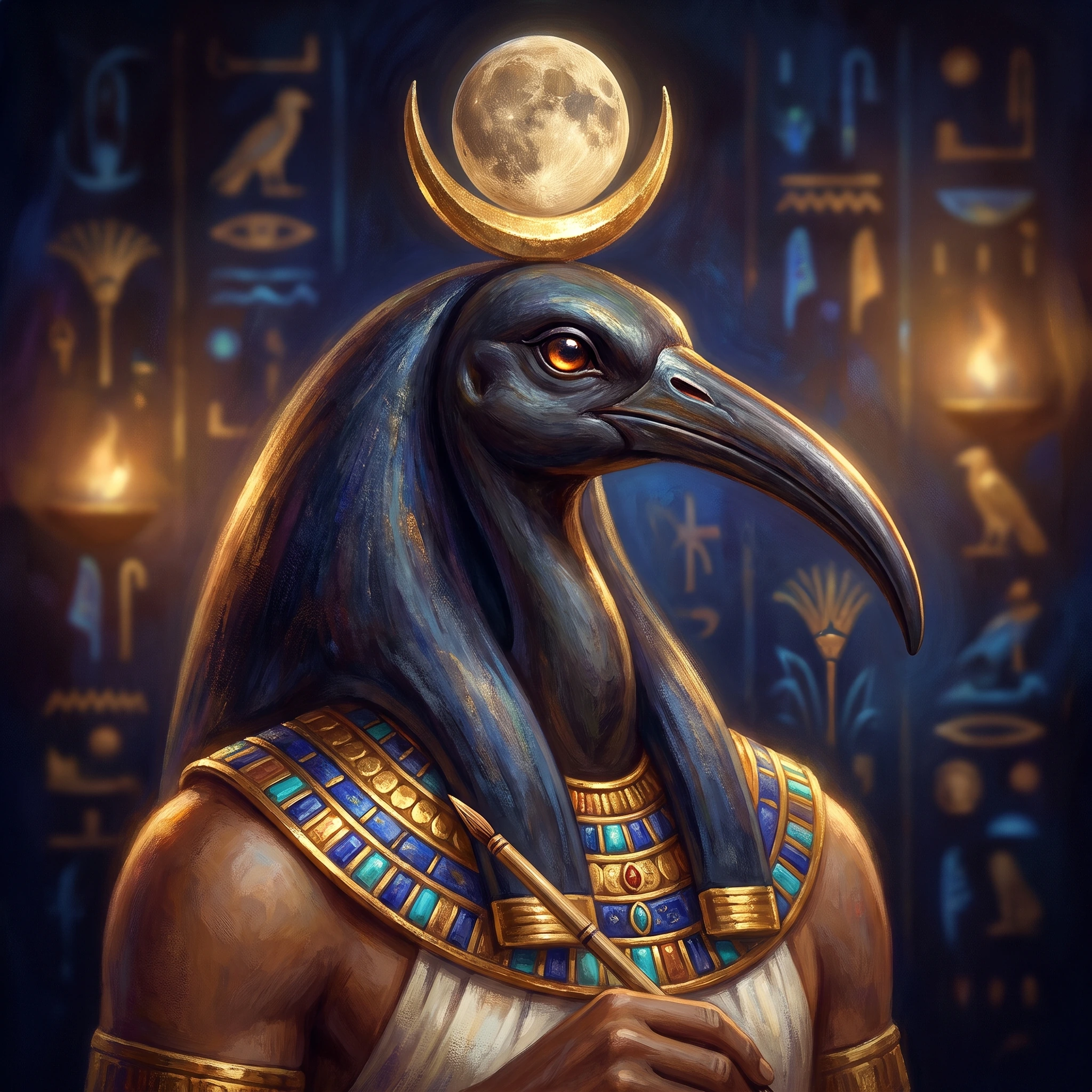
The Egyptians never called it the Book of the Dead. Its true name was the Chapters of Coming Forth by Day — spells written by Thoth himself, found under ancient kings, promising the soul free passage, any shape it pleased, and escape from the second death.
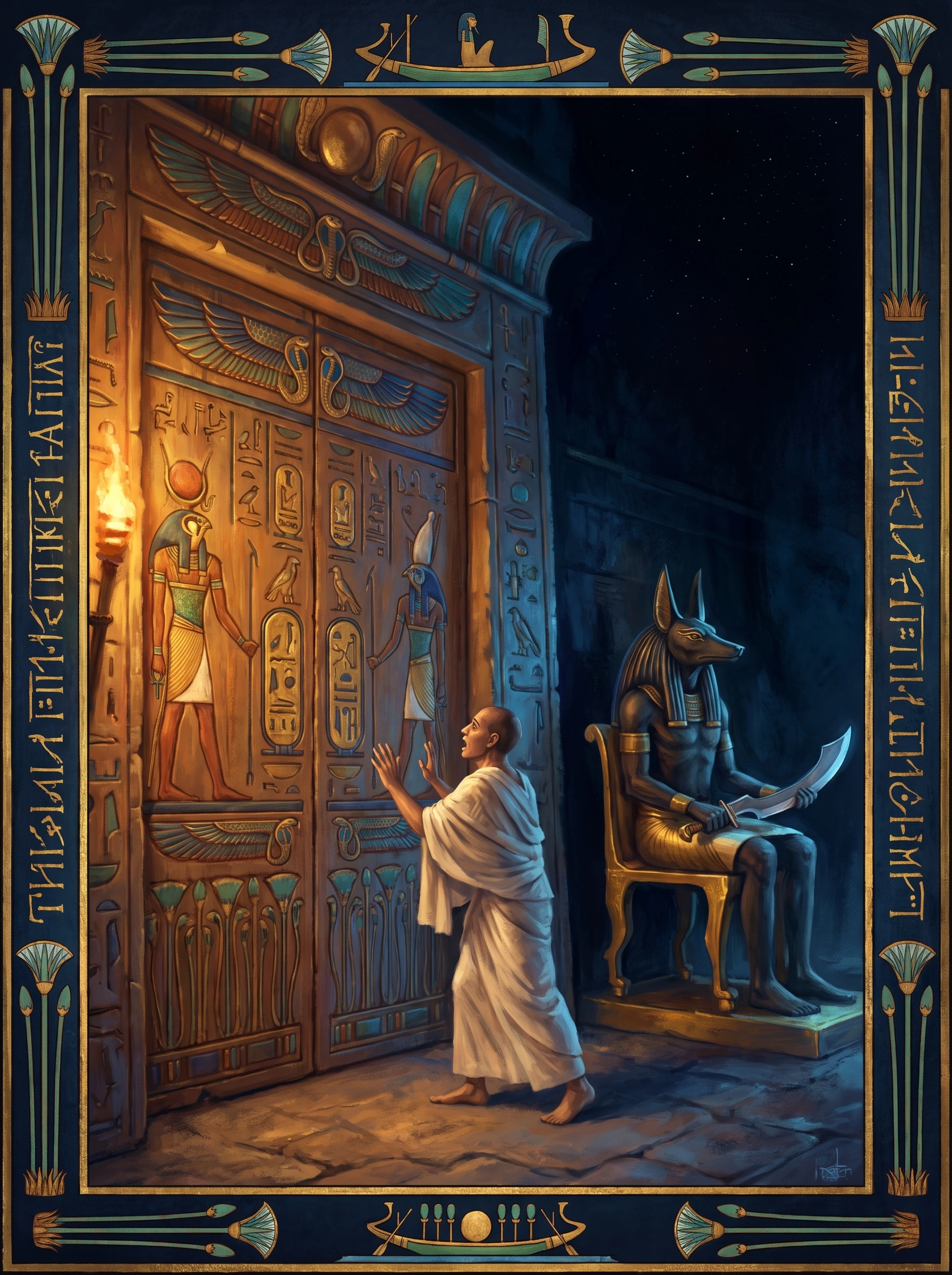
Into the Duat
Beyond the tomb lay the Duat — a dark land without water, air, or growing things, crossed by gated halls where a porter, a watchman, and a herald guarded every door. Nothing opened for strength or rank. Every gate opened for one thing only: its secret name.
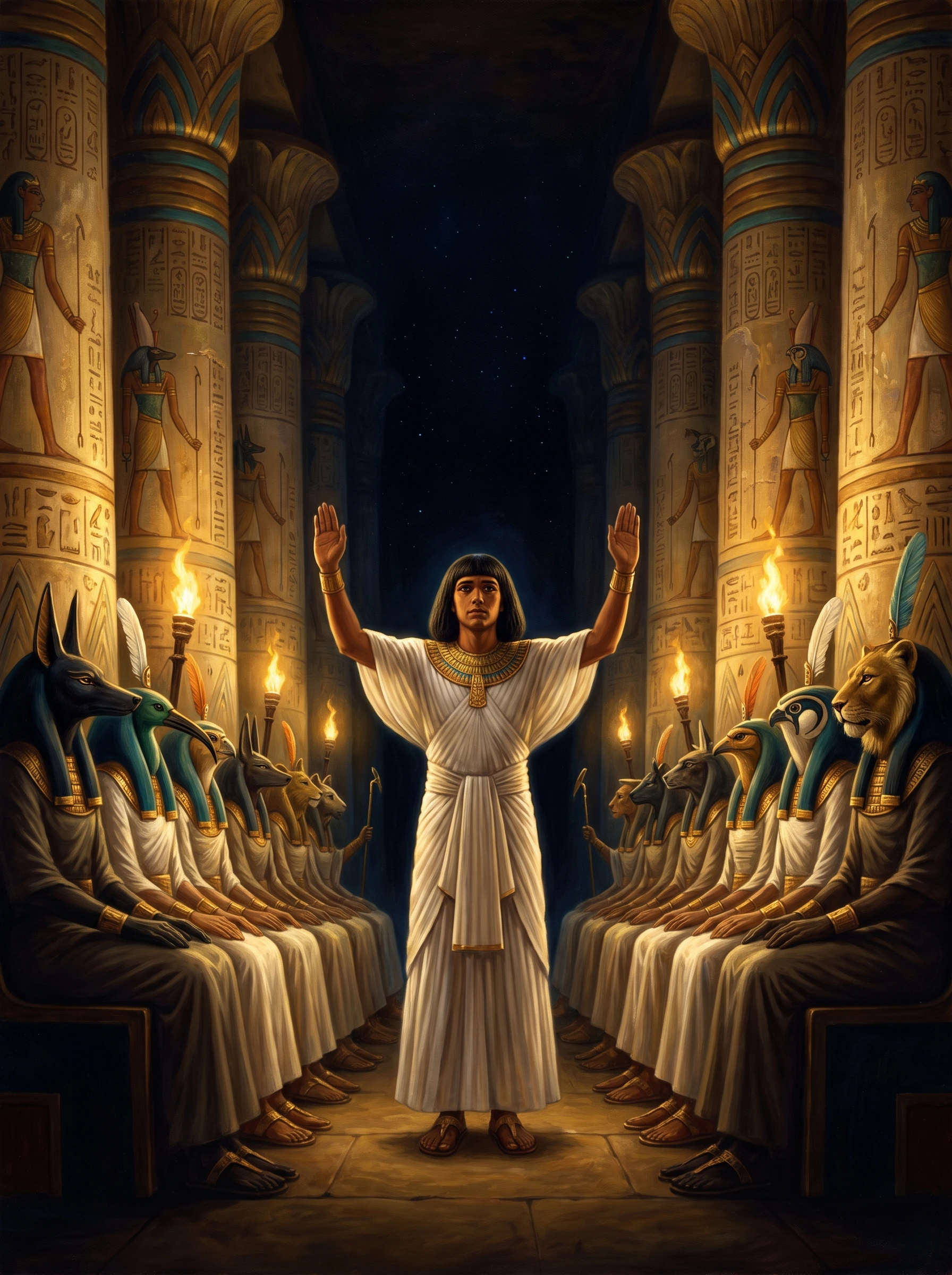
The Negative Confession
In the Hall of the Two Truths, before forty-two judges, the soul declares what it has never done — not stolen, not killed, not lied, not made anyone weep. A whole life examined plank by plank, and the measure is simple: the harm you did not do.
The Weighing of the Heart
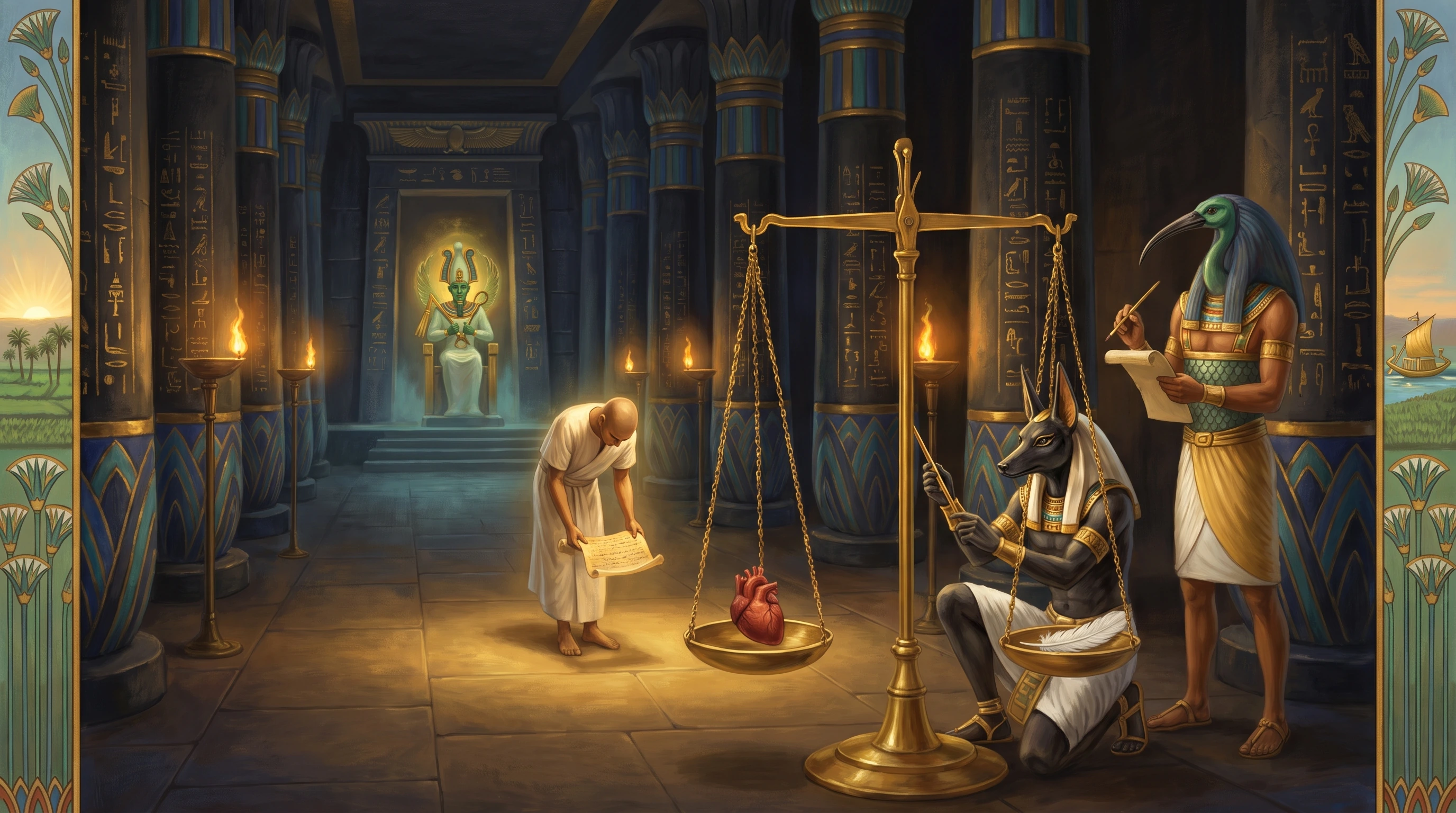
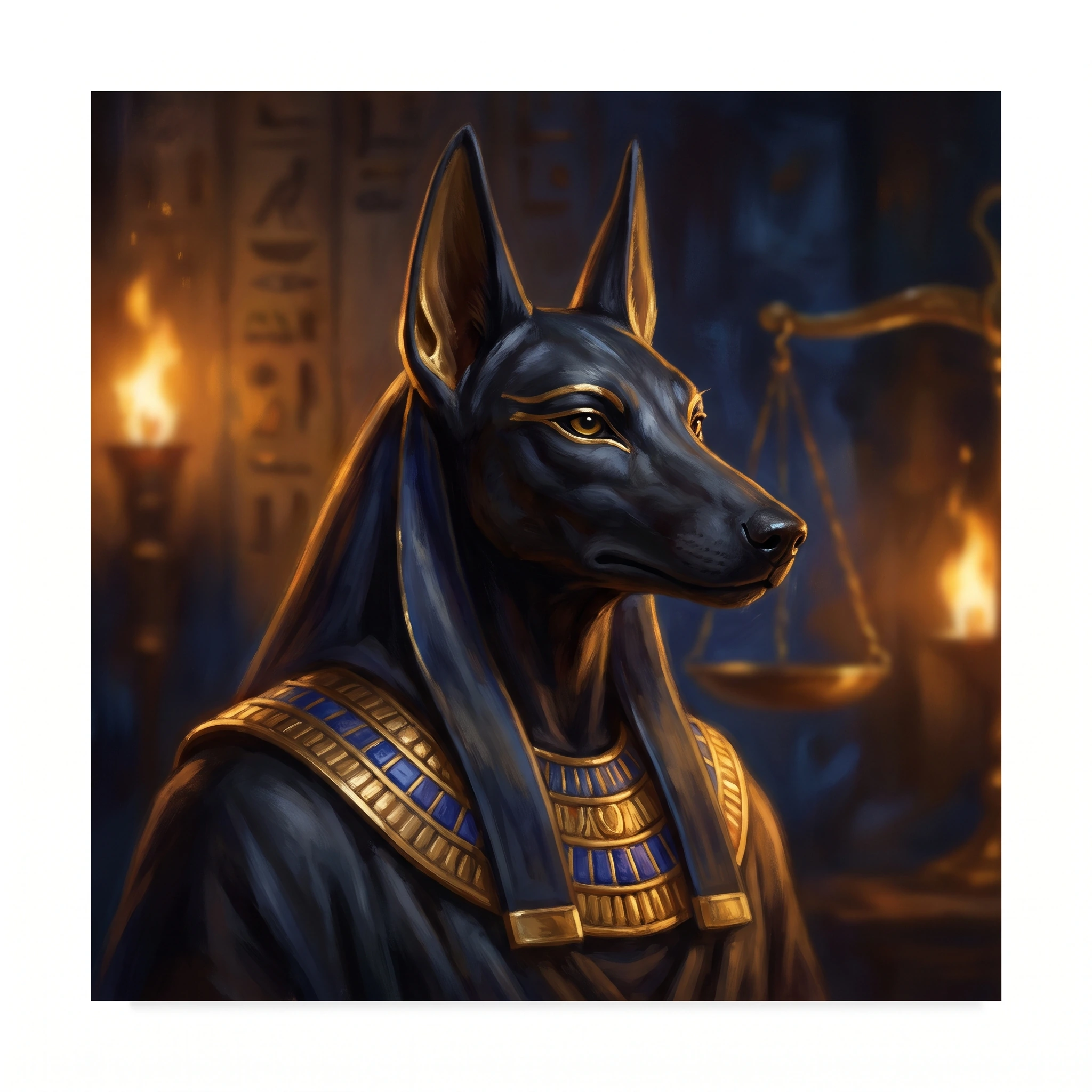
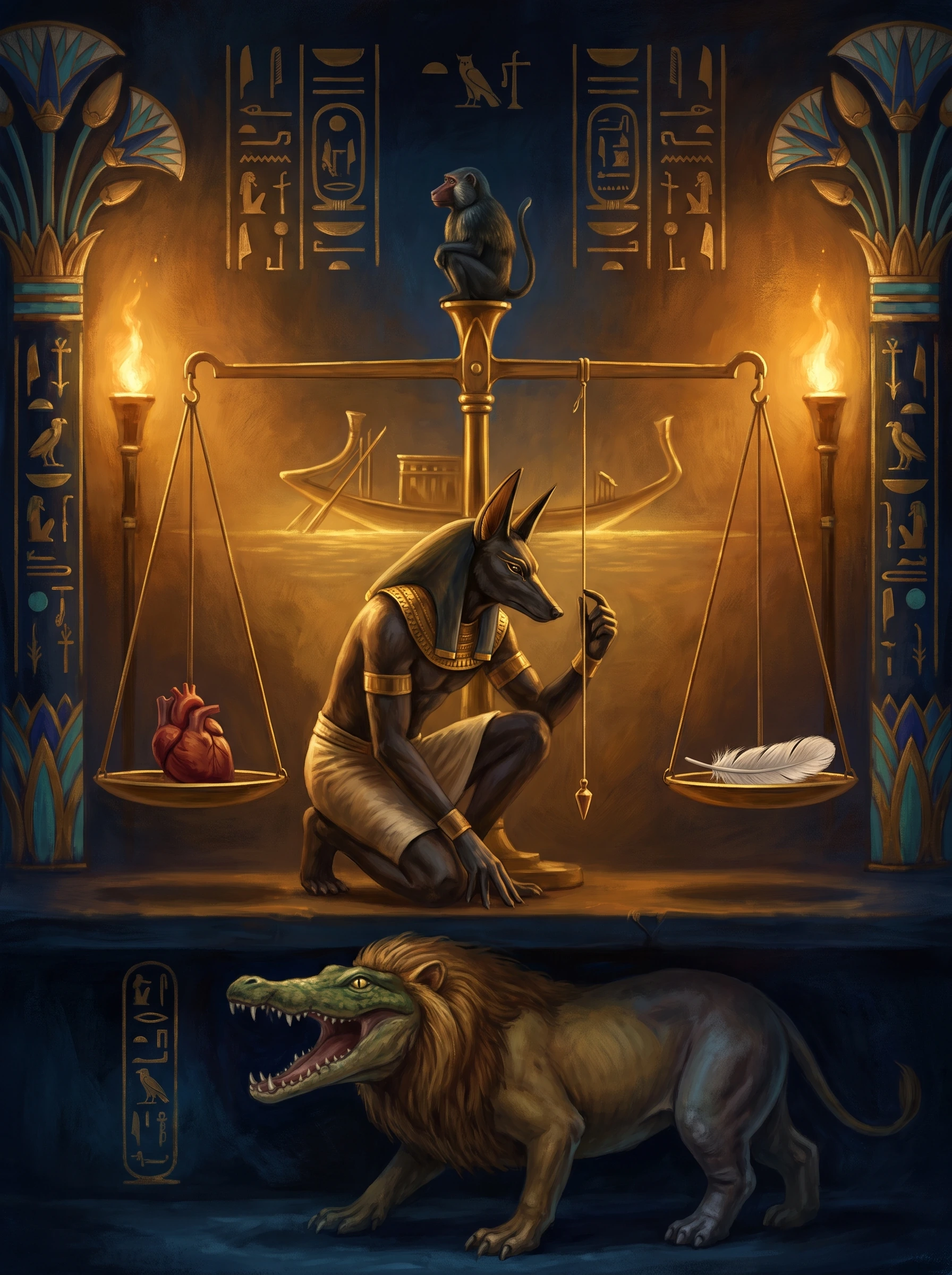
Anubis sets the heart on one pan of the great balance and the feather of Ma'at on the other. Thoth stands ready to record, and Ammit the Devourer waits beside the scale. The soul speaks to its own heart, begging it not to testify against him.
Before Osiris
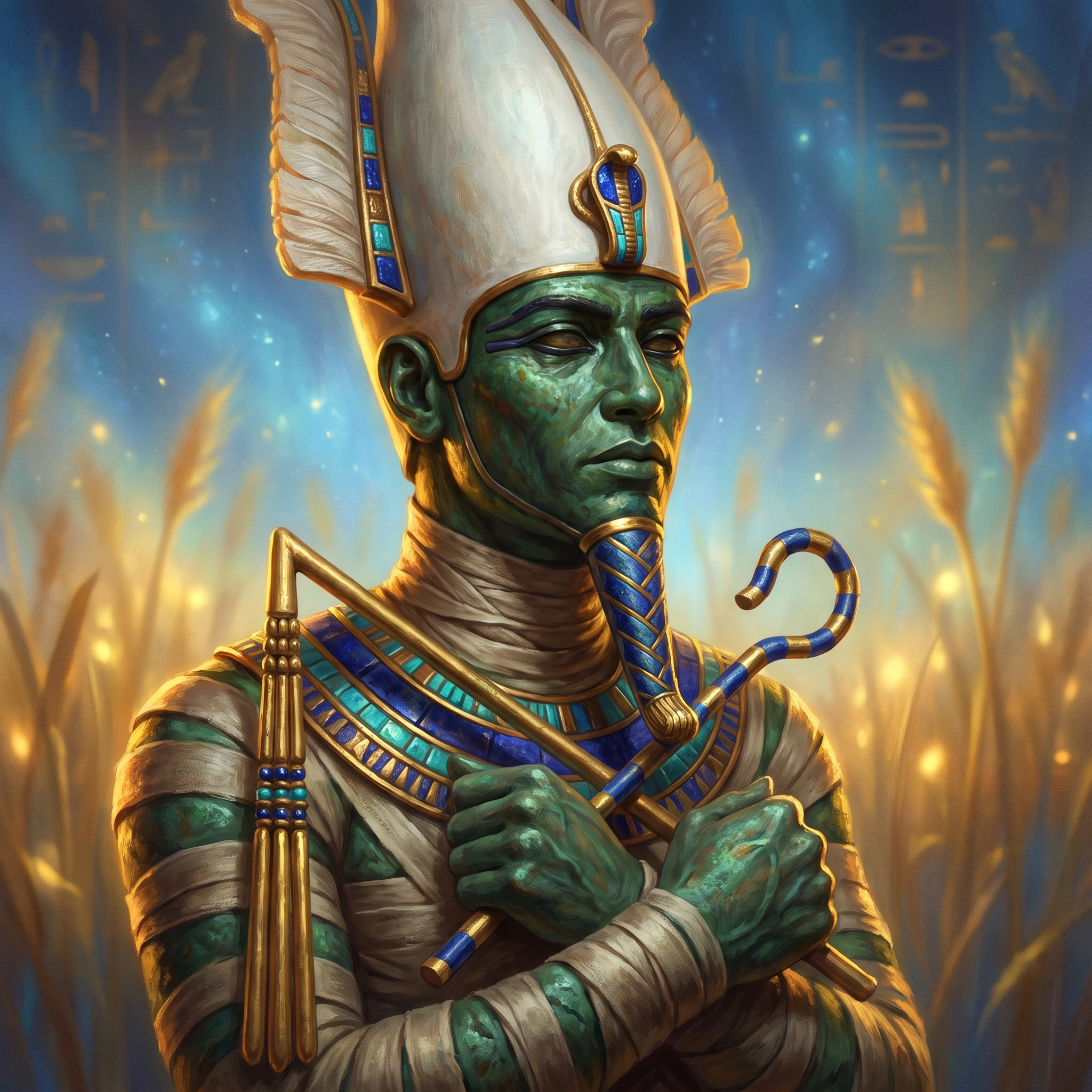
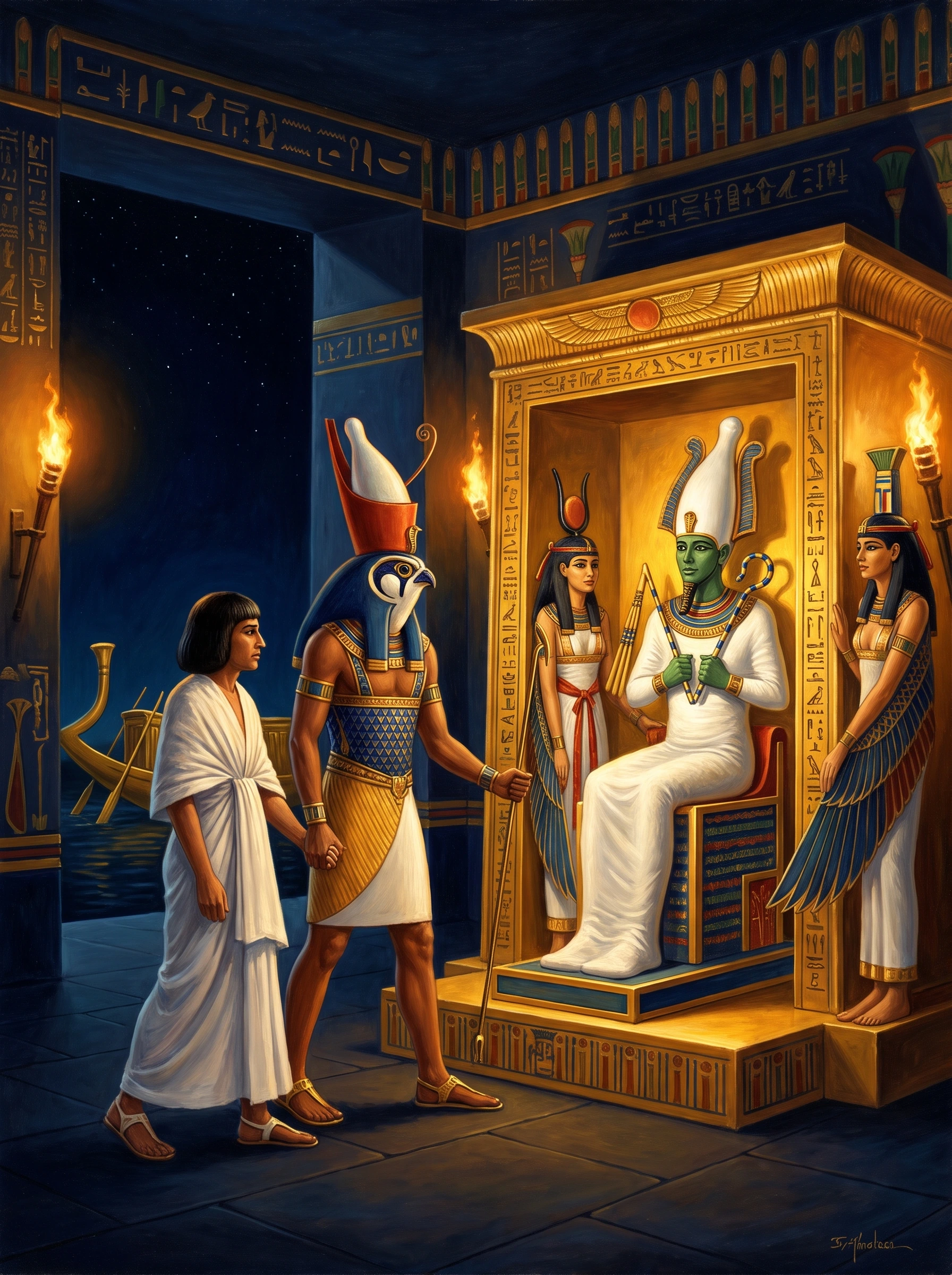
Horus leads the acquitted soul past the silent scale to the throne of Osiris — the murdered king who was tried, proved true of voice, and rose to rule the dead. From this day the soul carries the god's own name, and death has no more claim on it.
Perils of the Dark
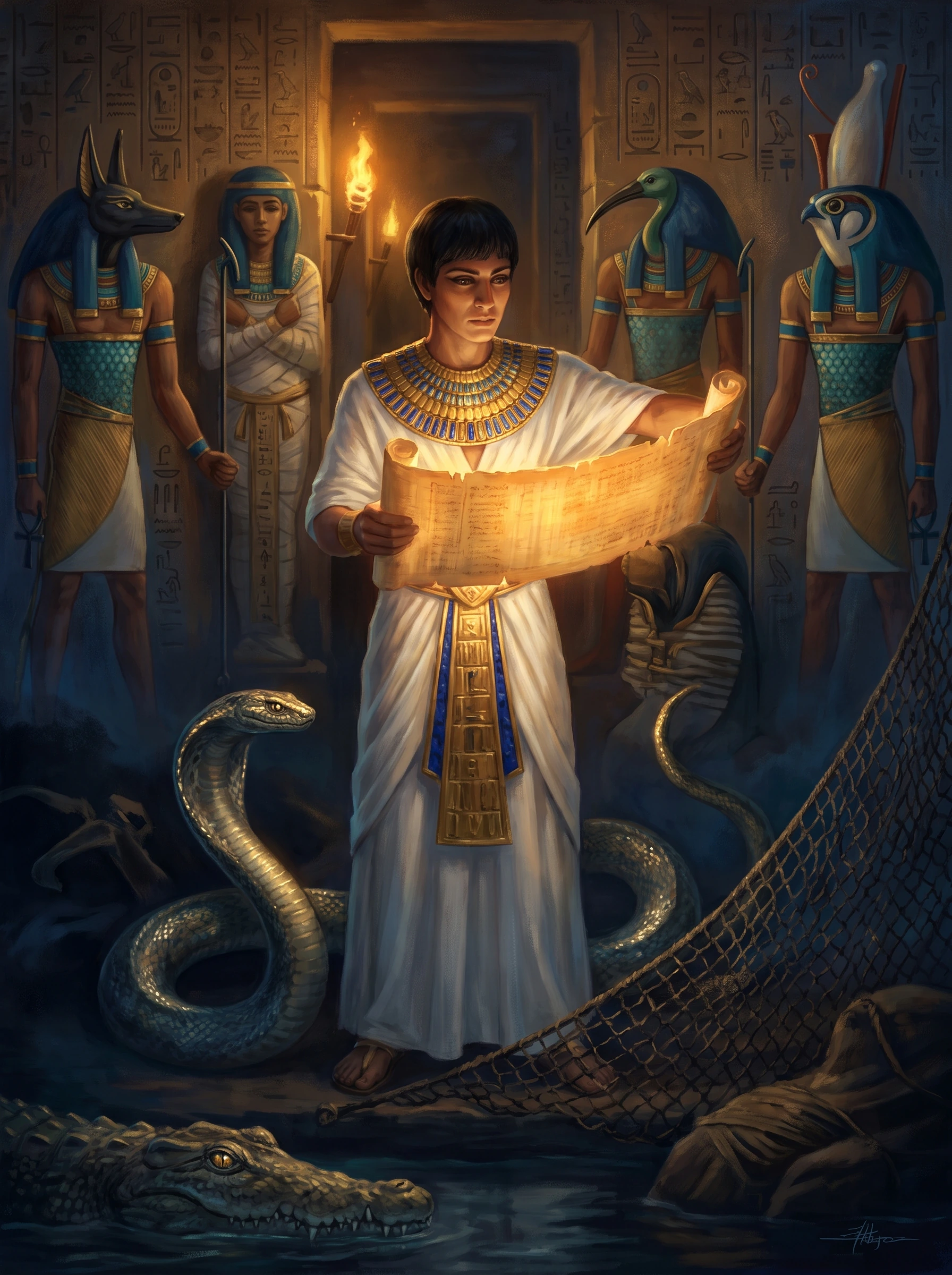
The Duat is full of hungers — crocodiles and serpents, a beetle that gnaws, a net stretched to snare souls, pools that scald liars, and gods who take heads. Against each peril the papyrus carries a spell, down to the mightiest of all: the spell against dying a second time.
The Field of Reeds
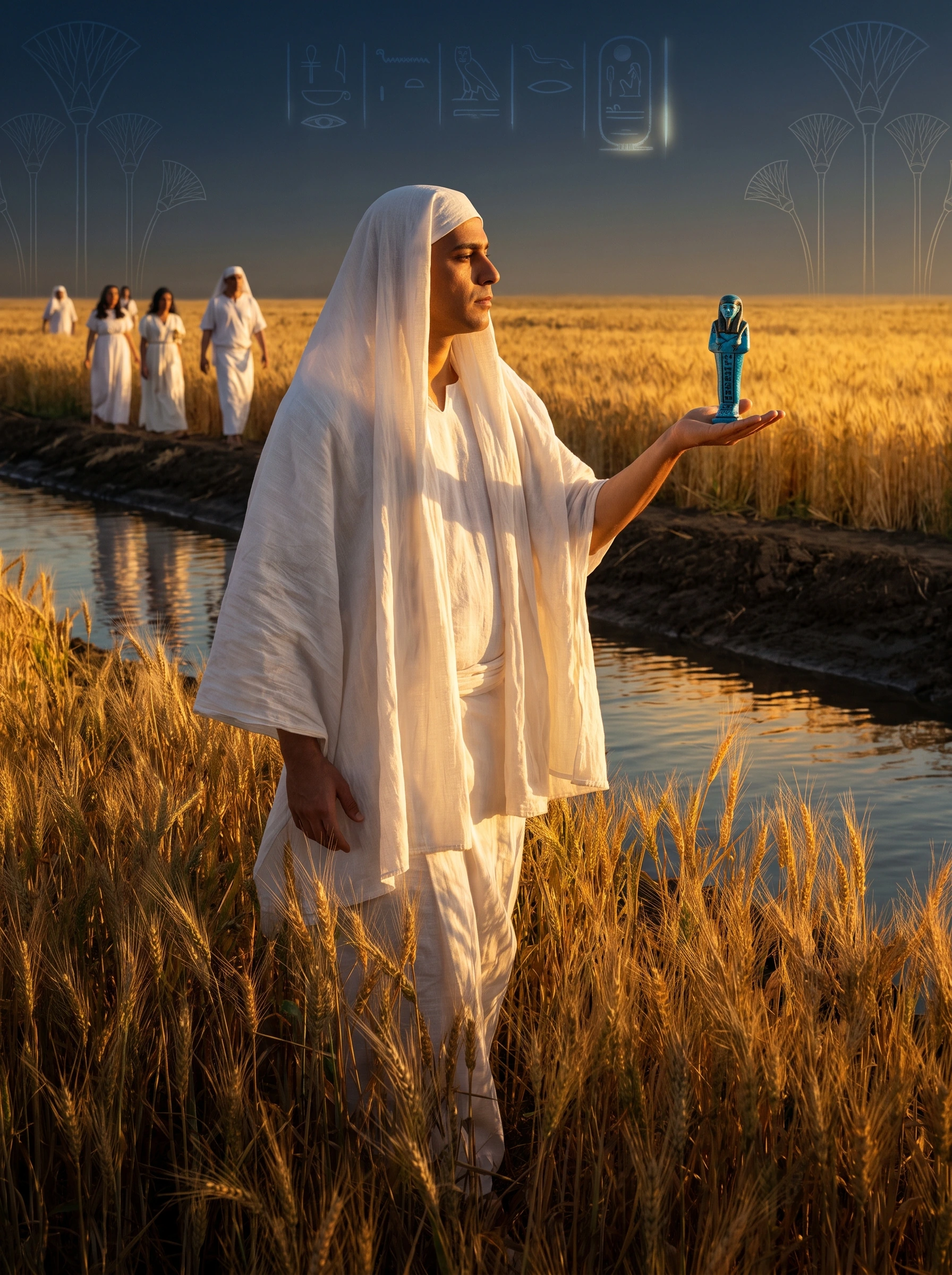
Paradise is a farm: the Field of Reeds, a perfected Egypt of clear canals and barley taller than a man, where the soul finds its ancestors waiting. And when there is work to do, the little shabti figures buried with the dead wake up and answer, 'Here I am.'
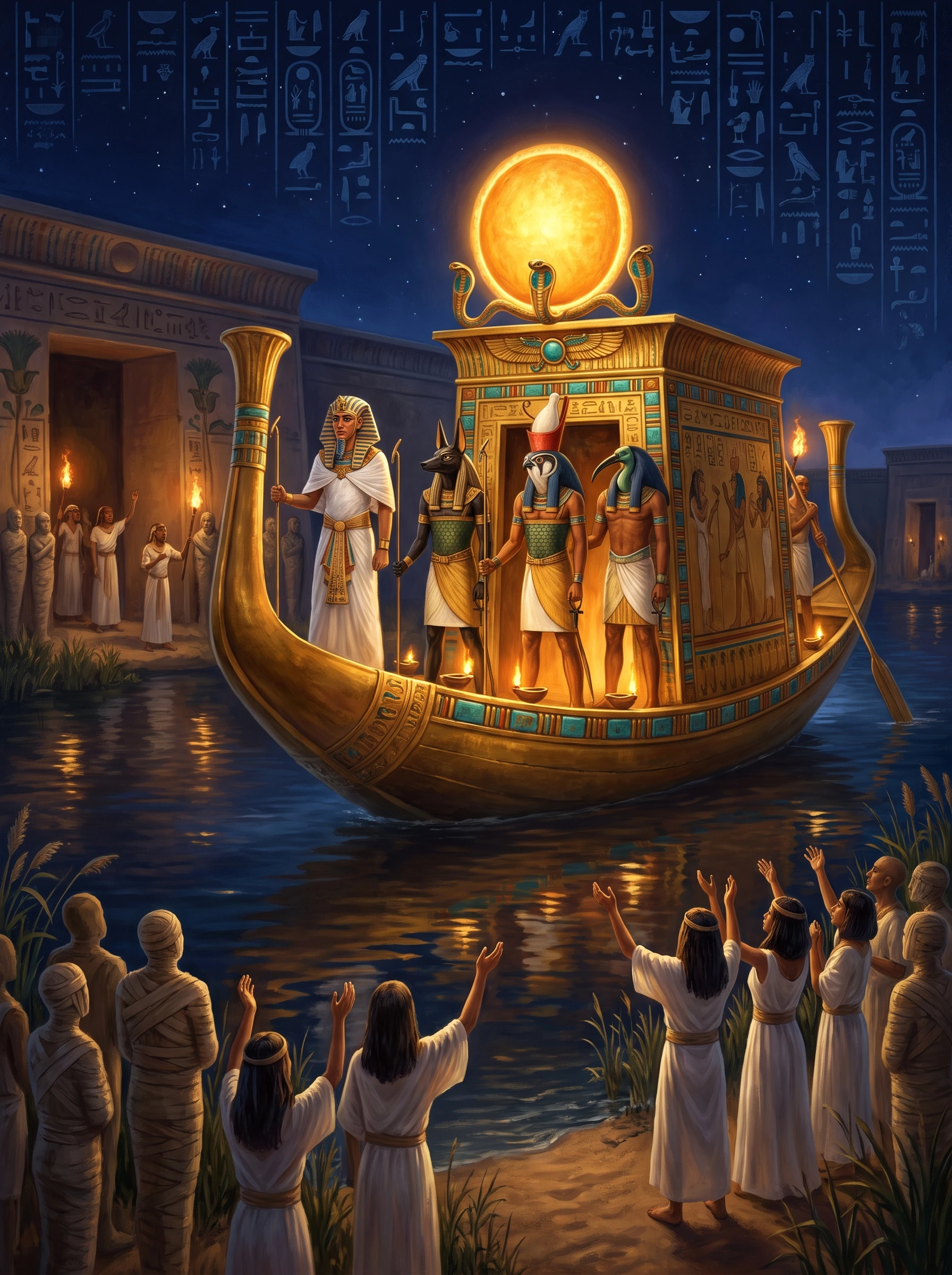
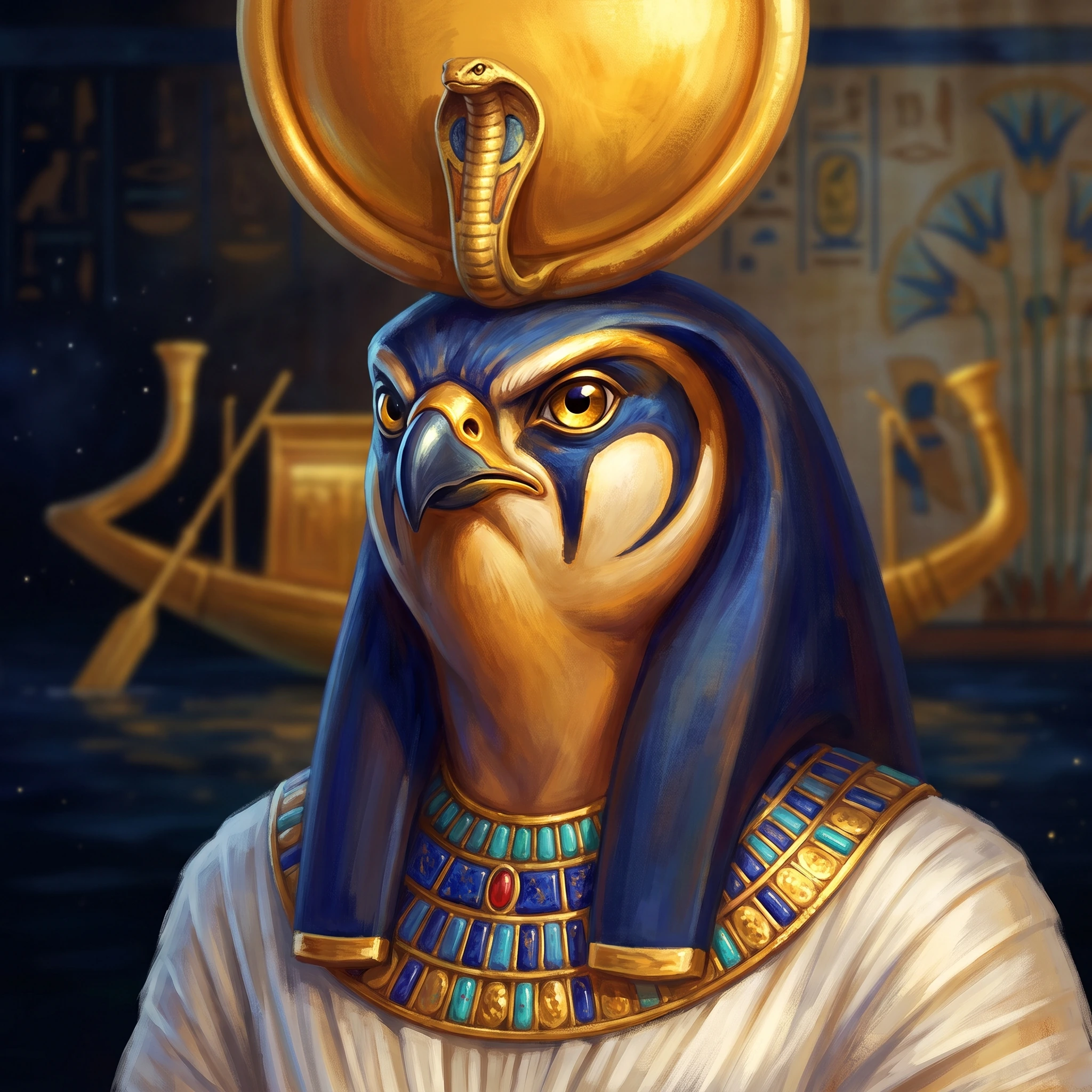
The Sun Barque
Every night Ra's golden boat sails down into the Duat, and the blessed dead crowd the banks to greet the light. The greatest promise in the whole papyrus is a seat in that boat — to ride with the sun forever, for millions of millions of years.