From Sangam Chieftains to the Lords of the Eastern Ocean
The thousand-year Chola arc in one sitting — a Tamil line that outlasted empires, revived itself under Vijayalaya, conquered the seas under Rajaraja and Rajendra, raised the tallest temples of its age, ran villages by secret ballot, traded with Song China, cast the dancing Shiva in bronze, and finally faded — leaving monuments the world still walks through.
Invoking the sacred fire...
# From Sangam Chieftains to the Lords of the Eastern Ocean
## The River and the Tiger
**Narrator:**
This is the story of a dynasty that began as one of three small Tamil houses on a southern river and ended, a thousand years later, as the only Indian power that ever sent a war fleet clean across the Bay of Bengal to topple a kingdom on the far shore. It is an epic of conquest and commerce, of granite towers raised to the height of mountains and of villages that chose their councils by drawing ballots from a pot. Much of it the wider world has forgotten. Almost none of it is small.
**Narrator:**
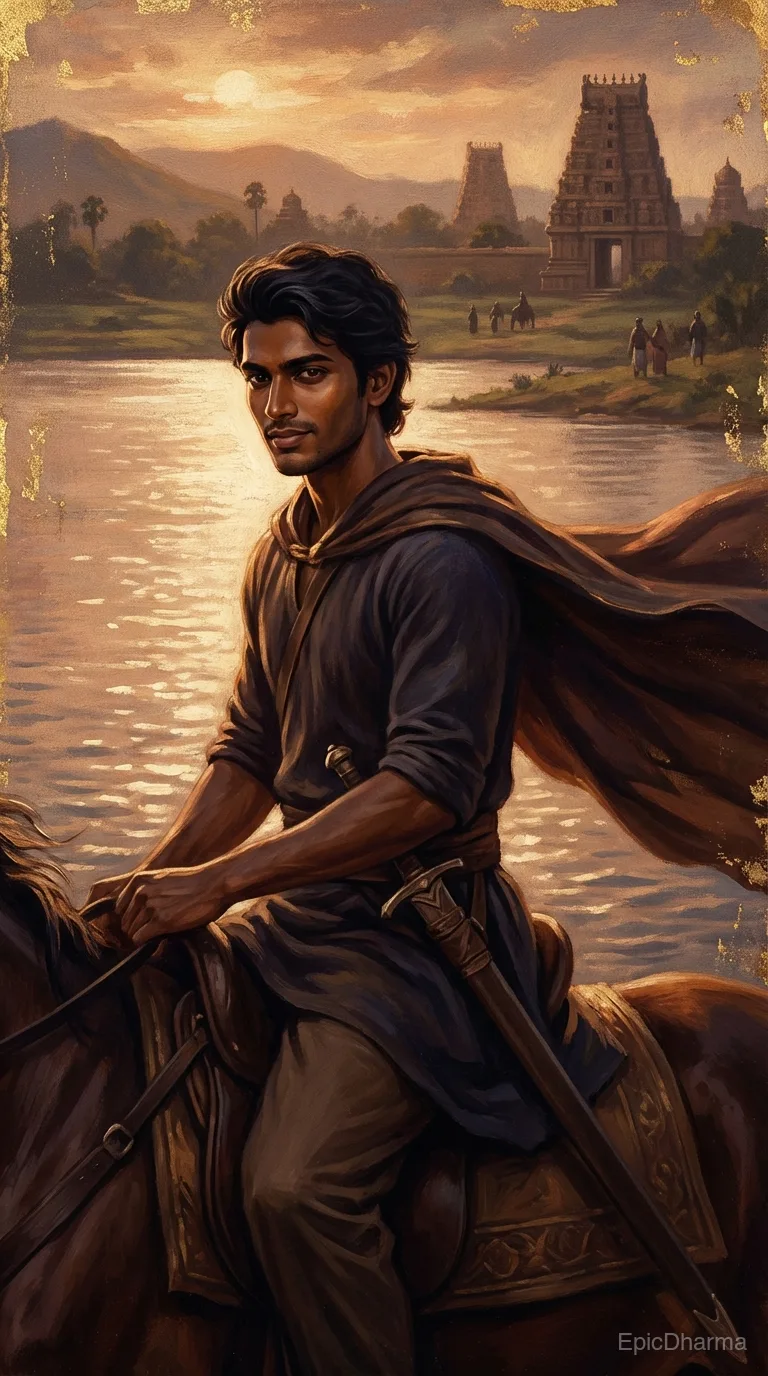
The Cholas were not, at first, an empire. In the early centuries of the common era — the age the Tamils remember through the poetry of their Sangam, the great gatherings of bards — they were one of the *muvendar*, the three crowned kings of the Tamil country, ruling alongside the Pandyas to the south and the Cheras to the west. Their power grew from a single, decisive geography: the delta of the Kaveri, a green ribbon of rice-land that the river renewed each year. Their early capital was Uraiyur, a port town famous for fine cotton, and they appear by name in the rock edicts of the Mauryan emperor Ashoka, far to the north, as a people already worth naming.
**Narrator:**
The most luminous of these early kings was Karikala. The bards credit him with breaking a coalition of Cheras and Pandyas at the field of Venni, and — more lastingly — with bending the Kaveri itself to human will. The Grand Anicut, the dam the Tamils call Kallanai, was thrown across the river to spread its floodwaters over the delta in a controlled flood. It is among the oldest water-regulating structures on earth still doing the work it was built for. But the Sangam glory faded. By around the fourth century, the Cholas were eclipsed — squeezed out by rising rivals, their tiger banner all but vanishing from the records. For some five hundred years they were minor chieftains clinging to scraps of ancestral land, biding their time. The memory of greatness, though, did not die.
## The Town That Became an Empire
**Narrator:**
Around 850, a conflict between the Pallavas and the Pandyas opened a crack, and an obscure Chola feudatory named Vijayalaya pushed through it. He seized the town of Thanjavur and raised a shrine there to the goddess. It was a modest beginning — one town, taken in the shadow of larger powers — but it was the hinge on which the whole later story turns. From Thanjavur his heirs built outward, brick by brick and battle by battle. His successors broke the Pallavas, pressed the Pandyas, and turned a captured market town into the seed of a state.
**Narrator:**
What grew on that seed was as much an idea of government as a sprawl of territory. The Cholas wrote everything down — on processed palm leaf for the working records and, for the permanent ones, cut into the stone walls of their temples. Land surveys fixed who owned what and who owed what; centralized revenue collection aimed at a rough fairness in taxation; officials were audited, and even reviews of official misconduct survive. These reforms quietly undercut the local lords and built the administrative spine an empire needs. By the late tenth century the Chola house was ready for a king who could carry it onto the world stage.
## Rajaraja the Great
**Narrator:**
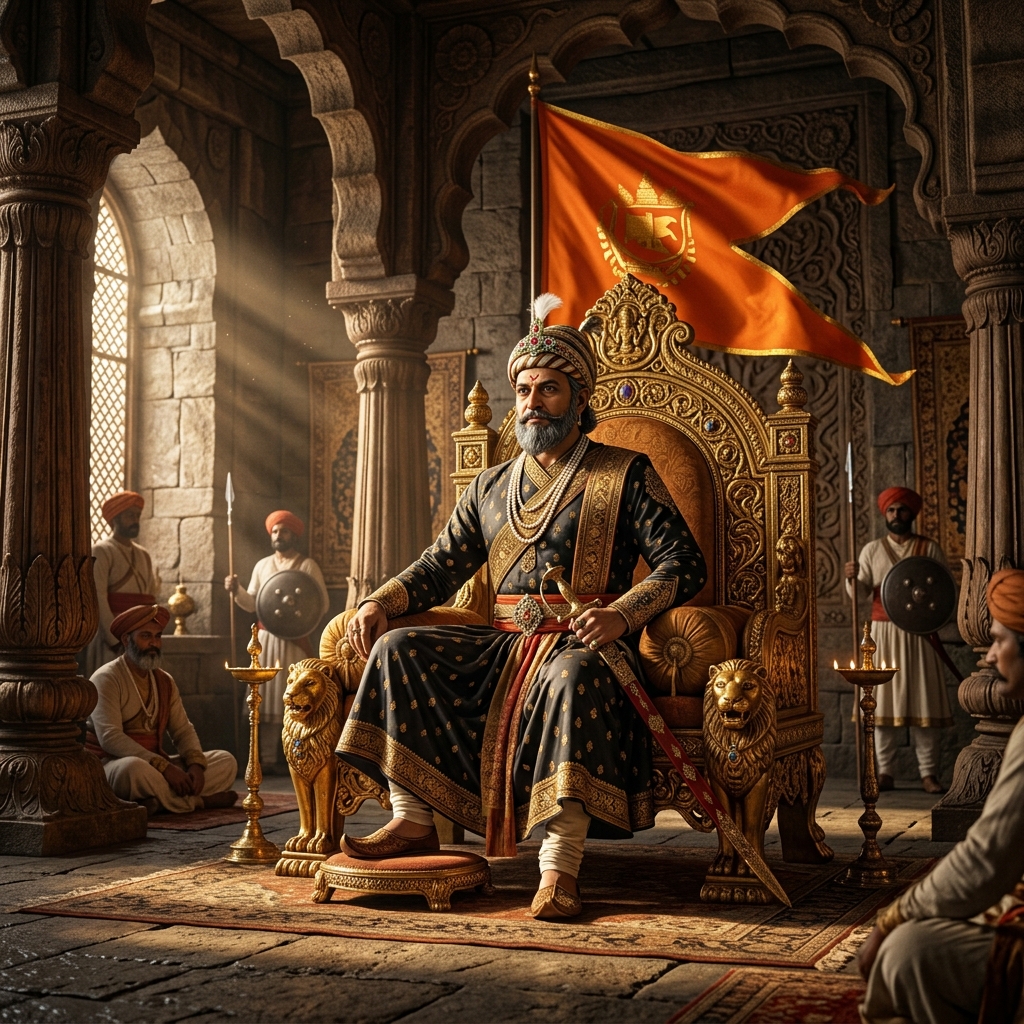
That king was Arulmozhivarman, who took the throne in 985 and the name by which history knows him: Rajaraja, the king of kings. In his twenty-nine years he turned a strong regional kingdom into the dominant power of the south. He smashed the Chera fleet — Tamil tradition remembers the burning of their ships at Kandalur Salai — and broke the Pandyas, fastening Chola control over the spice-rich Malabar coast. He crossed the strait and annexed the northern half of Sri Lanka. He pushed north against the powerful Western Chalukyas. We should not soften what conquest meant: navies were burned, cities were taken, and rival dynasties were extinguished. The golden age was built on hard war.
**Narrator:**
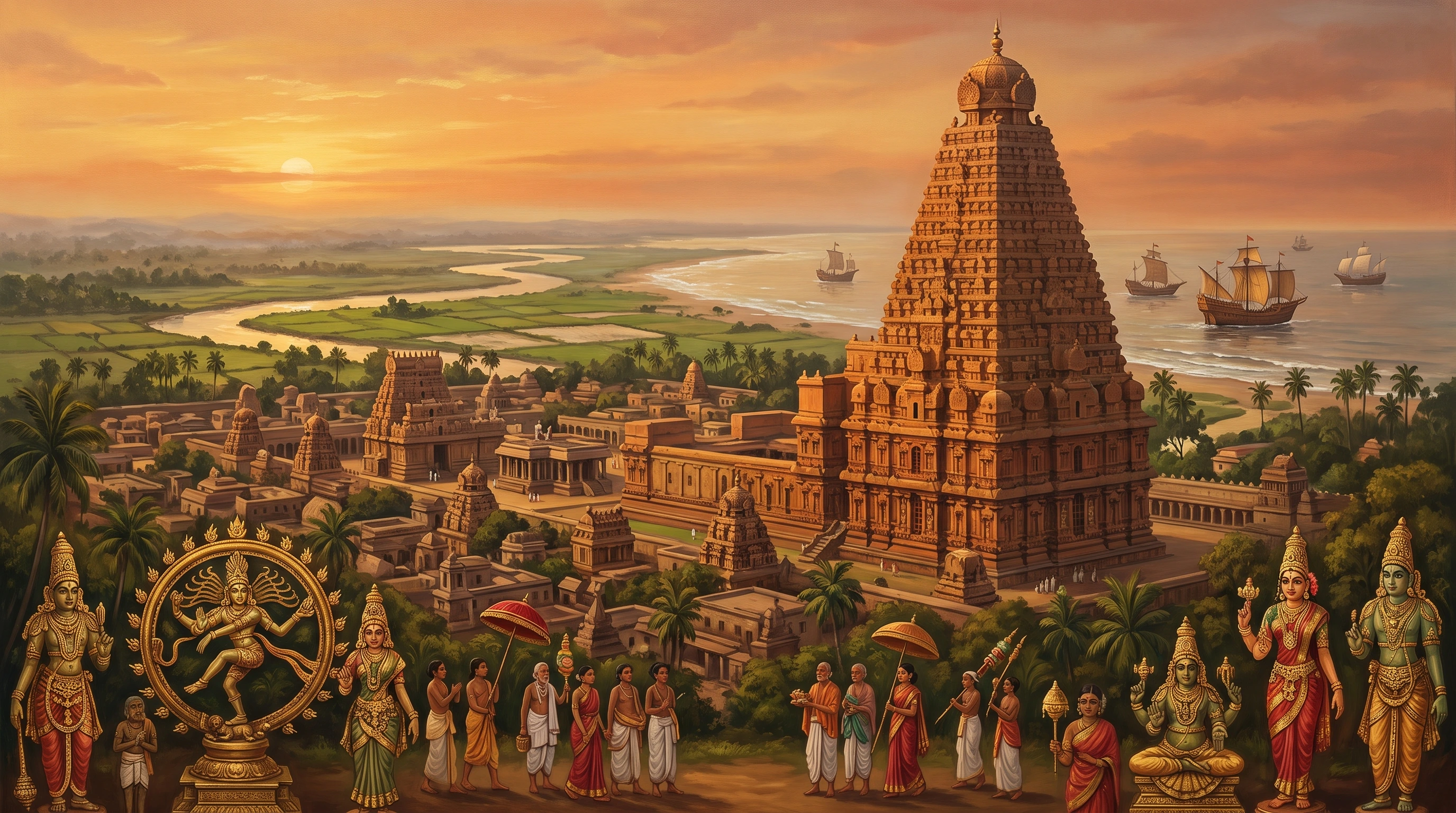
But Rajaraja's genius was not only military. He was a meticulous administrator — the great land survey, the ordering of the empire into provinces and districts and self-governing villages, all bear his mark. And he left a monument that still measures his ambition for anyone who stands beneath it: the Brihadeeswara temple at Thanjavur, consecrated in 1010, its great tower of granite rising more than sixty metres, crowned by a single carved capstone. A thousand years on, it is still standing, still in worship. In that one structure Rajaraja fused faith, power, and prosperity into stone.
**Rajaraja:**
"Let the temple stand higher than any in the land — so that when a man looks up at the god, he looks up also at the king who raised the god's house."
## Rajendra and the Eastern Ocean
**Narrator:**
If the father was the great consolidator, the son was the great conqueror. Rajendra I came to the throne in 1014, already a seasoned general from campaigns under his father, and his gaze fixed on horizons no Chola had reached. He finished the conquest of Sri Lanka, occupied the Maldives, and pushed Chola reach over the Andaman waters. Then, around 1023, he did something extravagant and deliberate: he marched an army the length of eastern India, all the way to the Ganga, defeating Kalinga and the Pala king of Bengal on the way. He had vessels of the river's sacred water carried back to the south and earned a title to ring through the inscriptions — Gangaikonda Chola, the Chola who took the Ganga. To house the victory he built a new capital, Gangaikonda Cholapuram, and crowned it with a second great temple to Shiva, a deliberate rival to his father's at Thanjavur.
**Narrator:**
And then he turned to the sea, to the single feat that makes the Cholas unique among Indian dynasties. Across the Bay of Bengal lay Srivijaya, a Malay-Sumatran maritime empire that held the Strait of Malacca — the chokepoint through which all trade between India and China had to pass. As long-distance shipping boomed, fed by the rising Song dynasty in China and the Fatimids in Egypt, Srivijaya squeezed the route: tolls, obstruction, even pirates set loose on Tamil shipping. Chola ports were being made redundant. In 1025, Rajendra answered with the unthinkable for a land power — a full amphibious invasion across open ocean.
**Narrator:**
The fleet struck with shocking speed. Chola inscriptions list more than a dozen ports stormed across the archipelago — Kadaram, the capital Palembang, Pannai, Malaiyur, and others scattered through Sumatra and the Malay peninsula. The Srivijaya king was taken captive. It was the high-water mark of Chola power, and Rajendra carried home a new epithet, Kadaram Kondan — conqueror of Kadaram, the place we now call Kedah in Malaysia. The campaign was, by its own measure, a complete and merciless success: a distant, prosperous, centuries-old realm broken open in a matter of months so that the road to China would run on Chola terms.
**Rajendra:**
"My father took the Ganga and made it bow. I will take the ocean — and make even the far shore pay toll to the Tiger."
## Masters of the Monsoon
**Narrator:**
How does a delta kingdom become master of an ocean? Not by accident. The Cholas built a blue-water navy — hundreds of ships, by the chroniclers' count — capable not just of guarding the coast but of projecting force across the open Bay. Rajaraja had brought in Chinese and Arab shipwrights to push the technology forward: hulls compartmented to survive rough water, the mariner's compass, and incendiary weapons not unlike the Greek fire of the Byzantines. Above all, the Chola captains read the monsoon — sailing with the seasonal winds that carry a ship east and bring it home again.
**Narrator:**
The 1025 victory itself turned on that seamanship. The Srivijaya fleet waited at the mouth of the Strait of Malacca, expecting the Cholas head-on. Instead the main fleet swung *south* of Sumatra, through waters thought too rough to risk during the monsoon, and came at the southern capital from behind. The defenders' blind spot was reasonable — no one had moved a war fleet that way before. That was precisely why it worked. The Chola navy was a fusion of royal warships and the private fleets of the merchant guilds, and for a few generations it made the Bay of Bengal, in the phrase historians like, a Chola lake.
## Mountains of Stone, Gods in Bronze
**Narrator:**
The wealth that war and trade poured into the south did not all go to fleets and armies. A great share of it was turned into art, and the Cholas became among the finest patrons of architecture and sculpture India has known. Their temples are a Dravidian style at its peak — soaring towers over the sanctum, vast courtyards, every surface carved with gods and kings. Three survive together as the Great Living Chola Temples, inscribed by UNESCO and, remarkably, still in daily worship: Rajaraja's Brihadeeswara at Thanjavur, Rajendra's temple at Gangaikonda Cholapuram, and the later, jewel-fine Airavatesvara at Darasuram. They were never only houses of god — they were schools, treasuries, employers of hundreds, the social and economic hearts of their towns.
**Narrator:**
But the Cholas' most intimate masterpiece is small enough to be carried on a man's shoulder. Using the lost-wax technique, their bronze-casters made images of the gods meant to be borne through the streets in procession — the deity walking among the people. The greatest of them is the Nataraja: Shiva dancing the universe into being and out of it again, one foot raised, a ring of fire around him, the whole cosmos held in a figure perfectly balanced on a single point. So resolved is that form that for the modern world it became, simply, the image of Indian art — and the bronzes are still carried out in festival, living gods moving among their people a thousand years after they were cast.
## The Village Republics
**Narrator:**
For all their god-kings and burning fleets, the strangest, most modern thing the Cholas left behind runs beneath all of it — a machinery of village self-government recorded in their own stone. On the walls of the assembly hall at Uttaramerur, an inscription from the reign of Parantaka I, early in the tenth century, sets out in exact detail how a village ran its own affairs. The village divided itself into wards. Candidates for the committees — for the tanks and irrigation, for gardens, for gold, for justice — had to meet real qualifications of property, learning, and honesty, with named disqualifications for fraud and unpaid dues.
**Narrator:**
And then the choosing itself: not a show of hands, but a draw by lot. Eligible names were written on palm-leaf tickets, sealed in a pot, and a child drew them out one by one — the *kudavolai*, the pot-ticket system. Terms were fixed; members could be audited and removed; a man who had not given honest account of his last office could not stand again. Political scientists still read the Uttaramerur stone and find a thousand-year-old answer to a question every democracy asks: how do you make ordinary people accountable for power they hold only briefly?
**Inscription:**
"Let the tickets be written, placed in the pot, and drawn by a young boy who knows nothing of the men — and let the one whose name is drawn hold the office, and render account when his year is done."
## The Ocean Bazaar
**Narrator:**
Behind the conquests was always commerce. The Cholas sat astride the maritime trade routes that carried South Indian textiles, spices, and gemstones east to China and west to Arabia and Egypt, returning with silk, porcelain, and horses. Their cosmopolitan ports — Nagapattinam chief among them — teemed with merchants from across the known world, and their embassies reached the Song court in China. Much of this was run not by the crown directly but by the great Tamil merchant guilds, like the Ayyavole — the famous "Five Hundred" — bodies so powerful they kept their own flags, their own private armies, and their own fleets, and lent money even to kings, Rajaraja and Rajendra among them.
**Narrator:**
The guilds and the throne fed each other. Royal conquest opened and secured the markets; the guilds carried the goods and filled the treasury. After 1025 their reach widened with the empire's: Tamil merchant communities planted themselves in the ports of Southeast Asia and southern China, leaving inscriptions and Chola-style carvings far from home. The wealth flowing back along these routes is what gilded the temples and paid for the navy. Conquest and commerce were never two stories. They were one.
## The Long Twilight
**Narrator:**
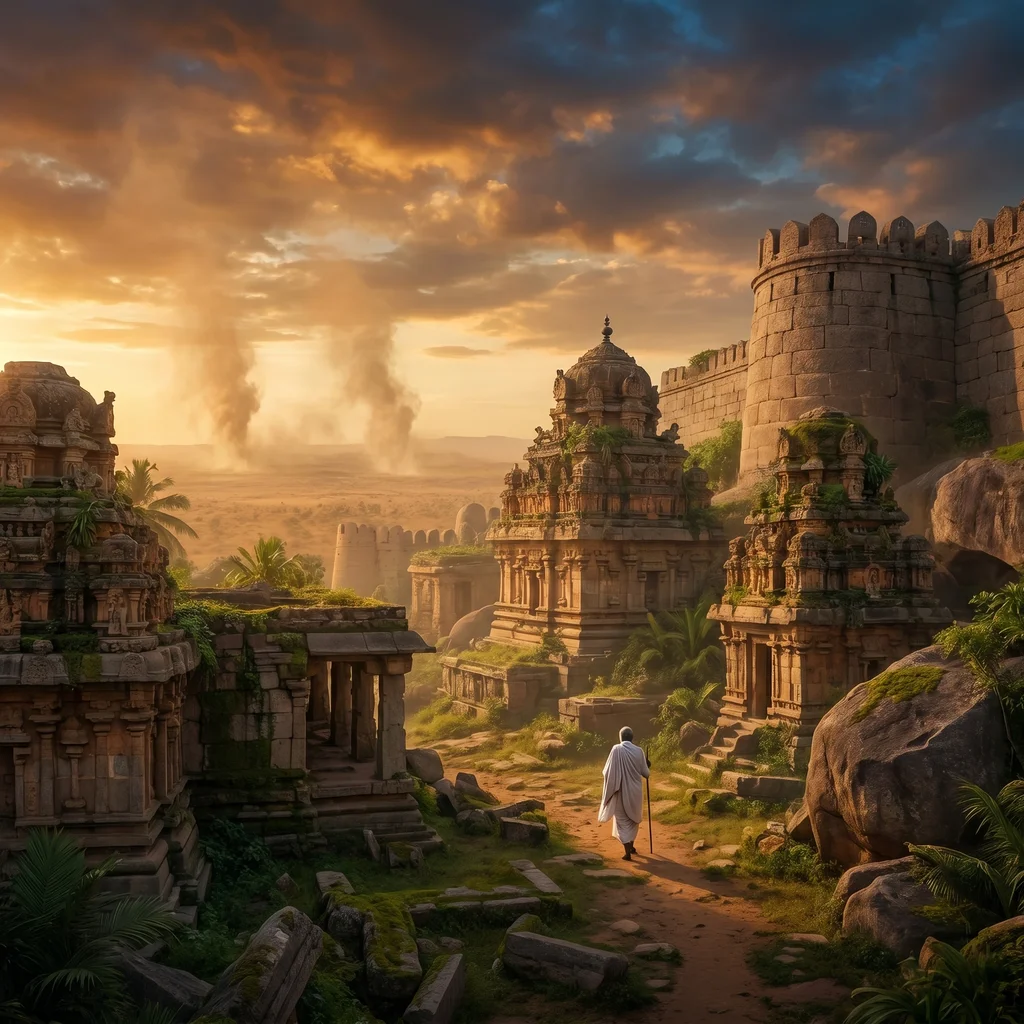
No empire holds its noon. After Rajendra's heirs, the Chola giant slowly stumbled — overstretched abroad, pressed at home by a resurgent Pandya south and by rising Hoysalas and Chalukyas, its grand machinery harder and harder to hold together. The decline was gradual, a century and more of internal strain and external pressure. The end came in 1279, when the Pandya king Maravarman Kulasekara defeated the last emperor, Rajendra III, and the tiger banner came down for the last time.
**Narrator:**
But the dynasty's fall was not the end of its story. Its blood ran on: Malay royalty long claimed Chola descent, and Tamil princes carried the line into Southeast Asian dynasties for generations. More than blood, its works outlived it. The self-governing village, the merchant guild, the ocean-spanning trade, the very idea of an Indian sea-power — all of it shaped what came after. And the monuments simply refused to die.
**Narrator:**
Go to Thanjavur today and the great granite tower Rajaraja raised in 1010 still stands against the sky, the lamp still lit in the sanctum, the priests still moving through rites a thousand years unbroken. And when the festival comes, the dancing Shiva is lifted from his shrine and carried out into the streets on the shoulders of the living — bronze poured by hands long turned to dust, still walking, even now, among his people.