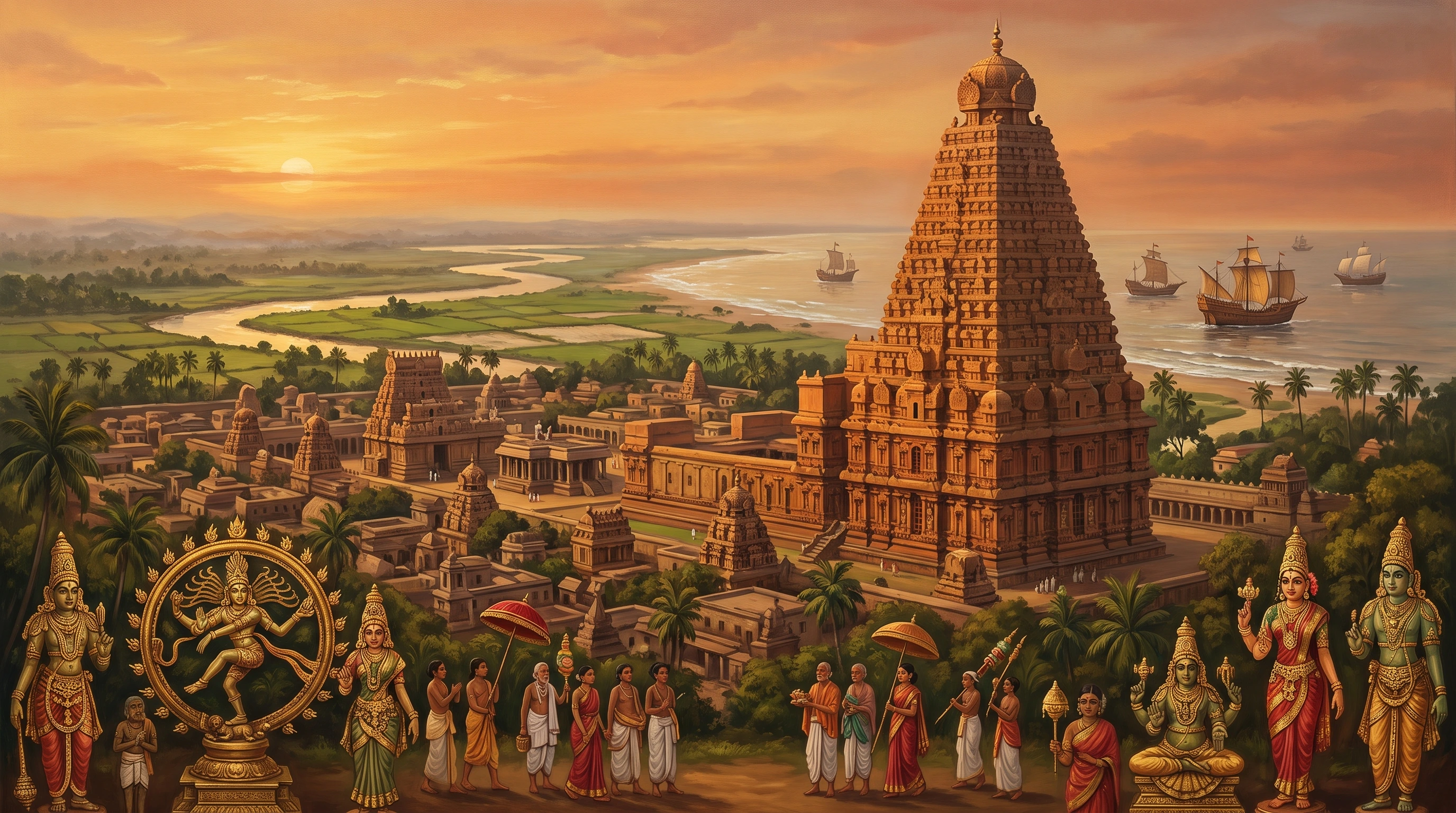
The Chola Empire
The thousand-year rise of the Cholas — Sangam-era chieftains who became a medieval superpower, their navy crossing the Bay of Bengal, their temples touching the sky, their bronze gods still dancing. India’s greatest maritime empire, retold from the sources.
Short on Time?
From Sangam Chieftains to the Lords of the Eastern Ocean
Out of the Sangam Dawn
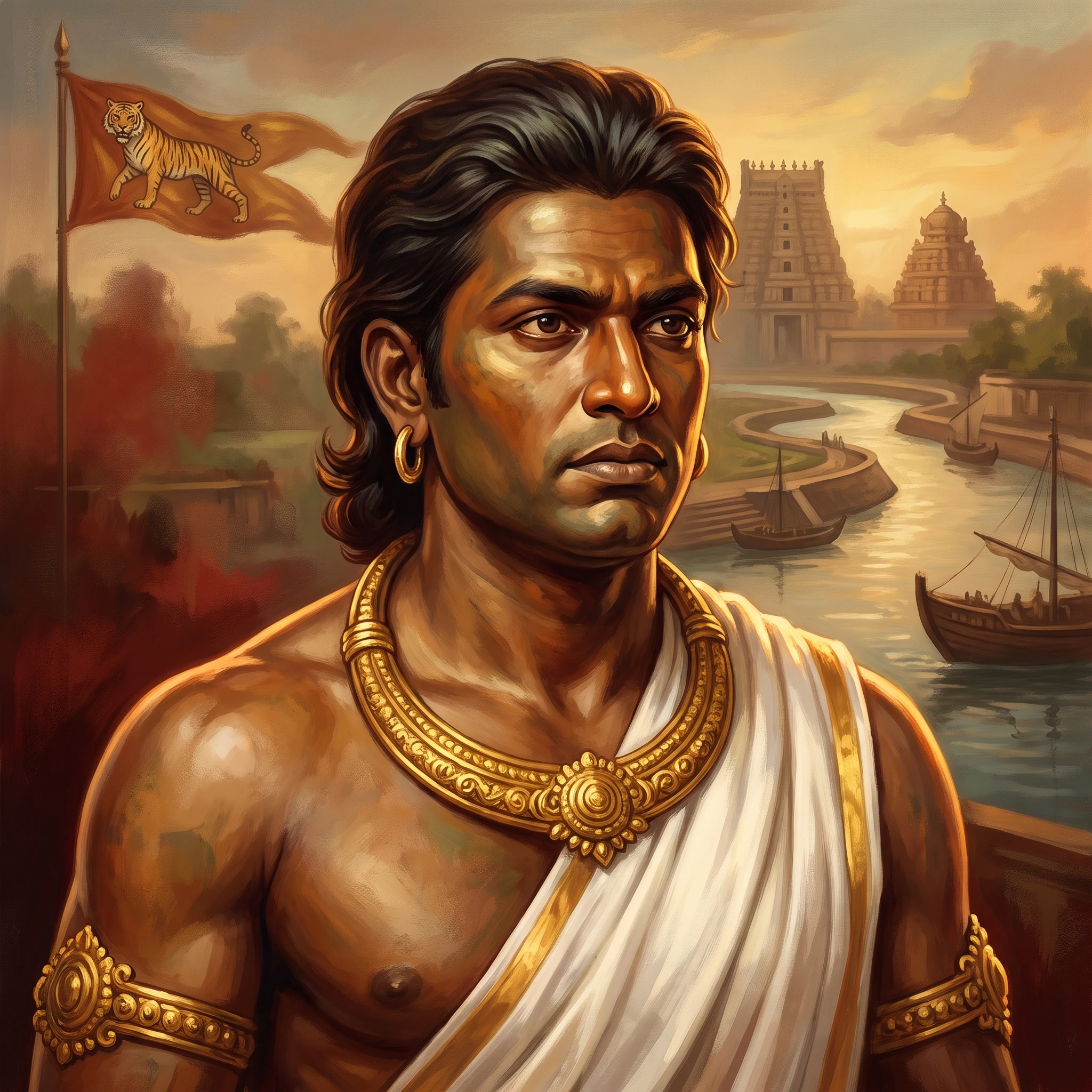
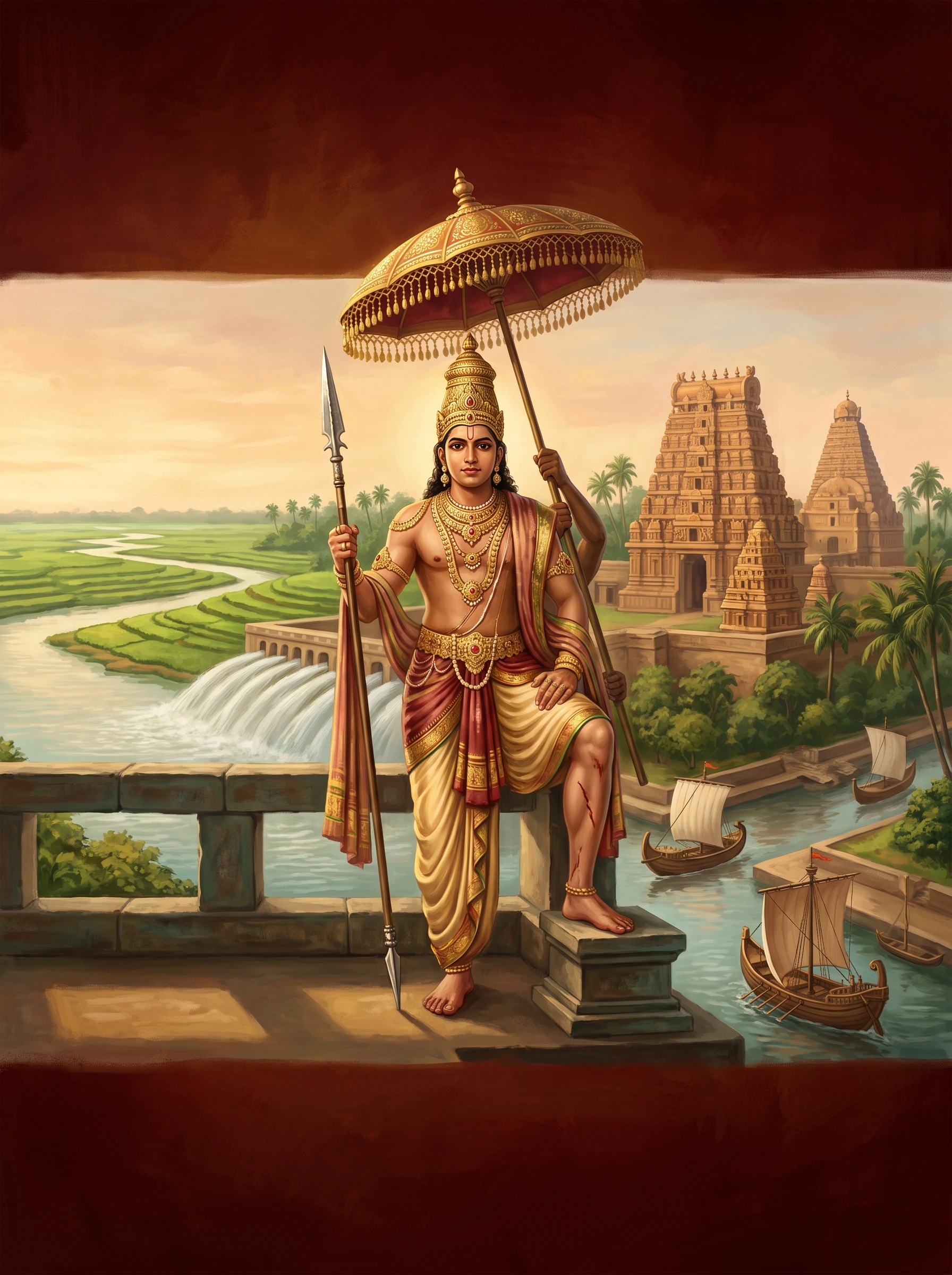
Before the empire, there were the early Cholas of the Sangam age — one of the three crowned Tamil dynasties, ruling the fertile Kaveri delta from Uraiyur. The warrior-king Karikala tamed the river with embankments and won the field at Venni, but after the Sangam centuries the line slipped into the shadows for five hundred years.
Vijayalaya's Gambit
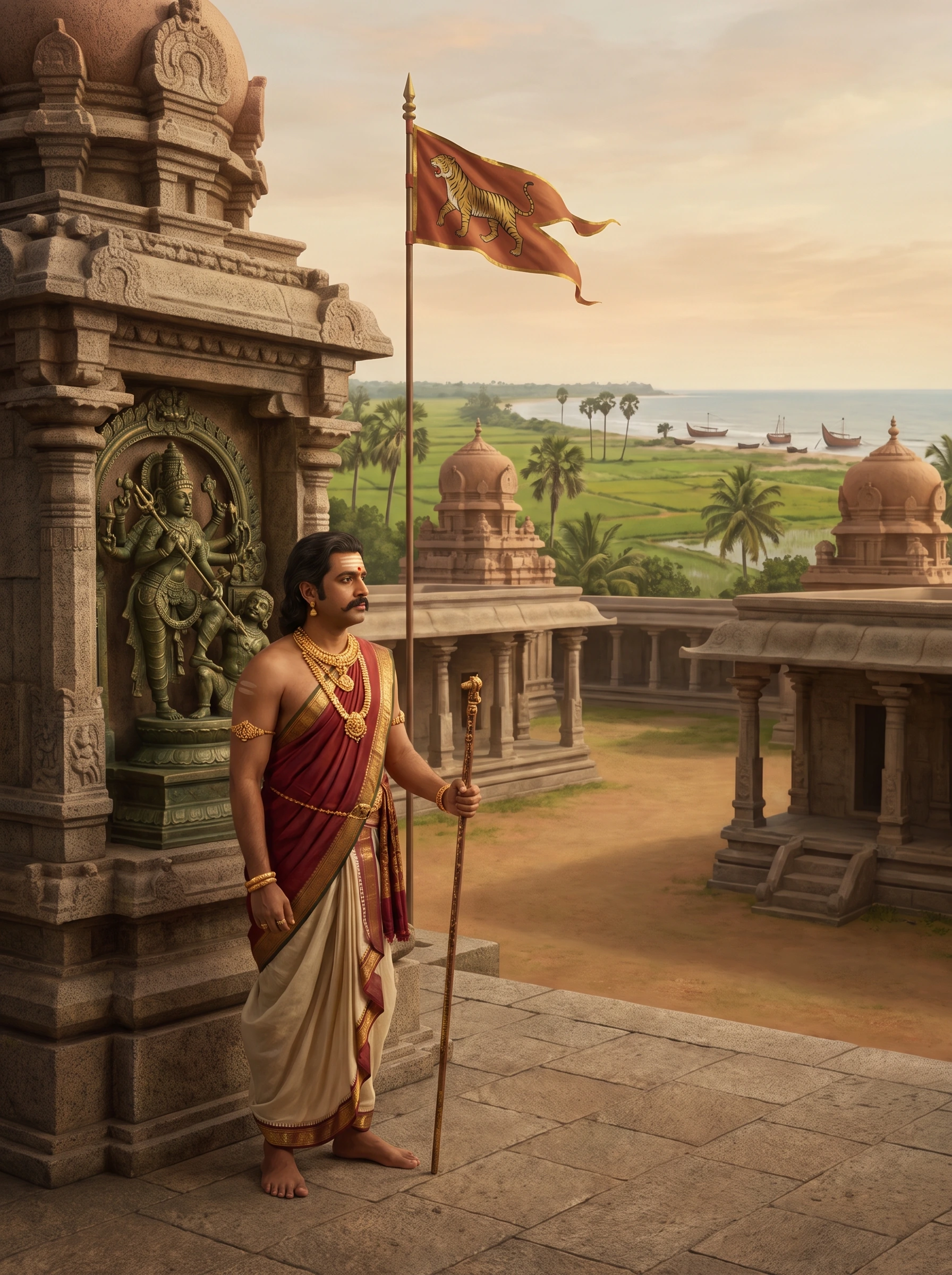
Around 850 CE an obscure Chola feudatory named Vijayalaya seized the town of Thanjavur from the Pallavas' shadow and built a shrine to the goddess Nishumbhasudini. From that single foothold his heirs — Aditya I and Parantaka I — broke the Pallavas and the Pandyas and turned a captured town into the seed of an empire.
Rajaraja the Great
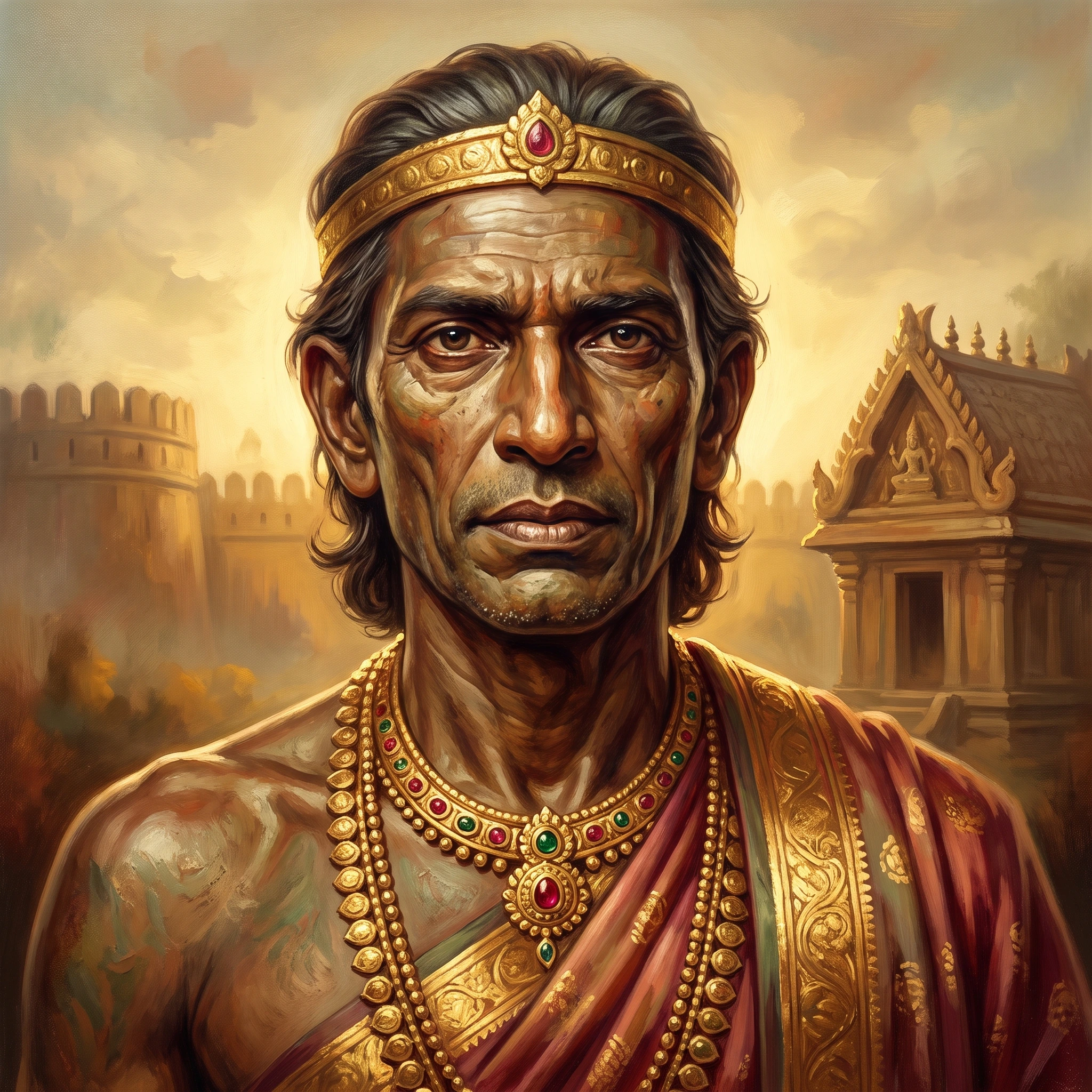
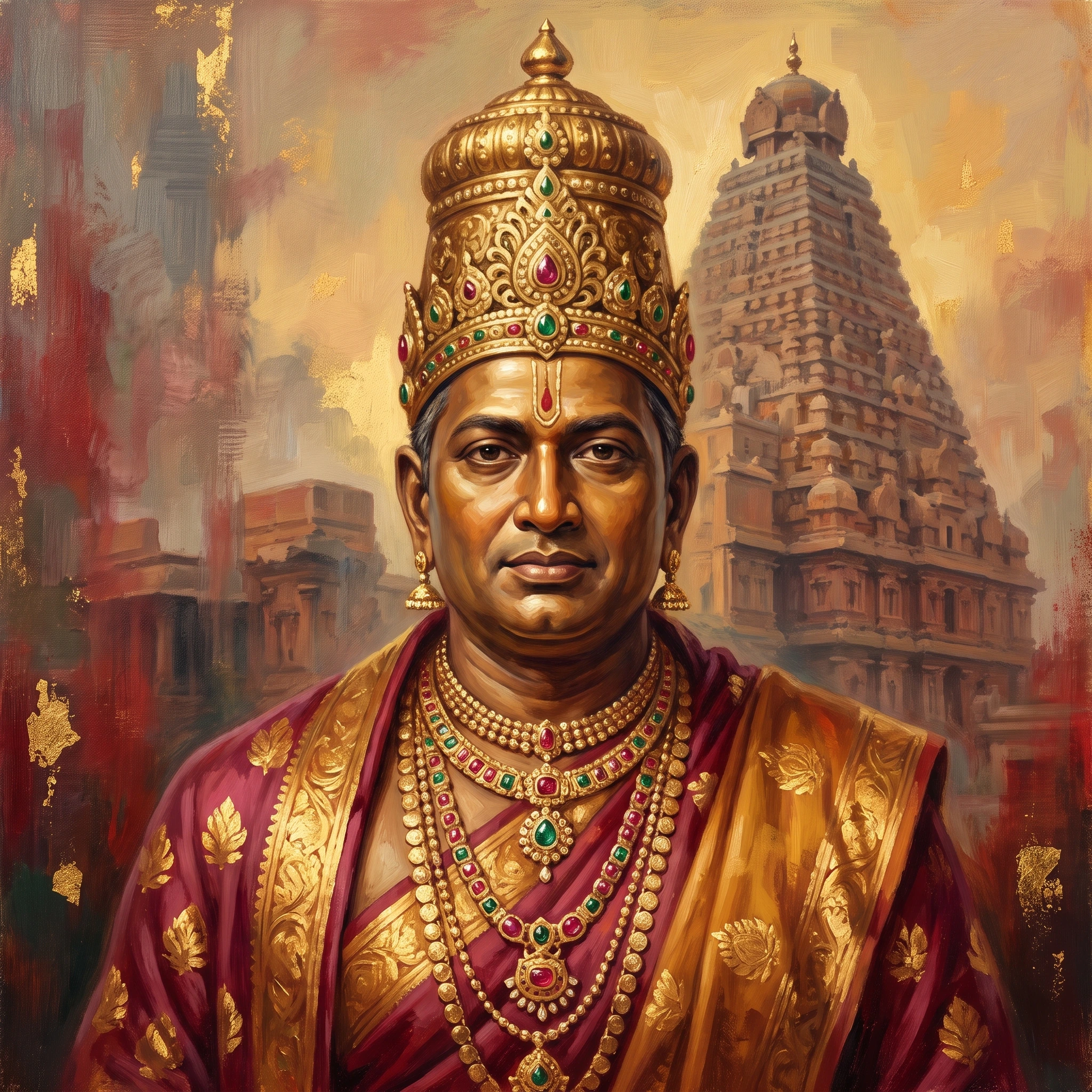
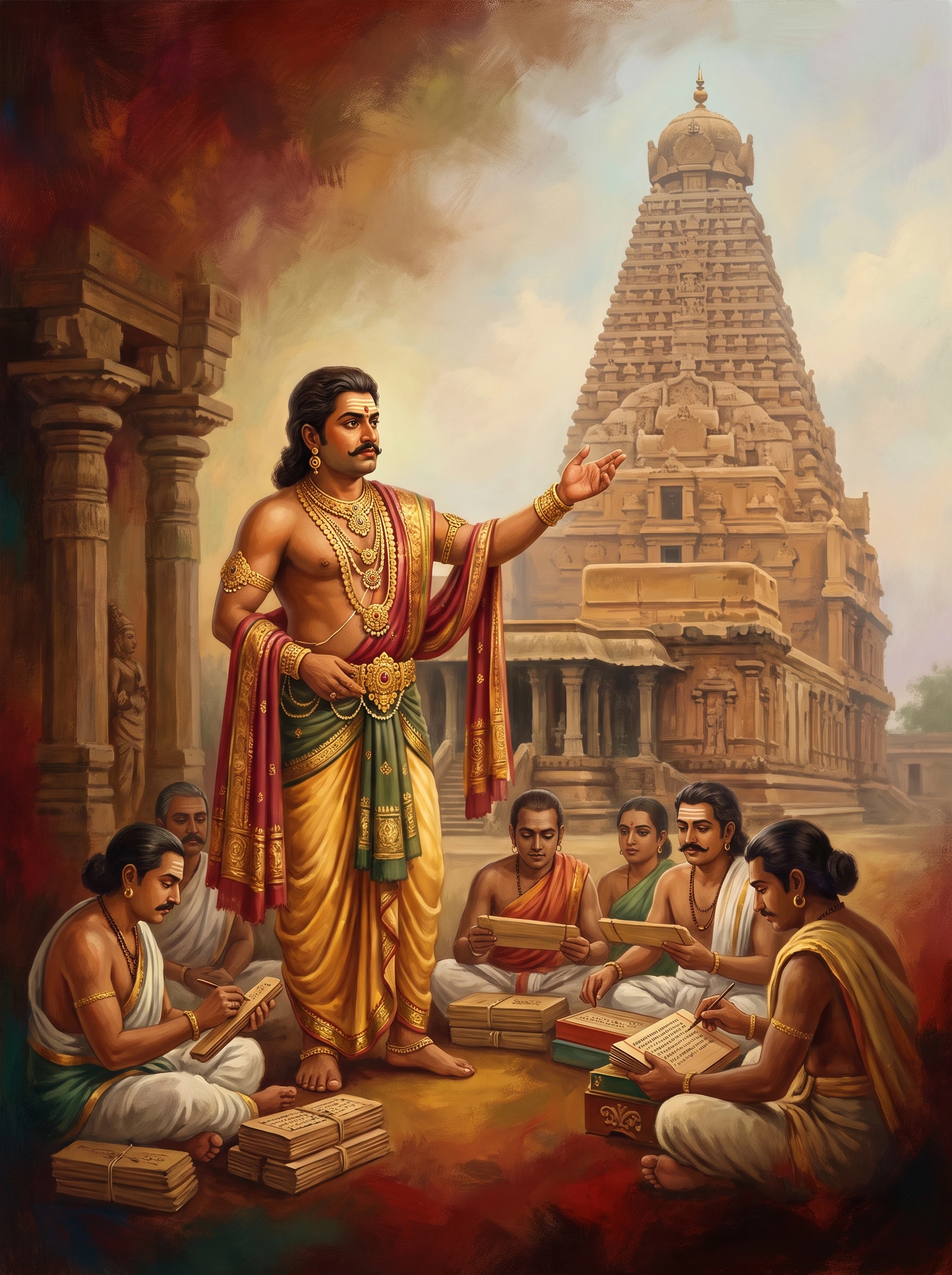
Rajaraja I (985–1014) turned a regional kingdom into the dominant power of southern India — shattering the Chera navy at Kandalur Salai, annexing northern Sri Lanka, and raising the colossal Brihadeeswara temple at Thanjavur, whose granite tower still stands as the signature of his reign.
Rajendra and the Eastern Ocean
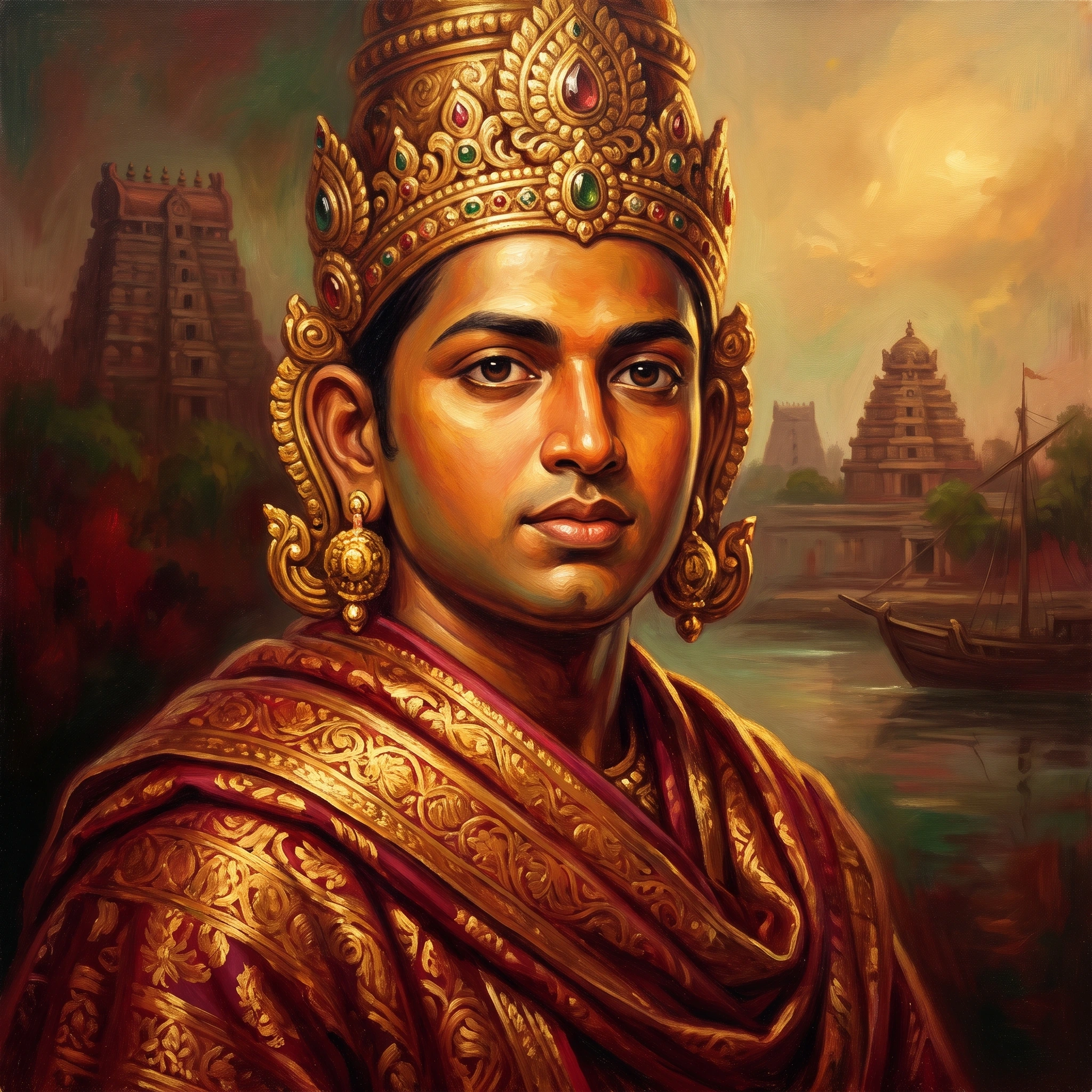
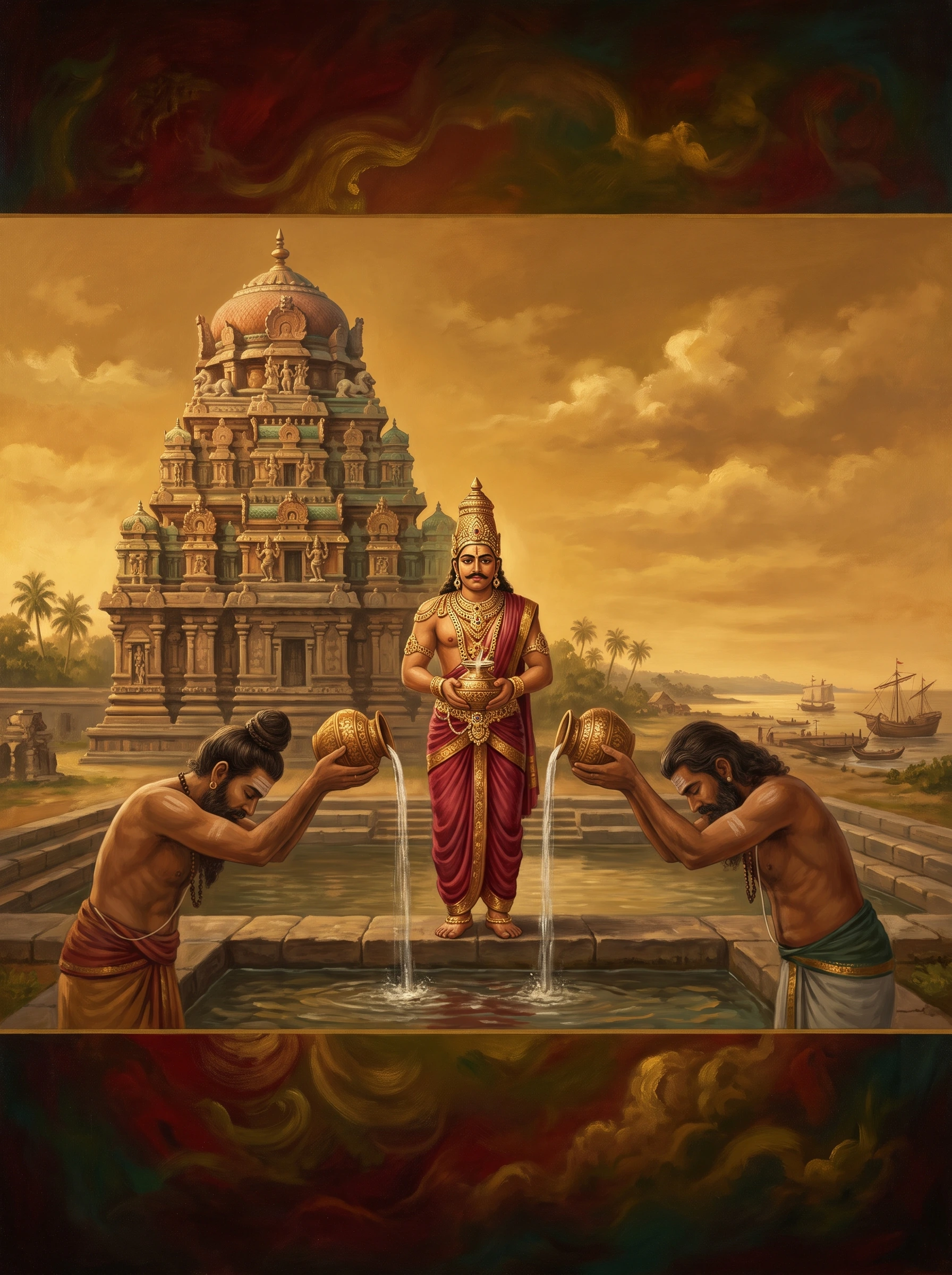
Rajendra I (1014–1044) marched an army to the Ganga to earn the title Gangaikonda Chola and built a new capital, Gangaikonda Cholapuram. Then, in 1025, he did the unthinkable for a land power — he sent a fleet across the Bay of Bengal to sack Srivijaya, the Malay-Sumatran empire that controlled the Strait of Malacca.
Masters of the Monsoon
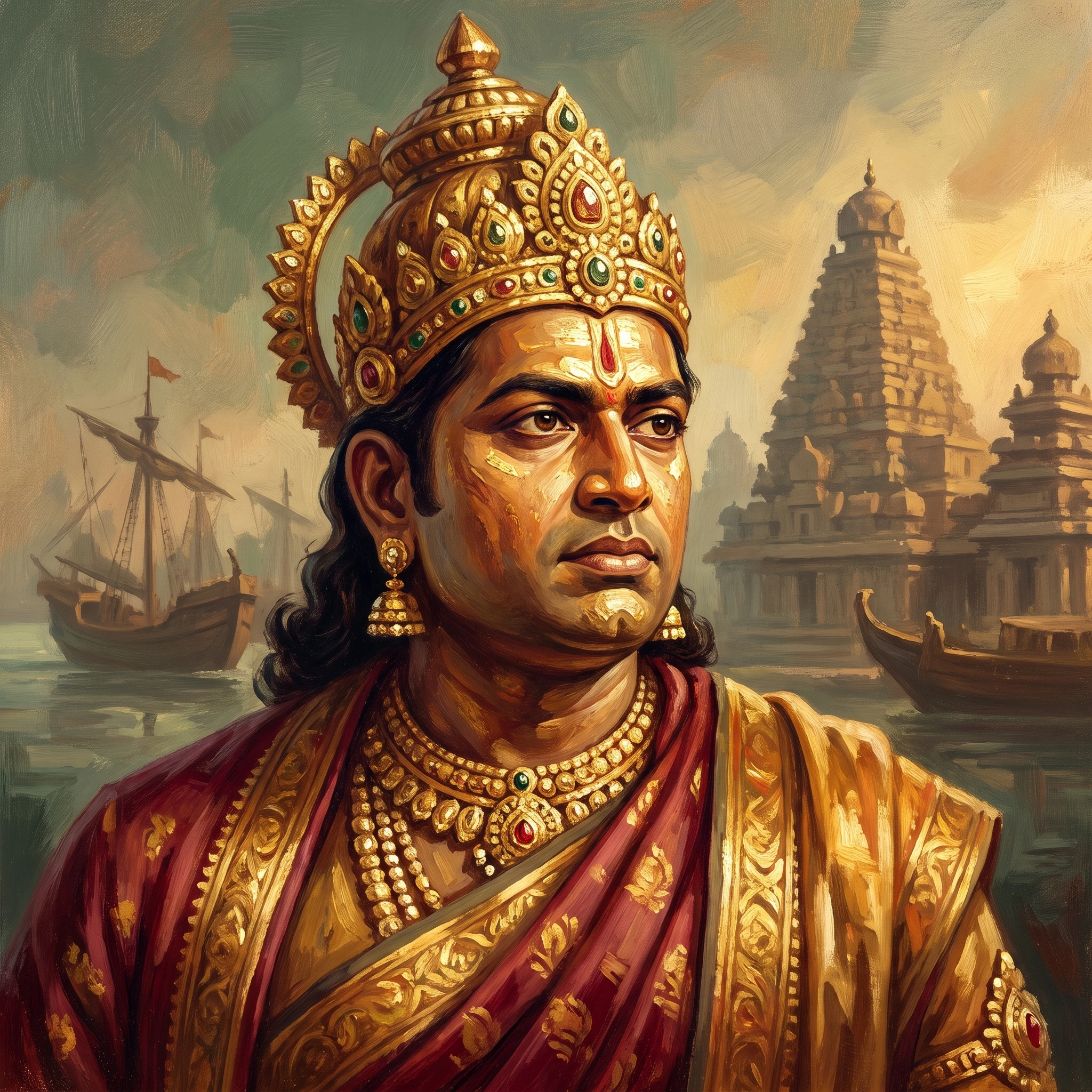
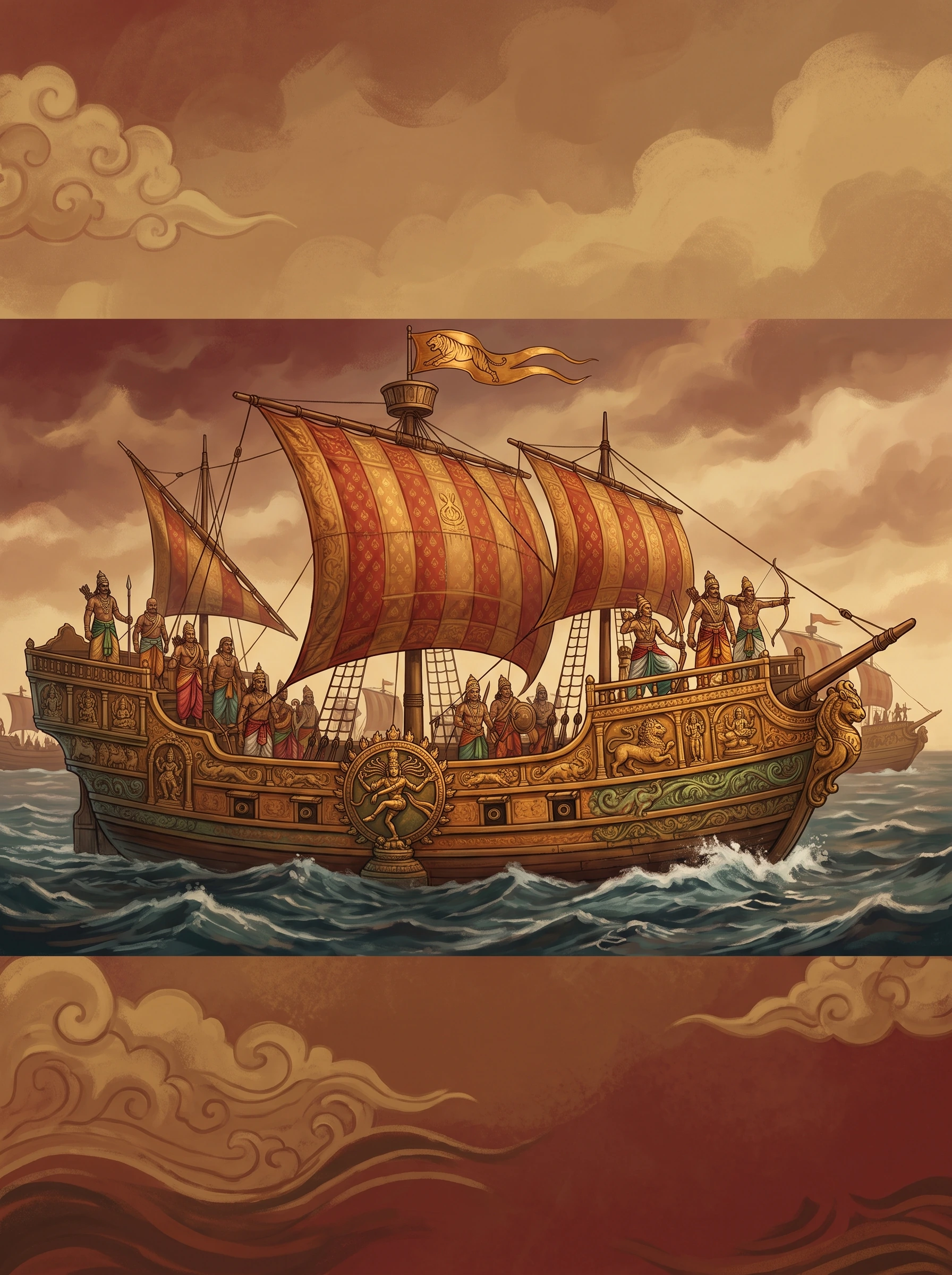
How did a Tamil delta kingdom build the most powerful navy in medieval Asia? Through monsoon-timed seamanship, oceangoing ships, fortified ports, and a fusion of royal fleet and merchant marine that let the Cholas project force across the Bay of Bengal — a maritime reach no Indian power would match for centuries.
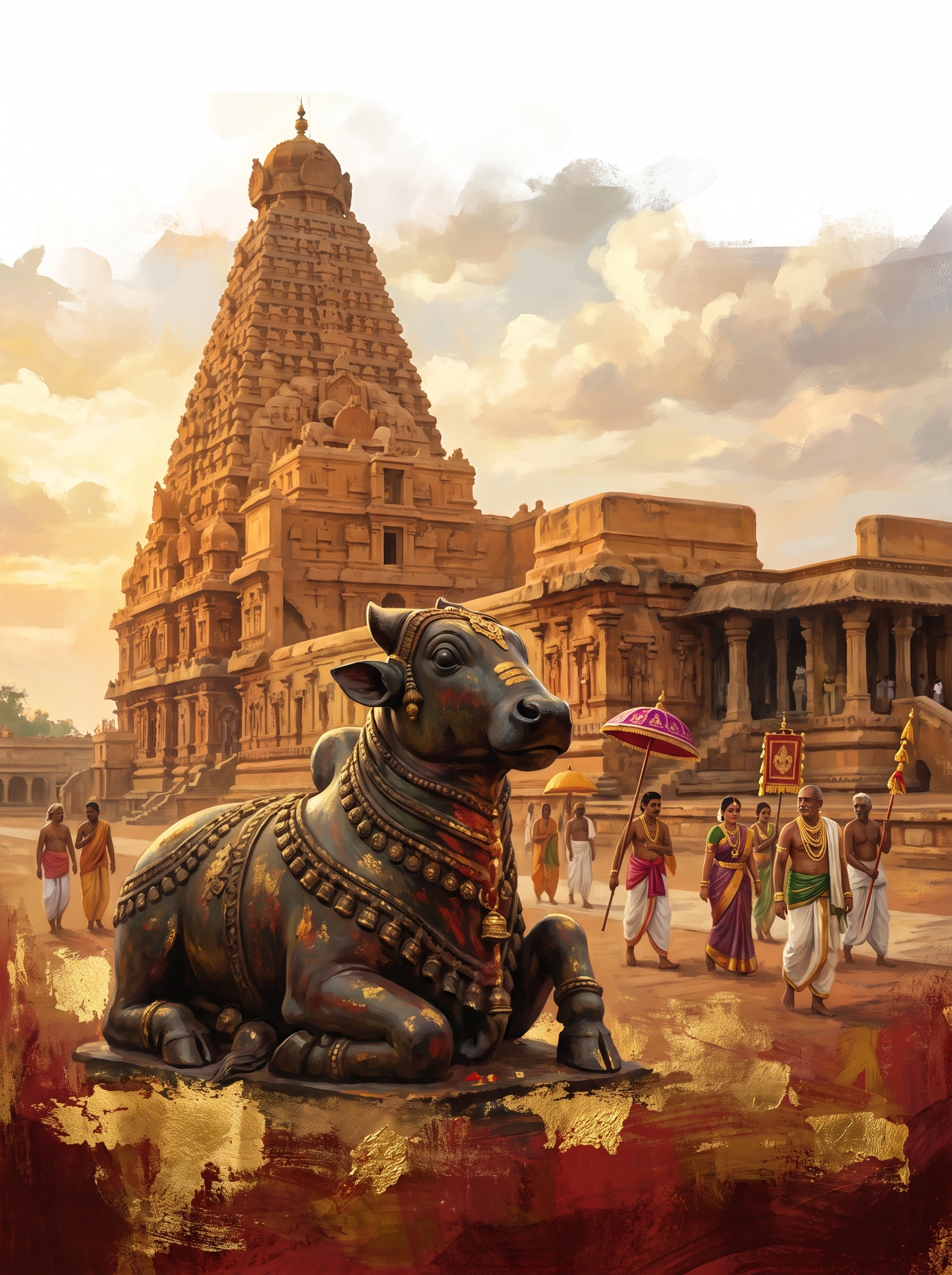
Mountains of Stone
The Cholas left behind a Dravidian architecture of soaring vimanas and chiseled granite. Three of their temples — Brihadeeswara at Thanjavur, the temple at Gangaikonda Cholapuram, and the jewel-like Airavatesvara at Darasuram — are together inscribed by UNESCO as the Great Living Chola Temples, still in worship a thousand years on.
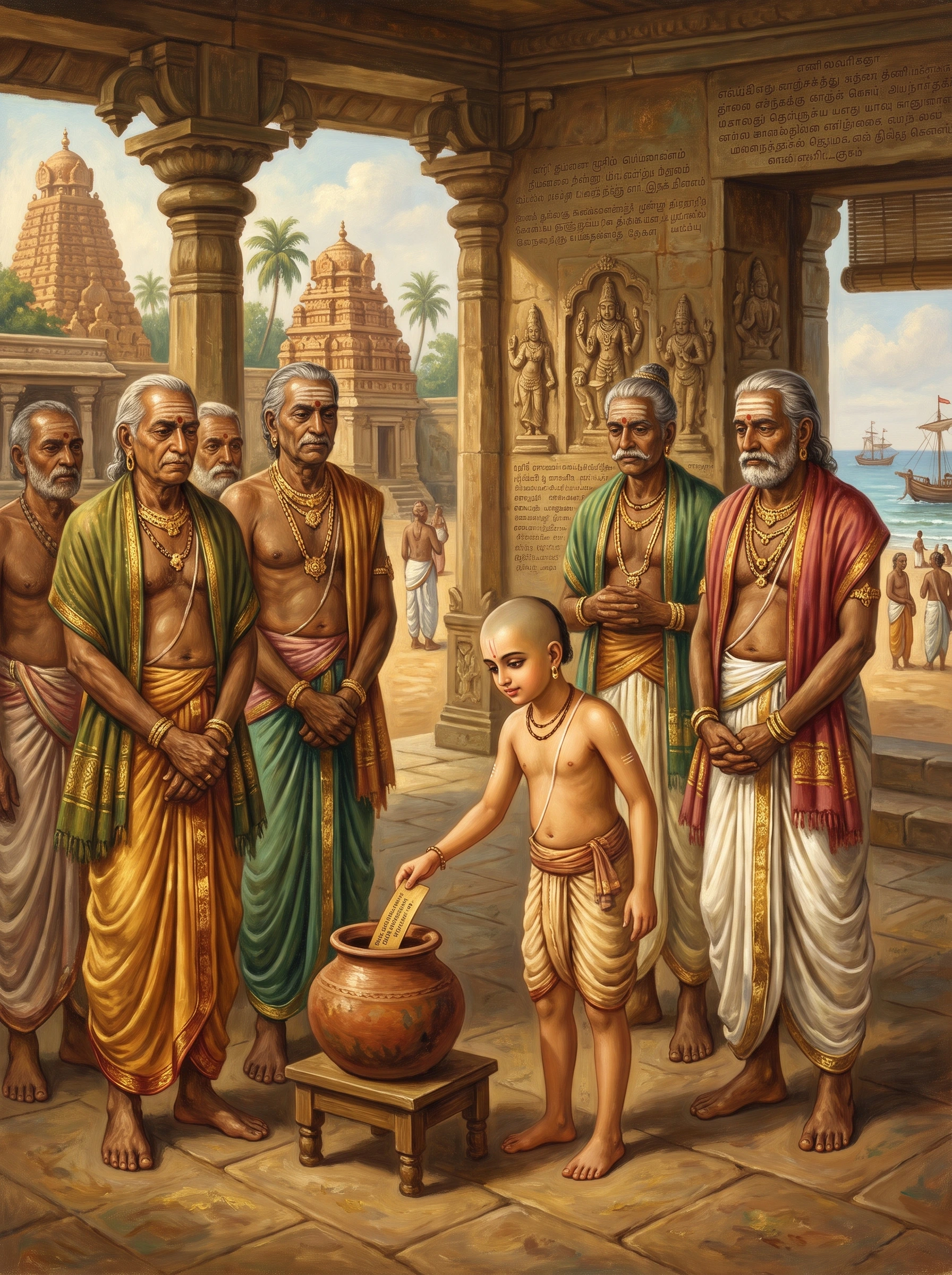
The Village Republics
Beneath the god-kings ran a startlingly modern machinery of self-government. The inscriptions of Uttaramerur record a village assembly — the sabha — choosing its committees by lot from ballots drawn out of a pot, with rules on terms, eligibility, and accountability that political scientists still study today.
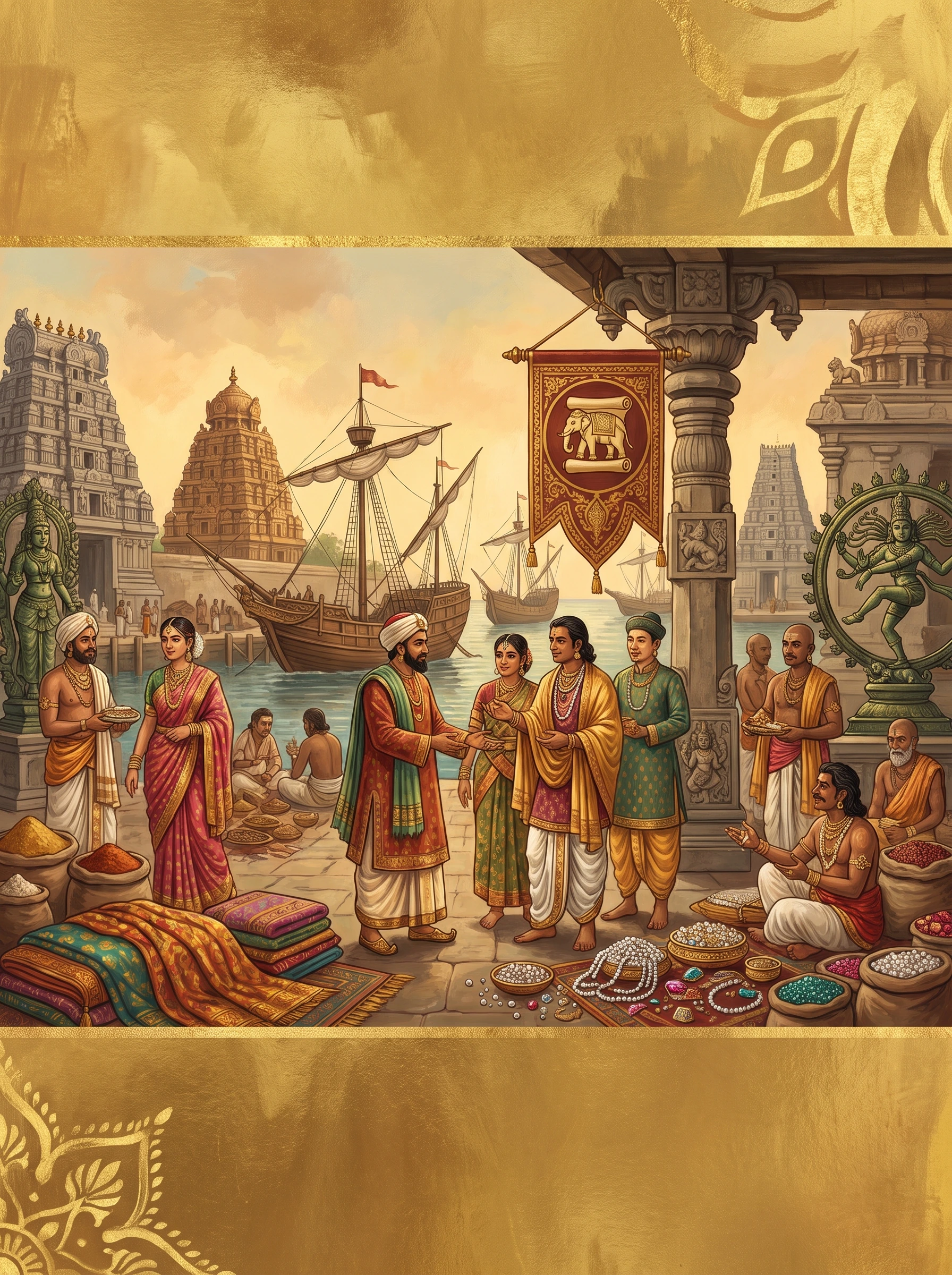
The Ocean Bazaar
Chola power rested on commerce as much as conquest. Merchant guilds like the Ayyavole and Manigramam ran caravans and ships from Arabia to China; Chola embassies reached the Song court; and the wealth of the Indian Ocean trade — textiles, spices, gems, horses — flowed back to gild the temples and pay the fleets.
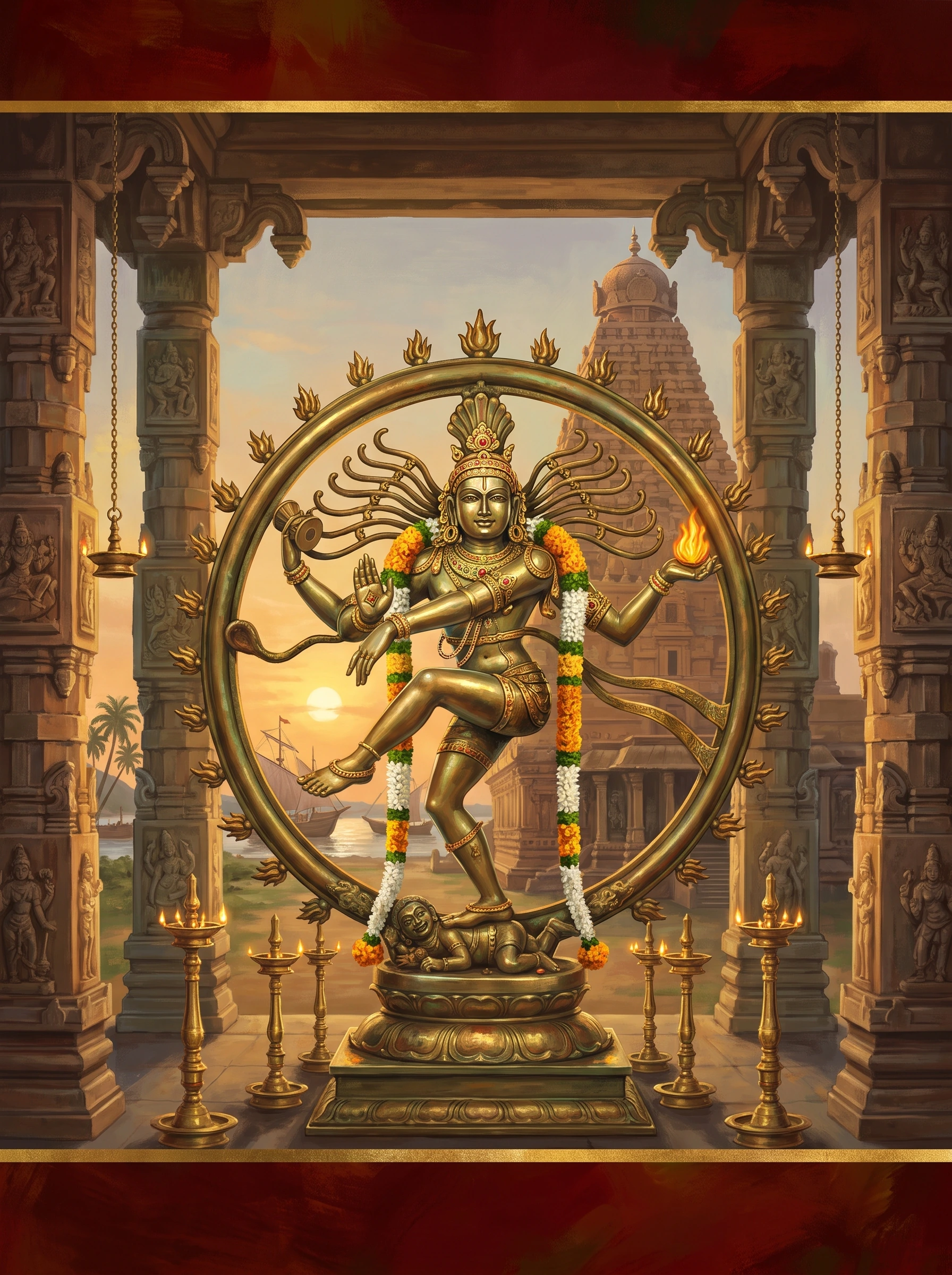
Gods in Bronze
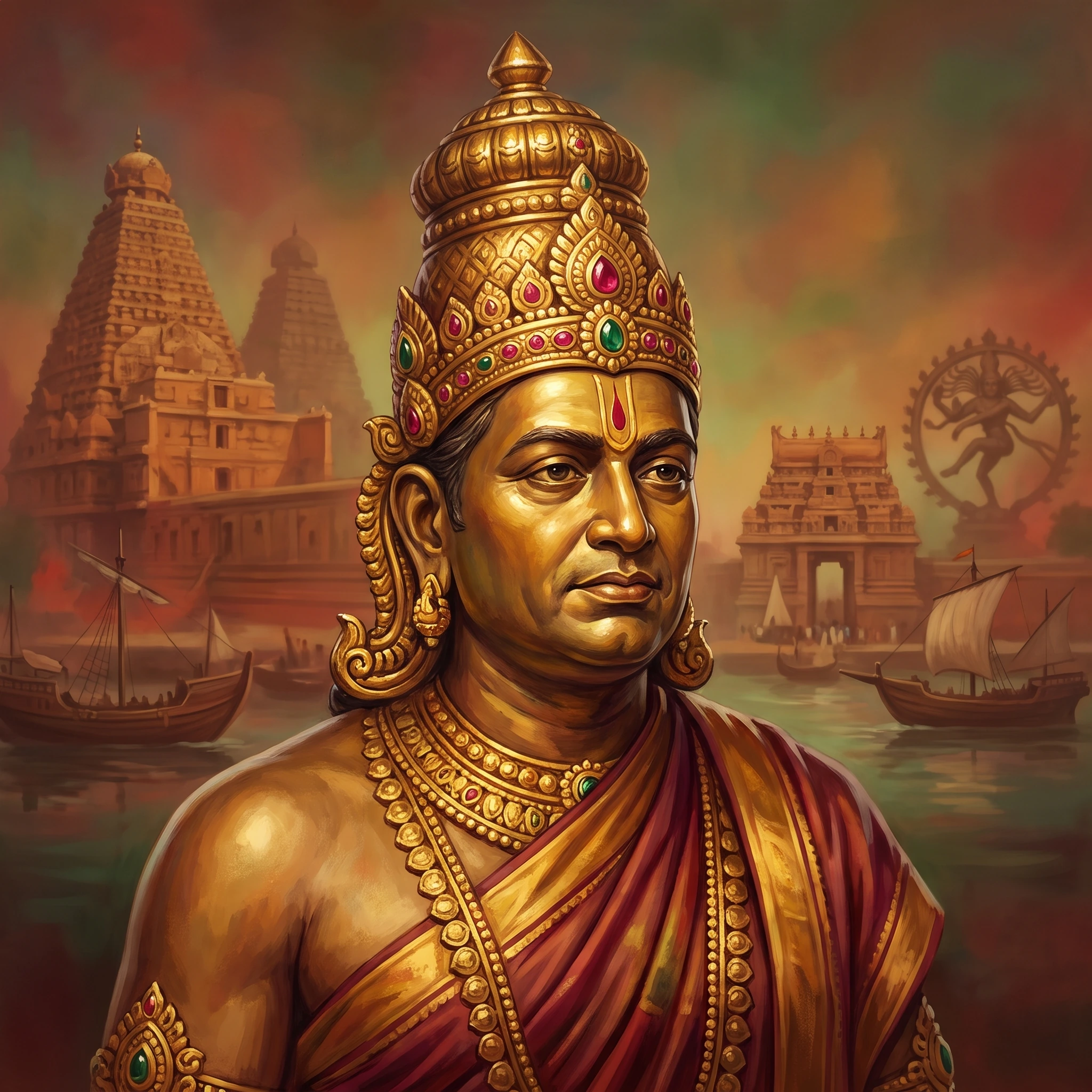
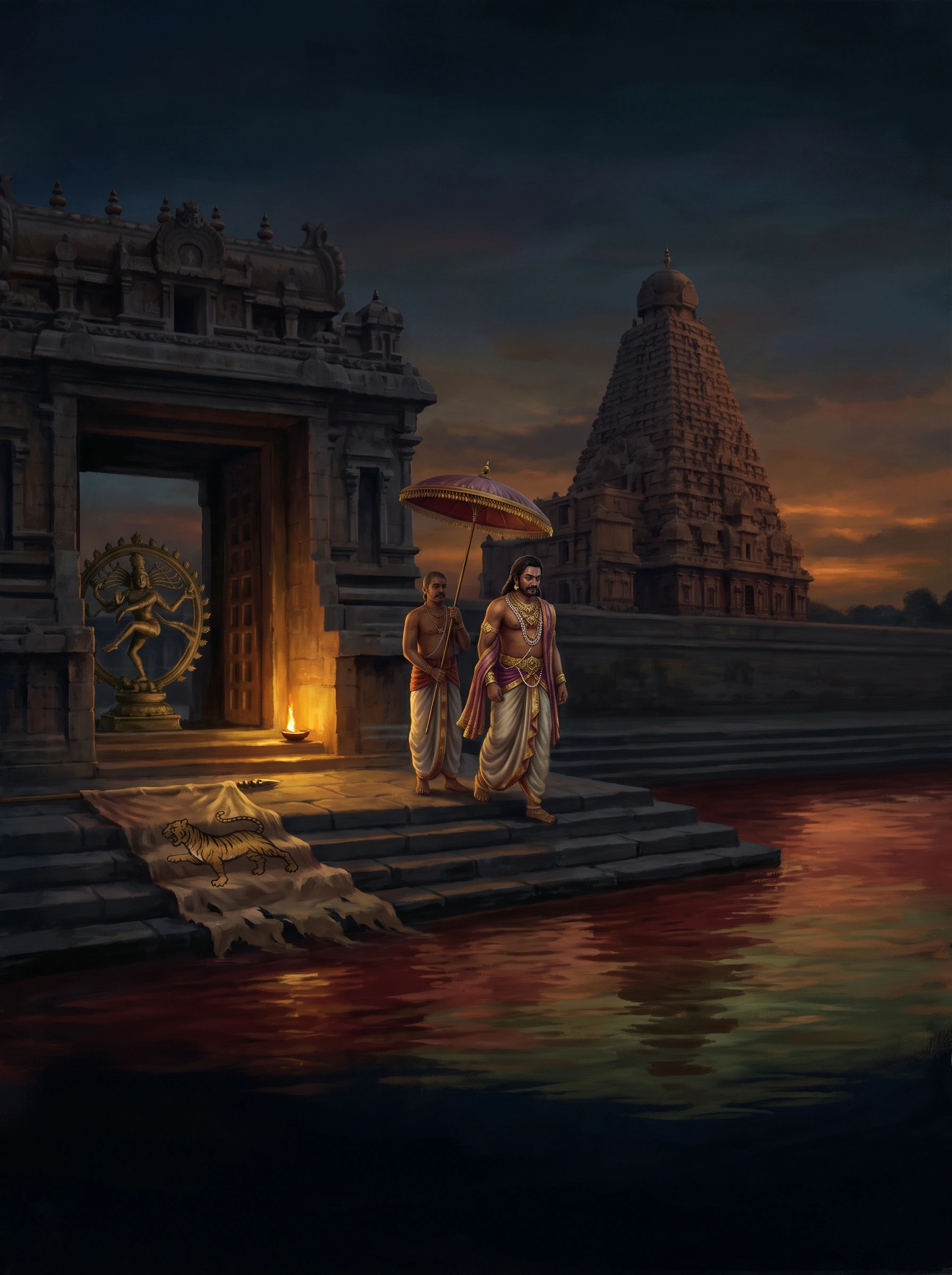
The Cholas perfected the lost-wax bronze, casting gods that could be carried in procession. Their greatest creation is Nataraja — Shiva dancing the universe into being and out of it inside a ring of fire — a sculpture so resolved that it became, for the modern world, the very image of Indian art.
The Long Twilight
After Rajendra's heirs the empire slowly unwound — overstretched abroad, pressed by the resurgent Pandyas and the rising Hoysalas and Chalukyas, until the last Chola, Rajendra III, faded in the late thirteenth century. But the temples, the bronzes, the assembly inscriptions, and the memory of an Indian sea-power outlived the dynasty entirely.